
Ultrasonic Pulse Velocity Tester
STANDART: EN12504-4, ASTM C 597-02, BS 1881 Part 203, ISO1920-7:2004
LT-C0185 Ultrasonic Pulse Velocity Tester | Pundit Lab Plus
LT-C0186 Ultrasonic Pulse Velocity Tester | Pundit Lab Plus
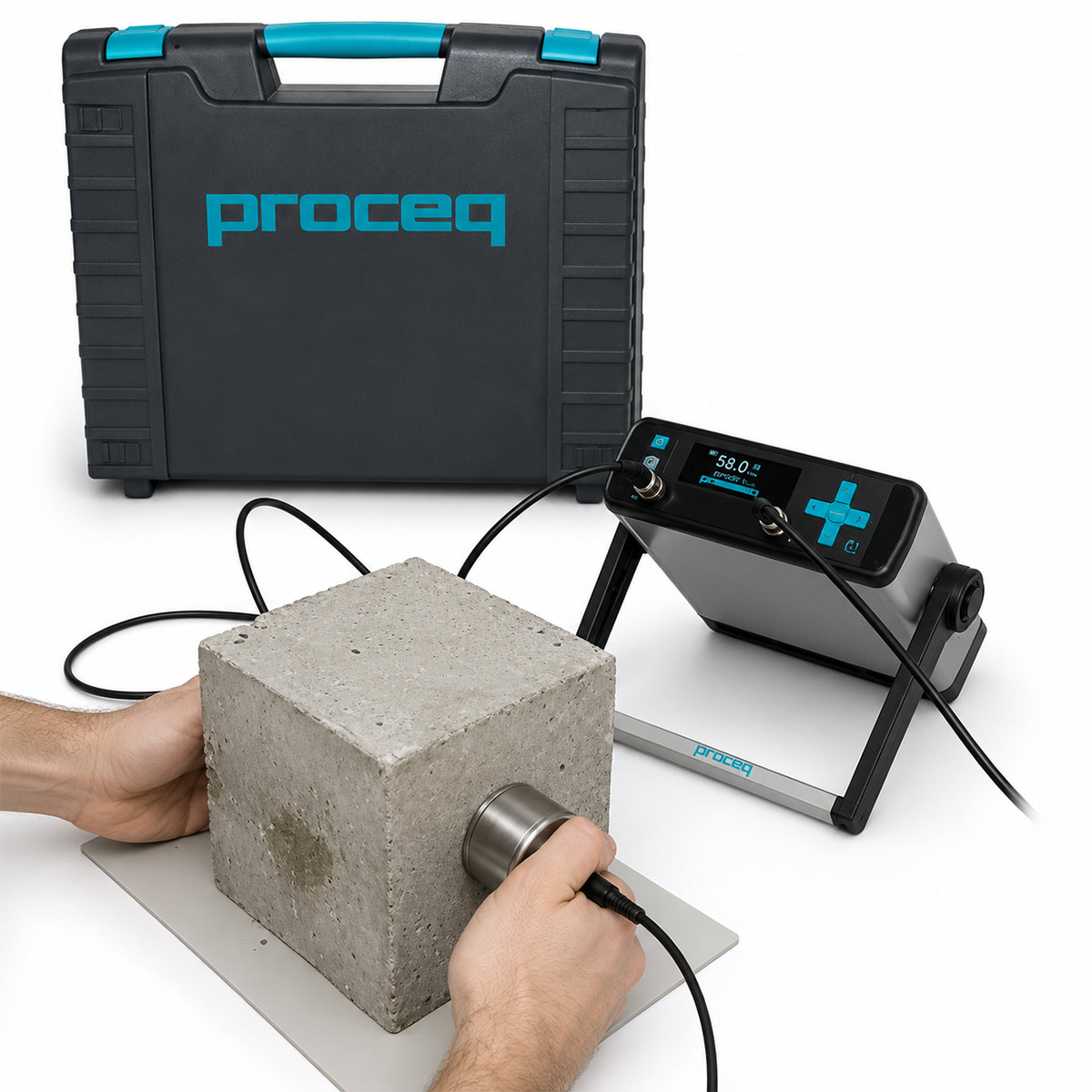
Ultrasonic Pulse Velocity Tester performs non-destructive testing of hardened concrete by measuring the transit time of an ultrasonic pulse through the material. Using the known path length and measured transit time, the instrument calculates ultrasonic pulse velocity. This allows users to compare concrete homogeneity, relative quality and internal variations while supporting the investigation of cracks, voids and other possible defects. LİYA Test offers Pundit Lab Plus and Pundit Lab model options for laboratory and field applications.
- Test Method: Ultrasonic Pulse Velocity (UPV)
- Application: Non-destructive evaluation of hardened concrete
- Measured Parameter: Ultrasonic pulse transit time
- Calculated Parameter: Ultrasonic pulse velocity
- Concrete Evaluation: Supports comparison of homogeneity and relative concrete quality
- Internal Defect Investigation: Helps assess cracks, voids and material variations
- Transducers: Standard set includes 2 × 54 kHz transducers
- Waveform Display: Allows direct observation of the received ultrasonic signal
- Manual Triggering: Supports manual adjustment of the signal trigger point
- Pundit Lab Plus: Provides enhanced gain and advanced evaluation functions
- SONREB Support: Allows combined evaluation of UPV and rebound hammer data
- PC Connectivity: Pundit Link software supports data recording, analysis and export
- Dimensions: 17.5 × 5.5 × 22 cm
- Approximate Weight: 1.5 kg
- Standards: EN 12504-4, ASTM C597, BS 1881 Part 203, ISO 1920-7
| Product Code | Product Name | Overall Dimensions (cm) | Weight (kg) |
| LT-C0185 | Ultrasonic Pulse Velocity Tester, Pundit Lab Plus | 17.5 × 5.5 × 22 | 1.5 |
| LT-C0186 | Ultrasonic Pulse Velocity Tester, Pundit Lab | 17.5 × 5.5 × 22 | 1.5 |

LT_BETON_ULTRASONIC_
What Is an Ultrasonic Pulse Velocity Tester?
The Ultrasonic Pulse Velocity Tester measures the transit time of an ultrasonic pulse through hardened concrete. The instrument uses the distance between two transducers and the measured transit time to calculate ultrasonic pulse velocity.
This non-destructive method allows users to compare concrete homogeneity and relative material quality without damaging the structure. It can also support the investigation of cracks, voids and other internal variations.
However, ultrasonic pulse velocity alone does not directly provide concrete compressive strength. A project-specific correlation should be established when UPV results are used for strength estimation.
Pundit Lab and Pundit Lab Plus Models
LİYA Test offers two model options: LT-C0185 Pundit Lab Plus and LT-C0186 Pundit Lab.
Both models have overall dimensions of 17.5 × 5.5 × 22 cm and weigh approximately 1.5 kg. Their compact construction supports both laboratory and field applications.
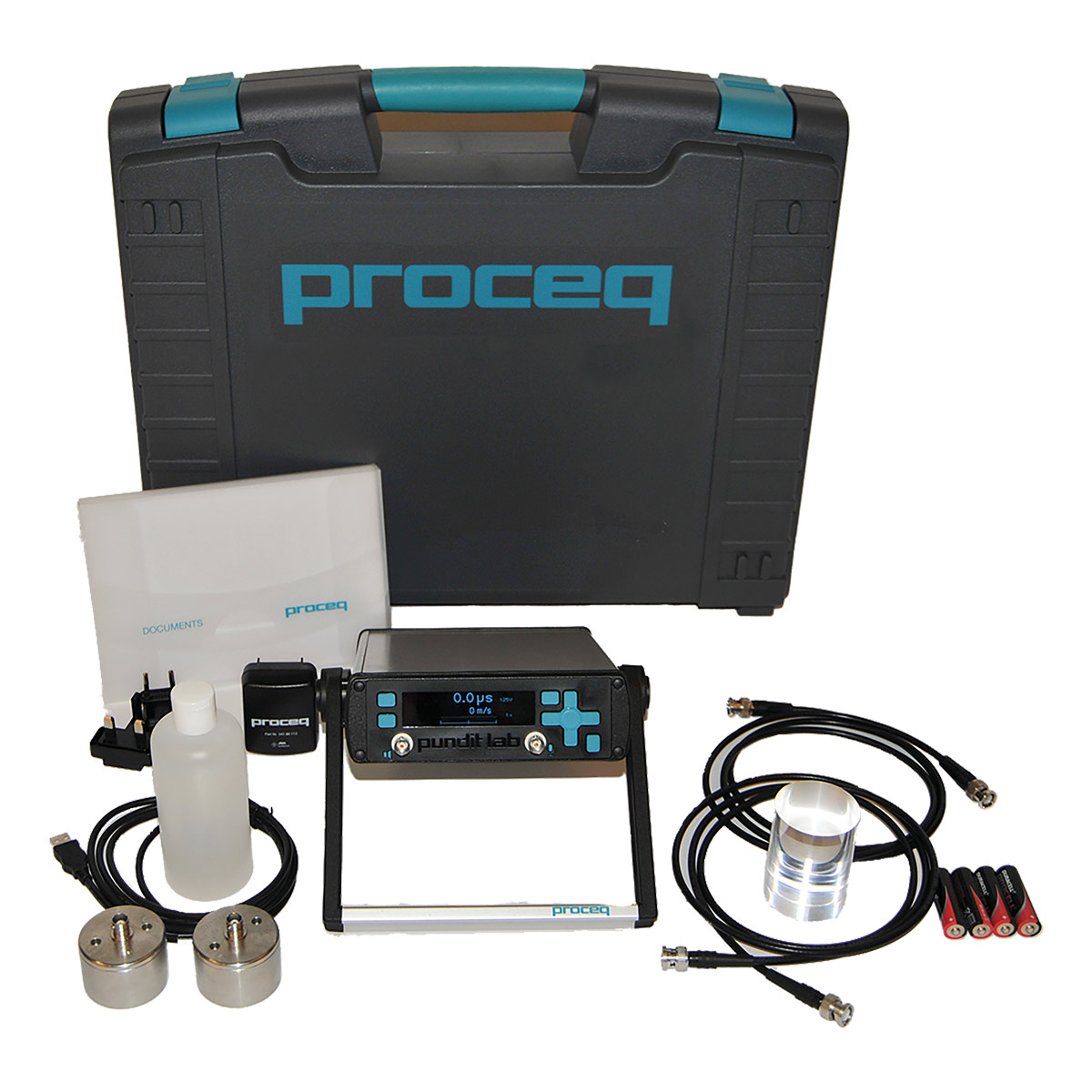
The standard system includes the display unit, two 54 kHz transducers, connection cables, coupling agent, calibration bar, USB cable, batteries, software and carrying case.
This complete configuration allows users to begin ultrasonic concrete testing with the essential equipment required for routine measurements.
Ultrasonic Transit Time and Pulse Velocity
During testing, one transducer sends an ultrasonic pulse through the concrete while the second transducer receives the signal.
The instrument measures the time required for the pulse to travel through the material. When the path length is known, the system calculates the pulse velocity.
Changes in pulse velocity may indicate variations in concrete quality or internal structure. Therefore, users can compare different locations within the same element or evaluate several specimens under similar conditions.
Waveform Analysis and Manual Triggering
The instrument displays the received ultrasonic waveform directly on the screen. This allows the operator to examine the signal and verify the selected transit-time point.
Manual triggering is useful when the received signal is weak or contains irregularities. The operator can adjust the trigger position and improve the evaluation of the pulse arrival time.
Proper coupling between the transducers and concrete surface is also important. A suitable coupling agent helps reduce signal loss and improves measurement repeatability.
Evaluation of Concrete Homogeneity
UPV testing provides a practical method for comparing different areas of a concrete structure.
Consistent velocity readings can indicate relatively uniform material conditions. In contrast, significant changes between measurement points may suggest differences in density, cracking, void content or other internal conditions.
However, users should interpret the measurements together with the structural condition, concrete composition and available project information.
Pundit Lab Plus and SONREB Evaluation
The Pundit Lab Plus provides additional functionality for more advanced testing applications.
Users can establish velocity-strength correlation curves when suitable reference data are available. The system can also support SONREB evaluation, which combines ultrasonic pulse velocity measurements with rebound hammer results.
This combined approach may improve strength estimation when a reliable site-specific correlation has been developed.
Nevertheless, SONREB remains an indirect assessment method. Core testing or other direct methods may still be necessary when accurate compressive strength verification is required.
Pundit Link Software and Data Management
Pundit Link software supports communication between the instrument and a computer.
Users can display waveforms, store measurements and export test data for further evaluation. This feature simplifies documentation and comparison of results from different test points.
Digital data management is particularly useful during extensive surveys where many measurements must be recorded and evaluated systematically.
Testing According to International Standards
EN 12504-4 specifies the determination of ultrasonic pulse velocity in hardened concrete.
ASTM C597 covers the measurement of pulse velocity through concrete using longitudinal ultrasonic waves. BS 1881 Part 203 also addresses ultrasonic testing of concrete.
In addition, ISO 1920-7 includes non-destructive testing methods for hardened concrete, including ultrasonic pulse velocity applications.
Reliable Non-Destructive Concrete Evaluation
The Ultrasonic Pulse Velocity Tester combines accurate transit-time measurement, waveform analysis and digital data management in one portable system.
As a result, laboratories and field teams can evaluate concrete homogeneity, relative quality and potential internal defects without damaging the tested element. The Pundit Lab and Pundit Lab Plus options provide flexible solutions for routine UPV measurements and more advanced concrete assessment applications.