
Rapid Chloride Permeability Test Apparatus
STANDART: ASTM C 1202; ASTM C 1760
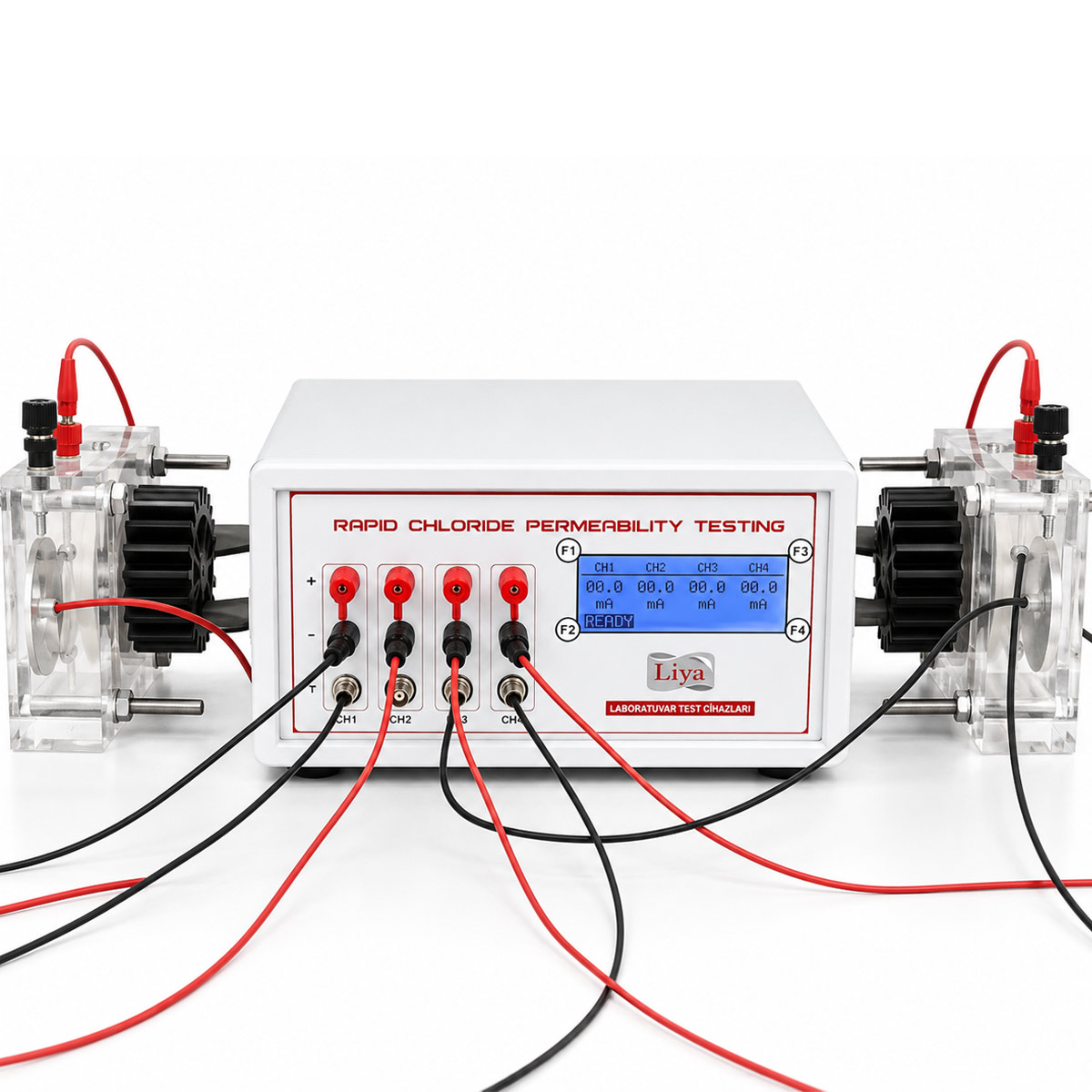
LT-C0900 Rapid Chloride Permeability Test Apparatus | 4 Channels
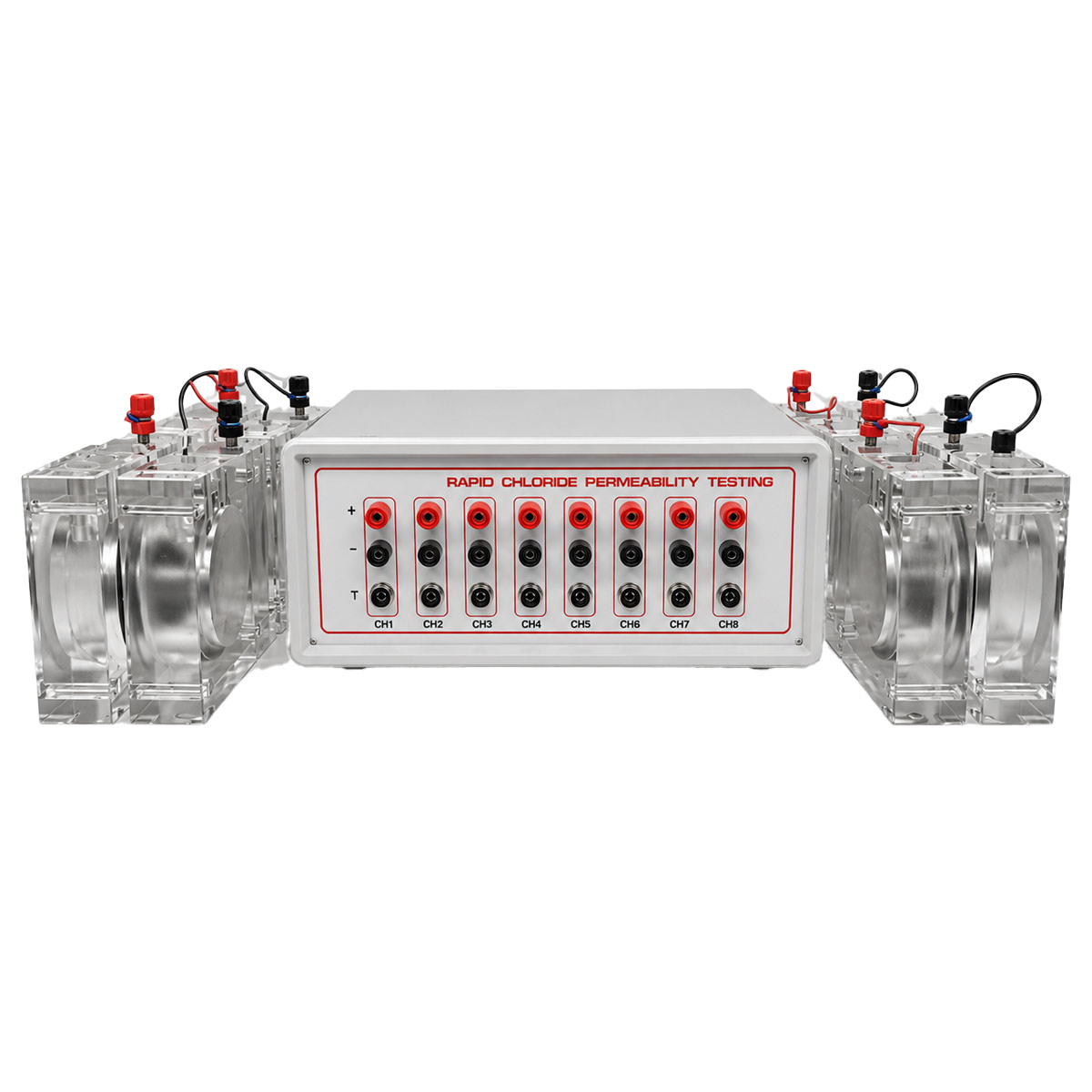
LT-C0901 Rapid Chloride Permeability Test Apparatus | 8 Channels
Rapid Chloride Permeability Test Apparatus (RCPT) evaluates the resistance of hardened concrete to chloride ion penetration by electrical indication. The system continuously measures the current passing through the concrete specimen and calculates the total electrical charge. Independent test channels allow several specimens to run simultaneously, while adjustable data recording, temperature monitoring and PC software simplify test control and reporting.
- Test Method: Rapid Chloride Permeability Test (RCPT)
- Application: Evaluation of concrete resistance to chloride ion penetration
- Model Options: 4-channel and 8-channel
- LT-C0900: 4 independent test channels
- LT-C0901: 8 independent test channels
- Current Measurement Accuracy: ±0.1 mA for the listed 4-channel model
- Recording Interval: Adjustable from 1 to 10 minutes
- Independent Monitoring: Each channel can be observed separately
- Temperature Monitoring: Supports tracking temperature changes during testing
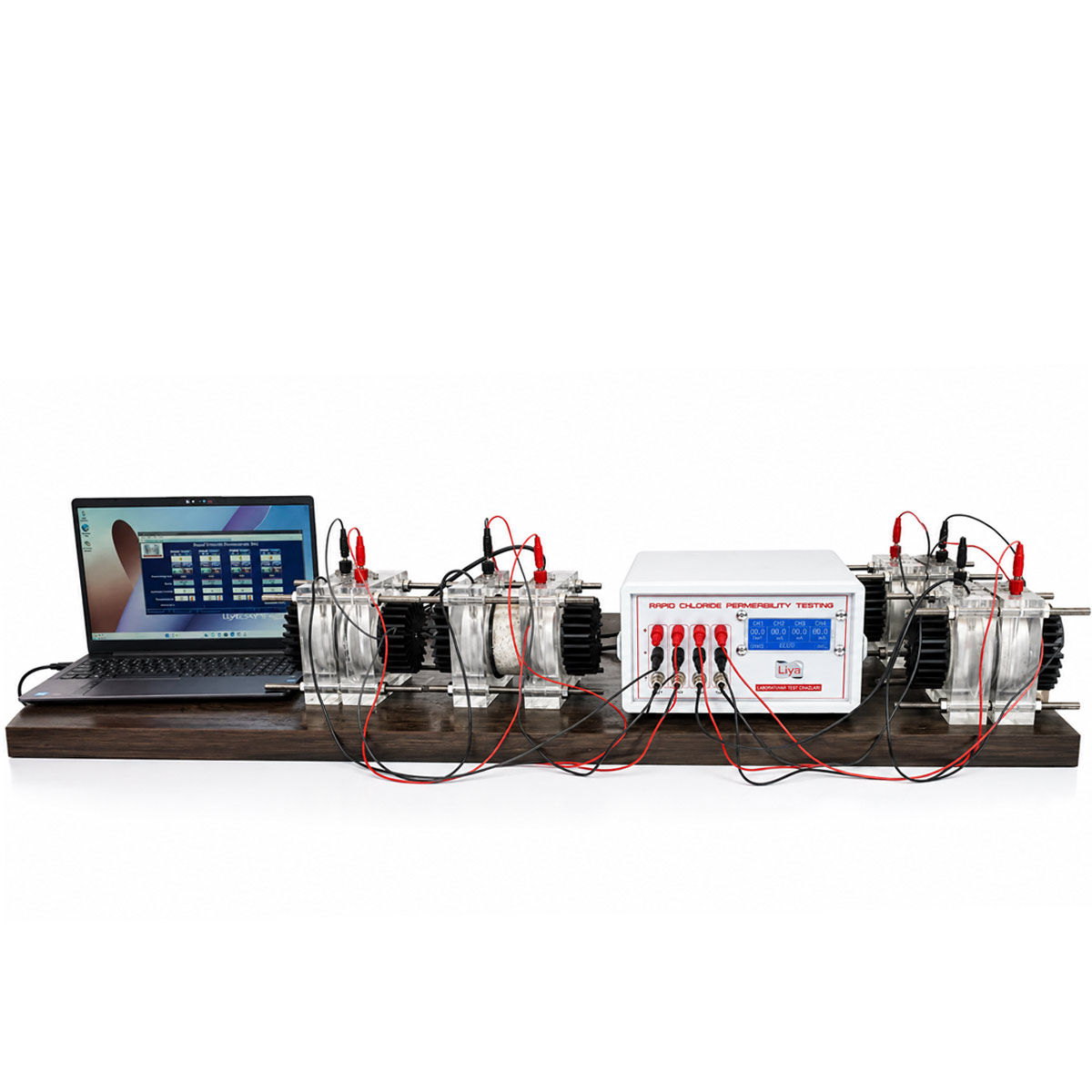
- USB Connection: Transfers test data to computer software
- Data Reporting: Creates individual records for each test channel
- Sealed Test Cells: Gaskets help reduce solution leakage
- Primary Standard: ASTM C1202/C1202M
- Related Method: AASHTO T 277
| Product Code | Product Name | Number of Channels | Current Accuracy | Recording Interval |
| LT-C0900 | Rapid Chloride Permeability Test Apparatus | 4 | ±0.1 mA | 1–10 min |
| LT-C0901 | Rapid Chloride Permeability Test Apparatus | 8 | — | — |

LT_BETON_KLORGECIRGENLIK_
What Is a Rapid Chloride Permeability Test Apparatus?
The Rapid Chloride Permeability Test provides a rapid electrical indication of hardened concrete’s resistance to chloride ion penetration. During the test, the system measures the electrical current passing through a prepared concrete specimen.
The software records the current throughout the test and calculates the total electrical charge in coulombs. Laboratories can then compare different concrete mixtures under common test conditions.
Chloride exposure can increase the risk of reinforcement corrosion in concrete structures. Therefore, RCPT testing provides useful information for concrete used in bridges, tunnels, marine structures and other chloride-exposed environments. ASTM C1202-25 defines this electrical conductance method as a rapid indication of resistance to chloride ion penetration.
4-Channel and 8-Channel Models
LİYA Test offers two configurations for different laboratory workloads.
The LT-C0900 provides four independent test channels, allowing four specimens to run simultaneously. The LT-C0901 increases the system capacity to eight channels.
Independent channels improve laboratory productivity because users can monitor several concrete specimens during the same test period.
For the LT-C0900, the measuring system provides ±0.1 mA current accuracy. In addition, users can select a data recording interval between 1 and 10 minutes.
How Is the RCPT Test Performed?
First, the laboratory prepares the concrete specimen according to the applicable procedure. The operator seals the curved surface and completes the required conditioning process.
Next, the specimen is mounted between two test cells. The operator adds the specified solutions to the appropriate sides of the specimen and starts the test.
The electrical potential drives current through the concrete. The system records this current throughout the procedure.
At the end of the test, the software calculates the total charge passed in coulombs. This value provides the electrical indication used to compare the concrete’s resistance to chloride ion penetration.
Temperature and Current Monitoring
Electrical current can change during the test as specimen conditions change. Therefore, continuous monitoring provides important information throughout the procedure.
The system tracks current values independently for each channel. Temperature monitoring also helps the operator observe heating that may occur during testing.
Adjustable recording intervals allow laboratories to create detailed datasets without manually recording every reading.
PC Software and Test Reporting
The USB connection transfers test information directly to computer software.
Users can monitor individual channels, review current values and store results for later evaluation. Separate test records also make it easier to compare different concrete mixtures or production batches.
This digital workflow reduces manual data handling and simplifies laboratory reporting.
ASTM C1202 Rapid Chloride Testing
The current ASTM C1202-25 standard covers the electrical conductance of concrete as a rapid indication of its resistance to chloride ion penetration. ASTM currently lists C1202-25 as the active version.
The test does not directly determine a chloride diffusion coefficient. Instead, it evaluates electrical conductance and uses the total charge passed as an indicator of chloride ion penetrability.
Reliable Multi-Channel RCPT Testing
The Rapid Chloride Permeability Test Apparatus combines multi-channel testing, precise current measurement and digital data management in one laboratory system.
As a result, laboratories can compare concrete mixtures efficiently while maintaining consistent test monitoring. The 4-channel and 8-channel configurations also provide flexibility for both routine quality-control work and higher-volume concrete durability testing.