
Surface Soil Sampler
STANDART: ASTM D2937; CNR No:22; BS 1377:9
LT-S0085 Surface Soil Sampler
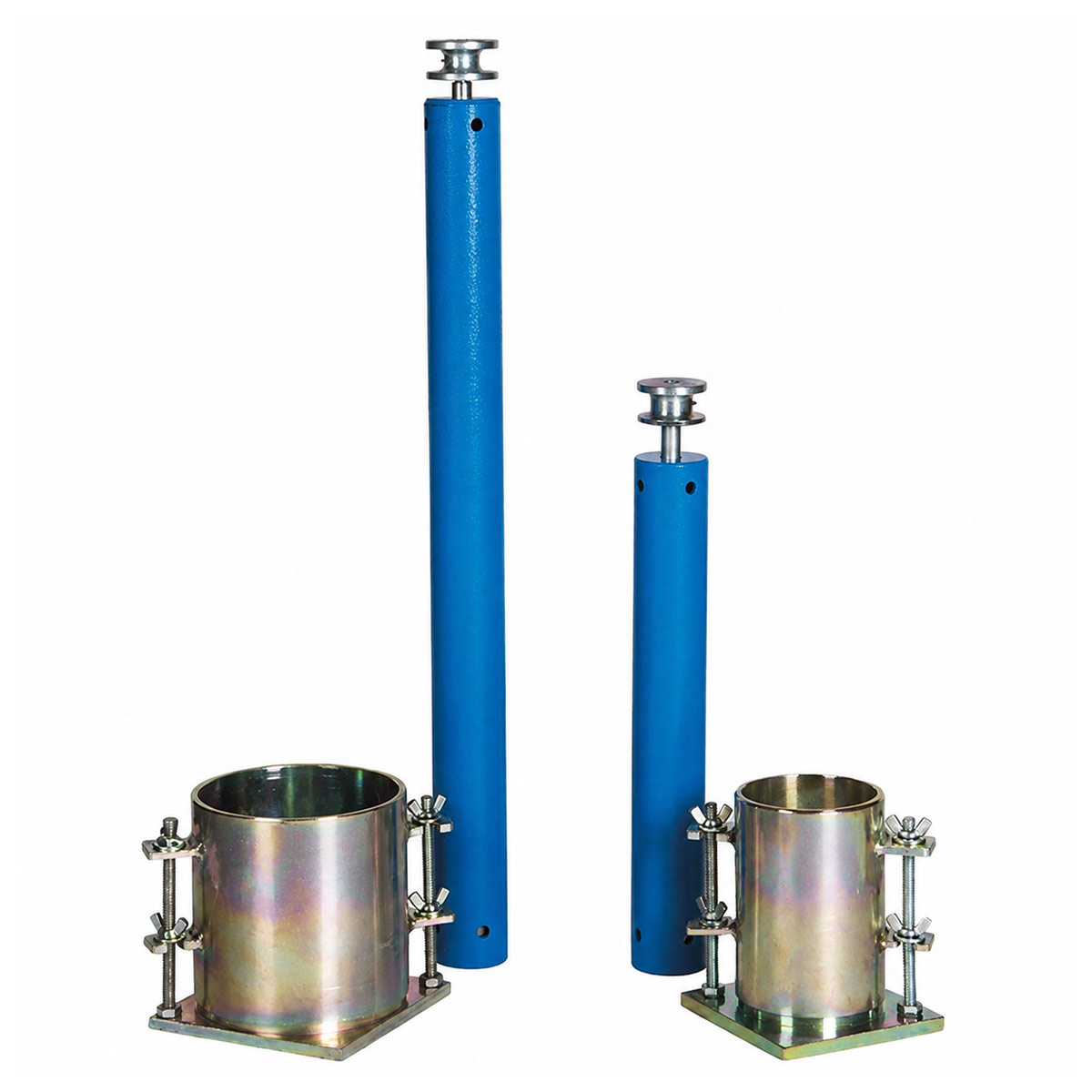
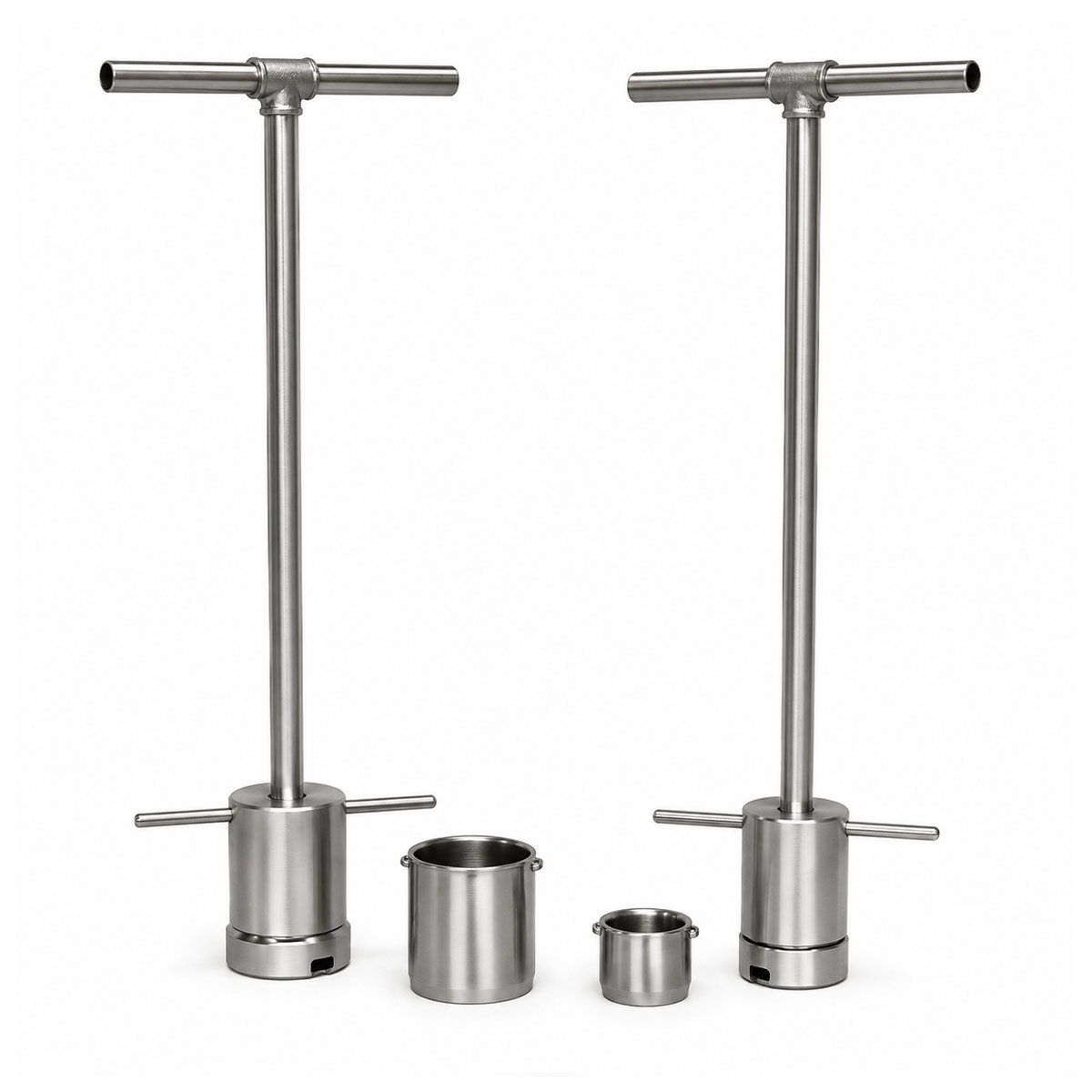
The Surface Soil Sampler is designed to obtain standard-volume cylindrical specimens from compacted fills and natural soils for in-situ density determination and field sampling. The sampler is driven vertically into the soil using a sliding rammer. After extraction, the specimen is trimmed and weighed. LİYA offers different sampler sizes for ASTM/CNR and BS-type applications. The steel components are galvanized for corrosion protection.
- In-situ density testing: Supports determination of soil density near the ground surface.
- Standard-volume sampling: Collects a cylindrical specimen with a known cutter volume.
- Field soil sampling: Suitable for compacted fills and suitable natural soils.
- Drive-cylinder principle: The sampler is driven vertically into the soil.
- Sliding rammer system: Transfers controlled impact force to the sampler.
- ASTM/CNR versions: Ø3 in and Ø4 in sampler configurations are available.
- BS-type versions: Ø73, Ø100 and Ø150 mm options are listed.
- Ø73 mm model: Uses a Ø73 × 66 mm core cutter and 5 kg driving rammer.
- Ø100 mm model: Uses a Ø100 × 130 mm core cutter.
- Ø150 mm model: Uses a Ø150 × 180 mm core cutter.
- Galvanized steel construction: Helps protect components against corrosion.
- Mechanical operation: Requires no electrical connection.
- Field application: Suitable for earthworks, embankments and compaction-control studies.
- Product family: LT-S0085, LT-S0086 and LT-S0087.
| Product Code | Product Name | Core Cutter Diameter | Weight (kg) |
| LT-S0085 | Surface Soil Sampler | Ø73 mm | 10 |
| LT-S0086 | Surface Soil Sampler | Ø100 mm | 13.5 |
| LT-S0087 | Surface Soil Sampler | Ø150 mm | 16 |

What Is a Surface Soil Sampler?
The Surface Soil Sampler is a mechanical field testing apparatus designed to obtain cylindrical soil specimens of known volume from locations close to the ground surface.
The system is commonly used for sampling compacted fills, embankments and suitable natural soils. Once the specimen has been collected, its mass and the known volume of the core cutter can be used to determine the in-situ density of the soil.
The LİYA Surface Soil Sampler is manufactured from steel and protected by a galvanized coating to improve resistance to corrosion during field use. Different sampler configurations are available according to the required test procedure.
Drive-Cylinder Sampling Principle
The sampler uses a simple mechanical drive-cylinder principle.
The operator first prepares and levels the test surface. The core cutter or thin-wall sampling tube is then positioned vertically on the soil.
A driving head is installed above the sampler. The sliding rammer is repeatedly raised and allowed to fall onto the driving head. Each impact pushes the sampling tube deeper into the soil.
Once the cutter is completely filled, it is carefully removed from the ground. Excess material at both ends is trimmed so that the soil is level with the cutter edges.
The resulting specimen therefore occupies a known volume.
In-Situ Soil Density Determination
After trimming, the sampler and specimen are weighed.
The empty cutter mass is subtracted from the combined mass to determine the mass of wet soil. Because the internal volume of the cutter is known, the laboratory can calculate the in-place wet density.
If the moisture content of the specimen is determined separately, the dry density can also be calculated.
This information is useful when evaluating the quality of compacted soil layers and comparing field results with laboratory compaction targets.
ASTM D2937-24
The current ASTM standard is ASTM D2937-24 — Standard Test Method for Density of Soil in Place by the Drive-Cylinder Method. ASTM lists this edition as active.
The method covers determination of in-place density near the ground surface by driving a thin-walled cylinder into the soil.
ASTM states that the method is particularly applicable to soils that do not contain significant quantities of particles larger than 5 mm and that can remain inside the drive cylinder after sampling.
The standard also notes that the method can be used on compacted fine-grained materials in structural fills, highway embankments and earth dams.
Soil Conditions and Test Limitations
The drive-cylinder technique is not appropriate for every soil.
ASTM D2937-24 warns against using the method on soils that may deform excessively during sampling, including some soft, organic, highly plastic, noncohesive or saturated materials. Very hard soils can also be difficult to penetrate with the cutter.
Large particles can interfere with the cutter and may create voids around the specimen. For this reason, the operator should inspect the material before selecting the test method.
ASTM/CNR Sampler Options
LİYA lists two ASTM/CNR-type sampler sizes: Ø3 in and Ø4 in.
Both configurations use a drive head, a 5 kg sliding drive hammer and a thin-wall sampling tube. The hammer falls freely onto the driving head to push the tube into the soil.
These versions provide alternative specimen diameters for different field sampling requirements.
BS-Type Surface Soil Samplers
LİYA also lists three metric BS-type configurations.
The Ø73 mm version uses a Ø73 × 66 mm high core cutter and a 5 kg driving rammer.
The Ø100 mm version uses a Ø100 × 130 mm high core cutter, while the larger version uses a Ø150 × 180 mm core cutter.
This allows the user to select an appropriate specimen size according to the material and testing procedure.
BS 1377-9:2025
The old product page currently shows BS 1377:9. The current edition is BS 1377-9:2025.
BSI specifically includes in-situ density tests within the standard. The published contents also identify a core cutter apparatus for soil density determination, making this current BS reference directly relevant to the Surface Soil Sampler.
Overall, the Surface Soil Sampler provides a straightforward mechanical method for collecting standard-volume soil specimens and supporting field density determination. Different cutter diameters, manual operation and galvanized steel construction make the system suitable for routine geotechnical and earthworks testing.