
Reference Colour Scale

STANDART: TS EN 1744-1, ASTM C40

LT-A0047         Organic Impurities Colour Scale

LT-A0047/1     Colour Scale Bottle

LT-A0047/2    Colour Scale Bottle

LT-G0717          Sodium Hydroxide

    PRODUCT DETAILS

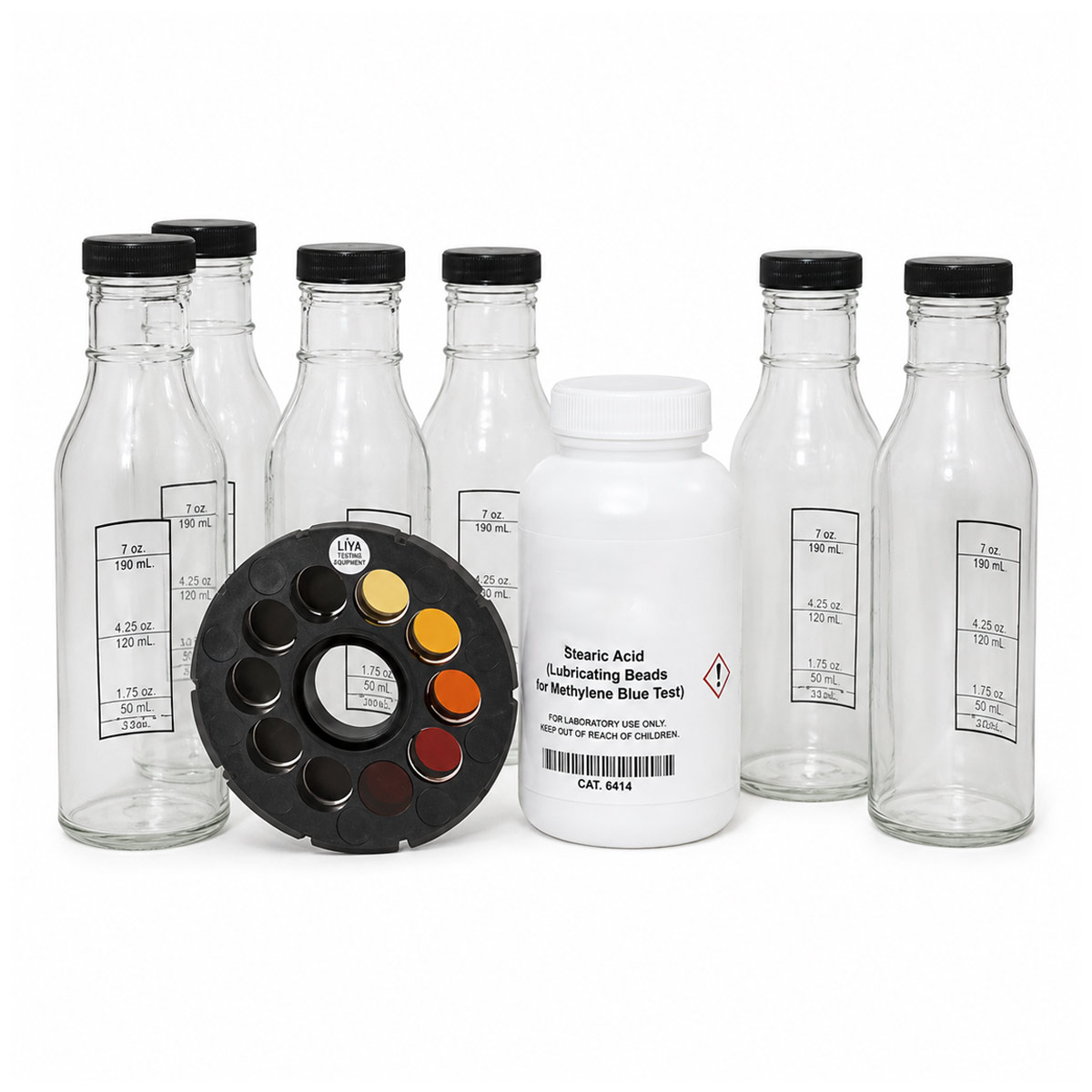
    Reference Colour Scale is used for the approximate determination of potentially harmful organic impurities in fine aggregates. The test compares the colour of the prepared aggregate solution with standard reference colours, providing a fast visual indication of possible organic contamination. The set includes five standard reference colours, test bottles and sodium hydroxide required for sample preparation.

    • Organic Impurities Testing: Supports preliminary assessment of potentially harmful organic matter in fine aggregates.
    • Five Reference Colours: Provides 5 standard colours for visual comparison.
    • Simple Visual Evaluation: The prepared sample colour is directly compared with the reference scale.
    • Fine Aggregate Testing: Suitable for sand and other fine aggregate samples intended for concrete.
    • Test Bottles: Separate colour scale bottles are available for sample preparation.
    • Sodium Hydroxide: LT-G0717 Sodium Hydroxide is available for preparation of the test solution.
    • No Electrical Power Required: Suitable for both laboratory and field screening.
    • Fast Test Setup: Simple components reduce preparation and equipment requirements.
    • Preliminary Screening: A darker colour indicates that further investigation of organic impurities may be required.
    • Standards: EN 1744-1 and ASTM C40/C40M.
    TECHNICAL SPECIFICATIONS
    Product Code Product Name Specification
    LT-A0047 Organic Impurities Colour Scale 5 Standard Colours / 5 Organic Scale References
    LT-A0047/1 Colour Scale Bottle —
    LT-A0047/2 Colour Scale Bottle —
    LT-G0717 Sodium Hydroxide Chemical Reagent
    TECHNICAL DOCUMENT

    LT_REFRENKSKALASI_

    Description
    What Is an Organic Impurities Colour Scale?

    The Organic Impurities Colour Scale is used for the preliminary evaluation of potentially harmful organic matter in fine aggregates intended for concrete. The method is based on comparing the colour of a prepared aggregate solution with a standard reference colour.

    Organic impurities may be present in natural sands and other fine aggregates. Some of these materials can adversely affect cement hydration or mortar strength. For this reason, colour comparison provides a quick screening method before more detailed testing is performed.

    ASTM describes this test as a preliminary determination of the acceptability of fine aggregate with respect to organic impurities.

    Five Standard Reference Colours

    The LİYA Test scale contains five standard reference colours arranged for easy visual comparison.

    During testing, the liquid above the fine aggregate sample is observed after the required preparation and waiting period. The operator compares its colour with the reference scale.

    A lighter result generally indicates a lower likelihood of harmful organic contamination. A colour darker than the specified reference indicates that additional investigation may be necessary.

    How Is the Organic Impurities Test Performed?

    First, the fine aggregate sample is placed into the appropriate test bottle. A sodium hydroxide solution is then added according to the applicable test procedure.

    The bottle is closed and the sample is mixed thoroughly. After the specified standing period, the colour of the liquid above the aggregate is examined.

    The operator compares this colour with the Reference Colour Scale. The result provides a rapid indication of whether potentially harmful organic impurities may be present.

    ASTM C40/C40M Evaluation

    The current active ASTM reference is ASTM C40/C40M-20. It covers two procedures for approximate determination of harmful organic impurities in fine aggregates used in concrete: one based on a standard colour solution and another using a glass colour standard.

    ASTM also states that if the test sample produces a colour darker than the standard, additional testing according to ASTM C87/C87M is advisable. That method evaluates the actual effect of the organic impurities on mortar strength.

    EN 1744-1 Aggregate Chemical Testing

    BS EN 1744-1:2009+A1:2012 is currently listed by BSI as the current release covering chemical analysis procedures for aggregates. A revision project is in progress, but the 2009+A1:2012 edition remains the published current version at present.

    The Organic Impurities Colour Scale therefore offers a simple and economical screening solution for aggregate laboratories. Its visual comparison method, compact test bottles and straightforward sample preparation make routine fine aggregate quality checks faster and easier.