
Bag Seal Integrity Tester | Vacuum Leak Test

STANDART:  –

LT-G0091    Bag Seal Integrity Tester | Vacuum Leak Test

    PRODUCT DETAILS

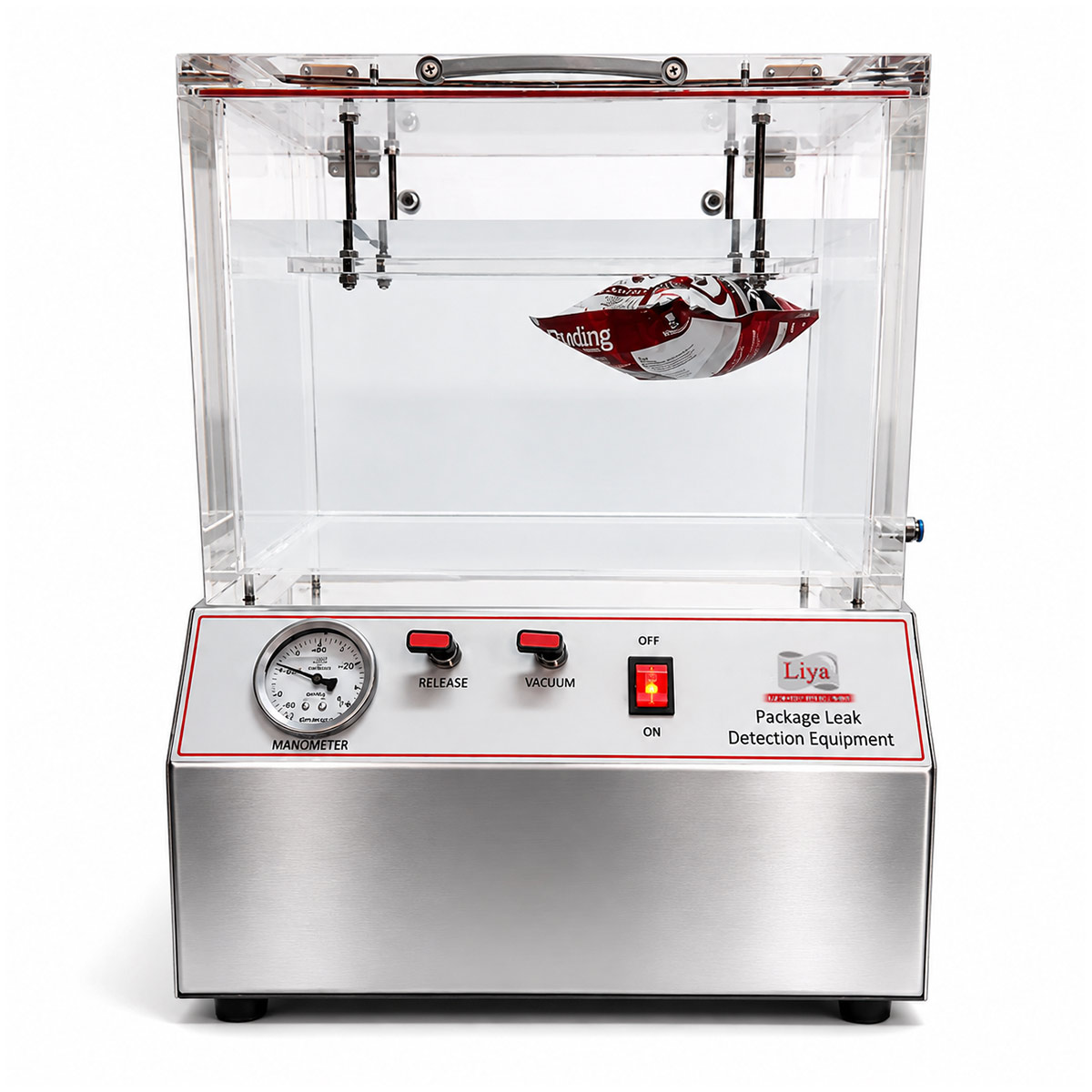
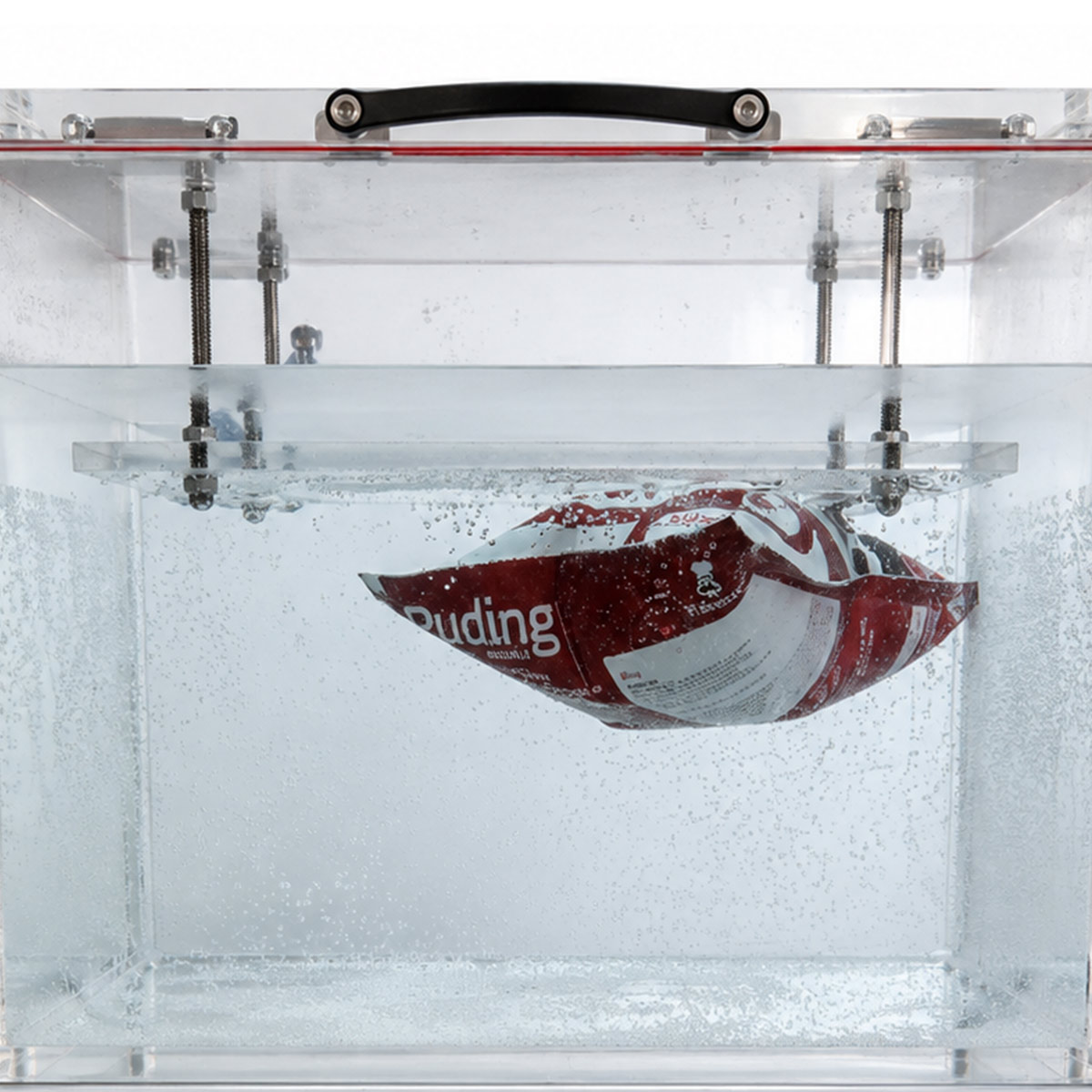
    The Bag Seal Integrity Tester is designed to detect leaks and sealing defects in bags and packages using a vacuum-assisted immersion method. The sample is placed in the water-filled test chamber and exposed to high vacuum. If a leak is present, air escapes from the package and forms visible bubbles in the water, allowing the operator to identify weak seals, welding defects or other leakage points quickly.

    • Product code: LT-G0091
    • Product name: Bag Seal Integrity Tester
    • Test method: Vacuum leak test
    • Application: Seal integrity control of bags and packages
    • Test principle: The sample is immersed in water and exposed to vacuum
    • Leak detection: Escaping air bubbles indicate leakage points
    • Inspection areas: Welds, seams, closures and package surfaces
    • Dimensions: 60 × 60 × 80 cm
    • Approx. weight: 50 kg
    • Product category: General Laboratory Equipment
    TECHNICAL SPECIFICATIONS
    Product Code Product Name Dimensions (cm) Weight (kg)
    LT-G0091 Bag Seal Integrity Tester 60 × 60 × 80 50


    TECHNICAL DOCUMENT

    Description
    What Is a Bag Seal Integrity Tester?

    The Bag Seal Integrity Tester is a laboratory device used to identify leaks and sealing defects in flexible bags and packages.

    The system uses a vacuum-assisted water immersion method. The package sample is placed inside a water-filled chamber and then exposed to vacuum.

    If the package contains a leak, the air inside the package expands and escapes through the defective area. The escaping air forms visible bubbles in the water.

    This allows the operator to identify the presence and approximate location of the leakage point.

    Vacuum Leak Test Principle

    During the test, the sample is completely positioned inside the test chamber.

    The vacuum system then reduces the pressure around the package. As the external pressure decreases, the air trapped inside the package expands.

    If there is a weak seam, pinhole, welding defect or other leakage path, air escapes through that point and produces bubbles in the surrounding water.

    The operator can therefore perform a direct visual assessment without complicated measuring procedures.

    Package Seal Inspection

    The tester can support inspection of different package areas such as:

    • heat-sealed sections
    • welded areas
    • seams
    • closures
    • package surfaces
    • possible pinholes
    • weak sealing points

    This makes the system practical for routine packaging quality control.

    Quality Control Applications

    Vacuum leak testing can be used during:

    • packaging production
    • laboratory quality control
    • package development
    • seal verification
    • routine sample inspection
    • manufacturing process checks

    The visual test principle helps operators detect defective packages quickly.

    LT-G0091 Technical Structure

    The LT-G0091 Bag Seal Integrity Tester has overall dimensions of 60 × 60 × 80 cm.

    The approximate weight of the device is 50 kg.

    Its chamber-based construction allows the sample to be observed directly during the vacuum test.

    Practical Visual Leak Detection

    One of the main advantages of the system is its straightforward inspection method.

    The operator does not need to interpret complex electronic data. Instead, leakage is indicated by visible air bubbles appearing from the package while it is under vacuum.

    This provides a simple and practical method for checking package integrity.

    Laboratory and Packaging Applications

    The system can be used for suitable bags, pouches and packaged samples where vacuum leak inspection is required.

    The exact testing conditions should be selected according to the package type, material and internal laboratory procedure.

    Overall, the Bag Seal Integrity Tester provides a practical solution for identifying leakage points in packaged products through a vacuum-assisted visual bubble test.