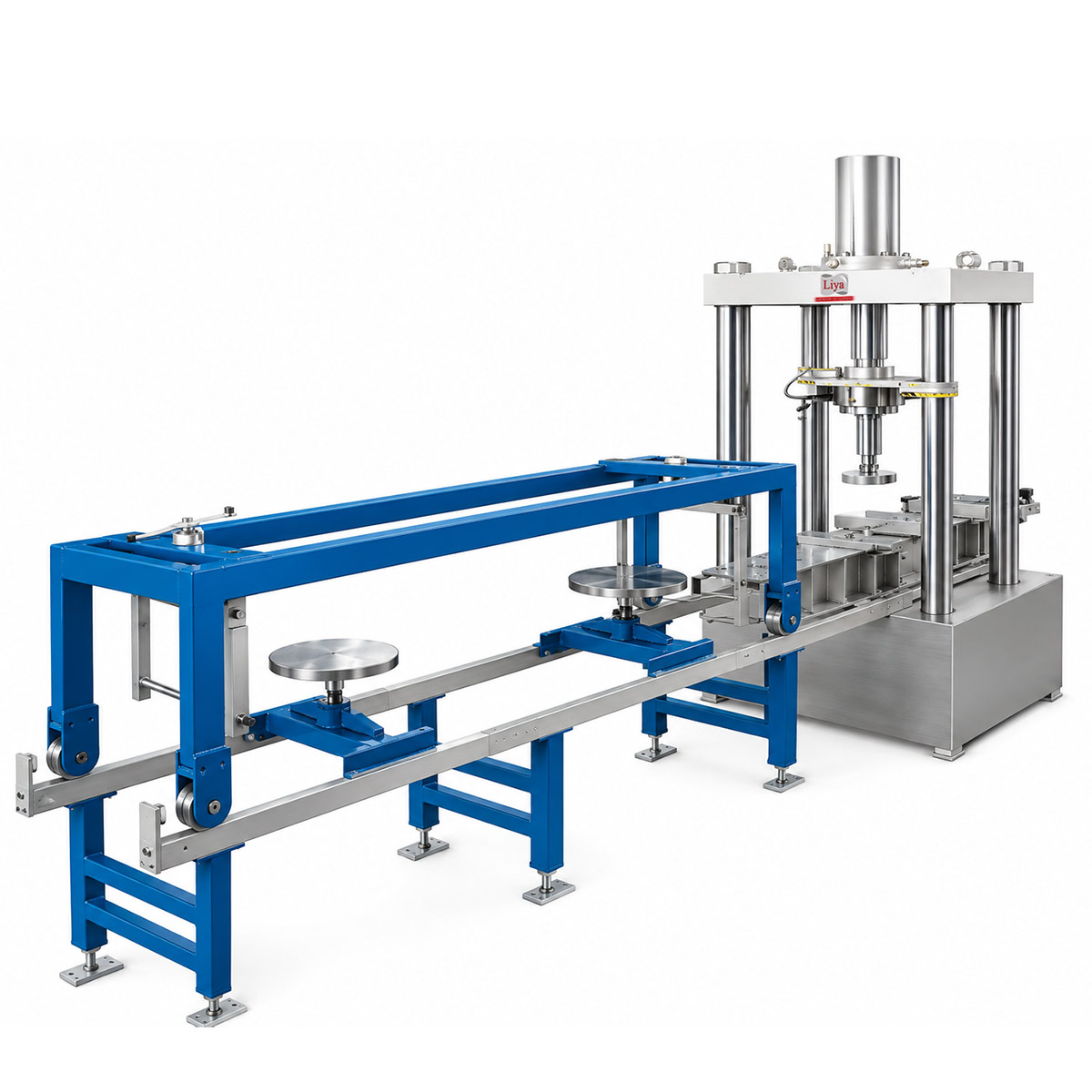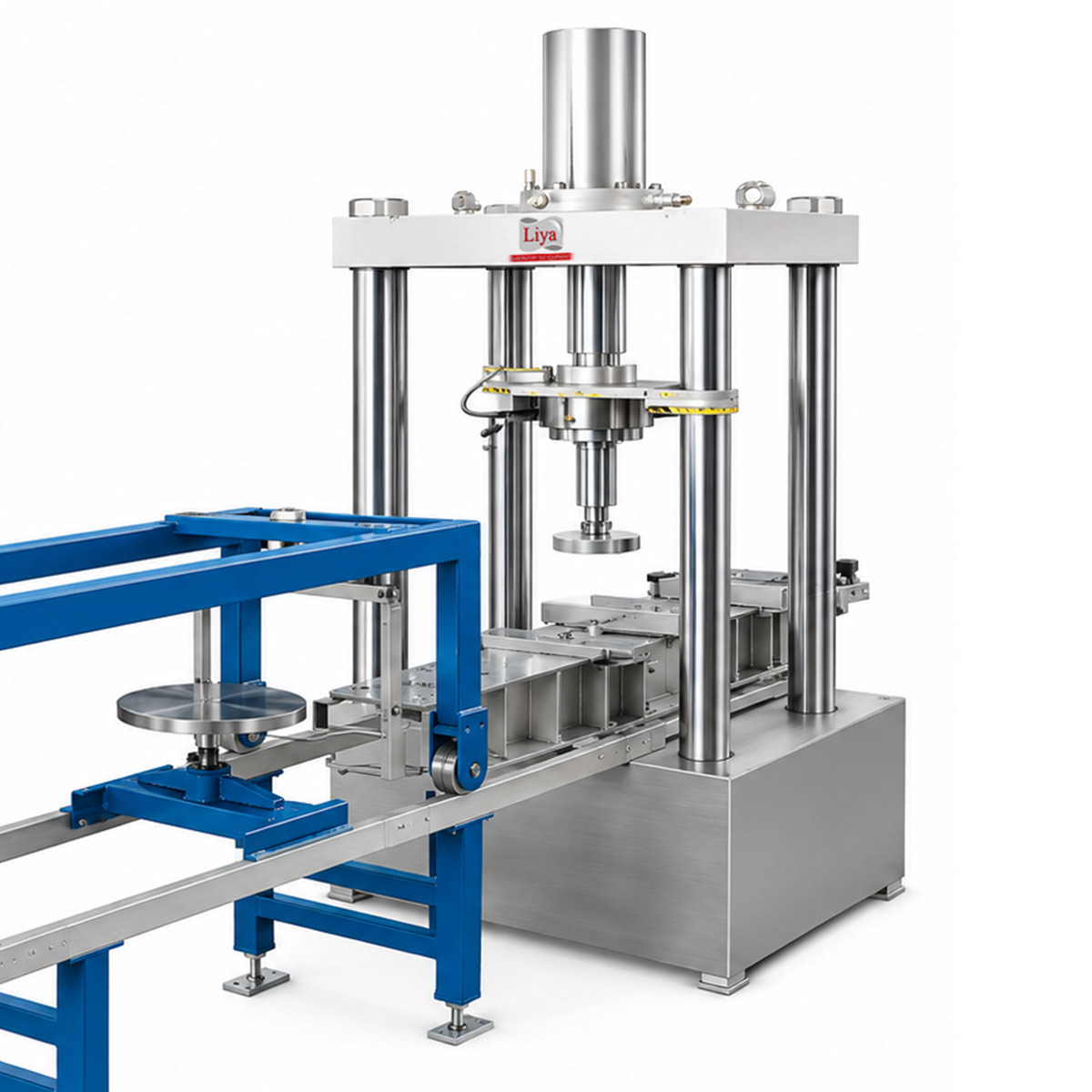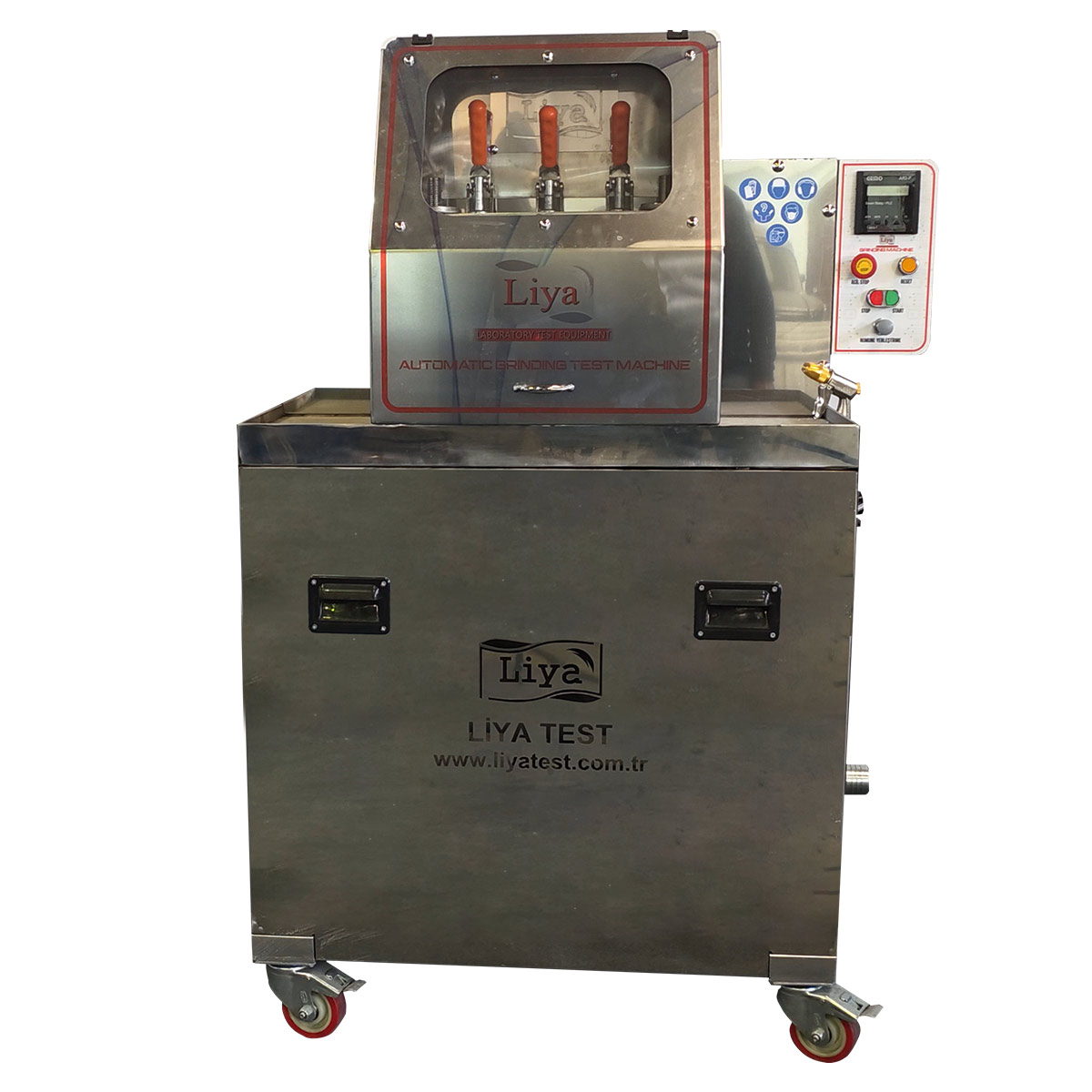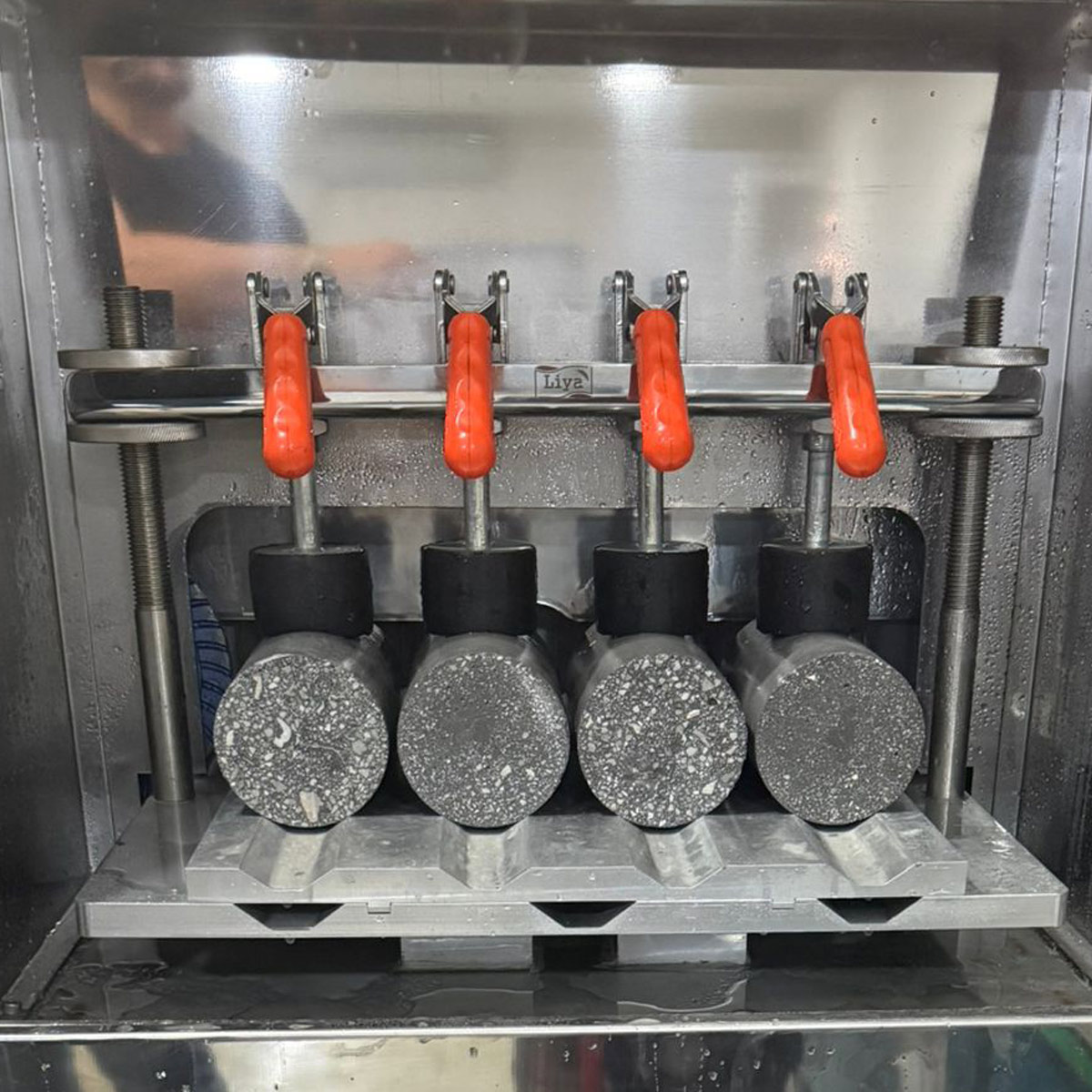

Concrete Water Permeability Test Set
STANDART: EN 12390-8
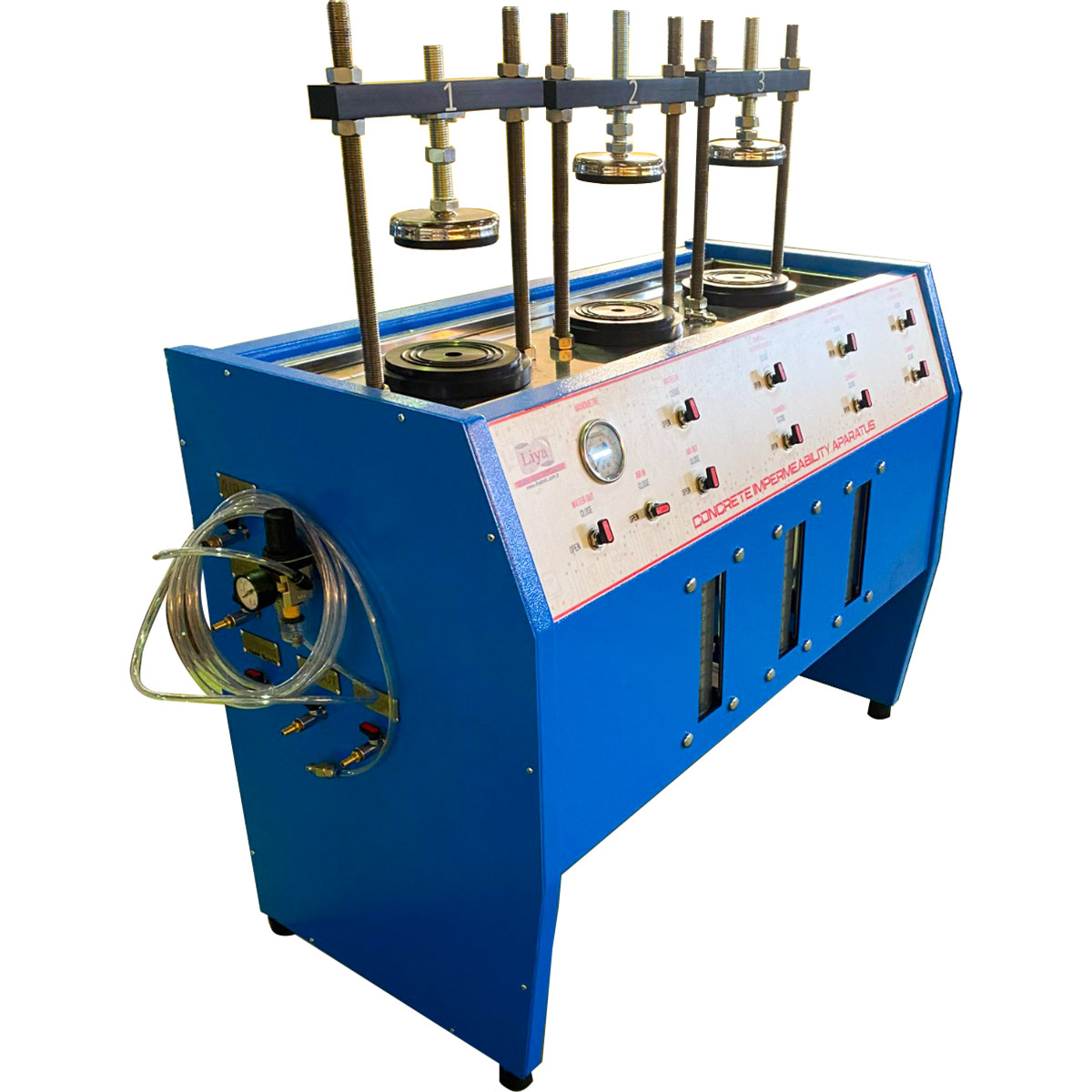
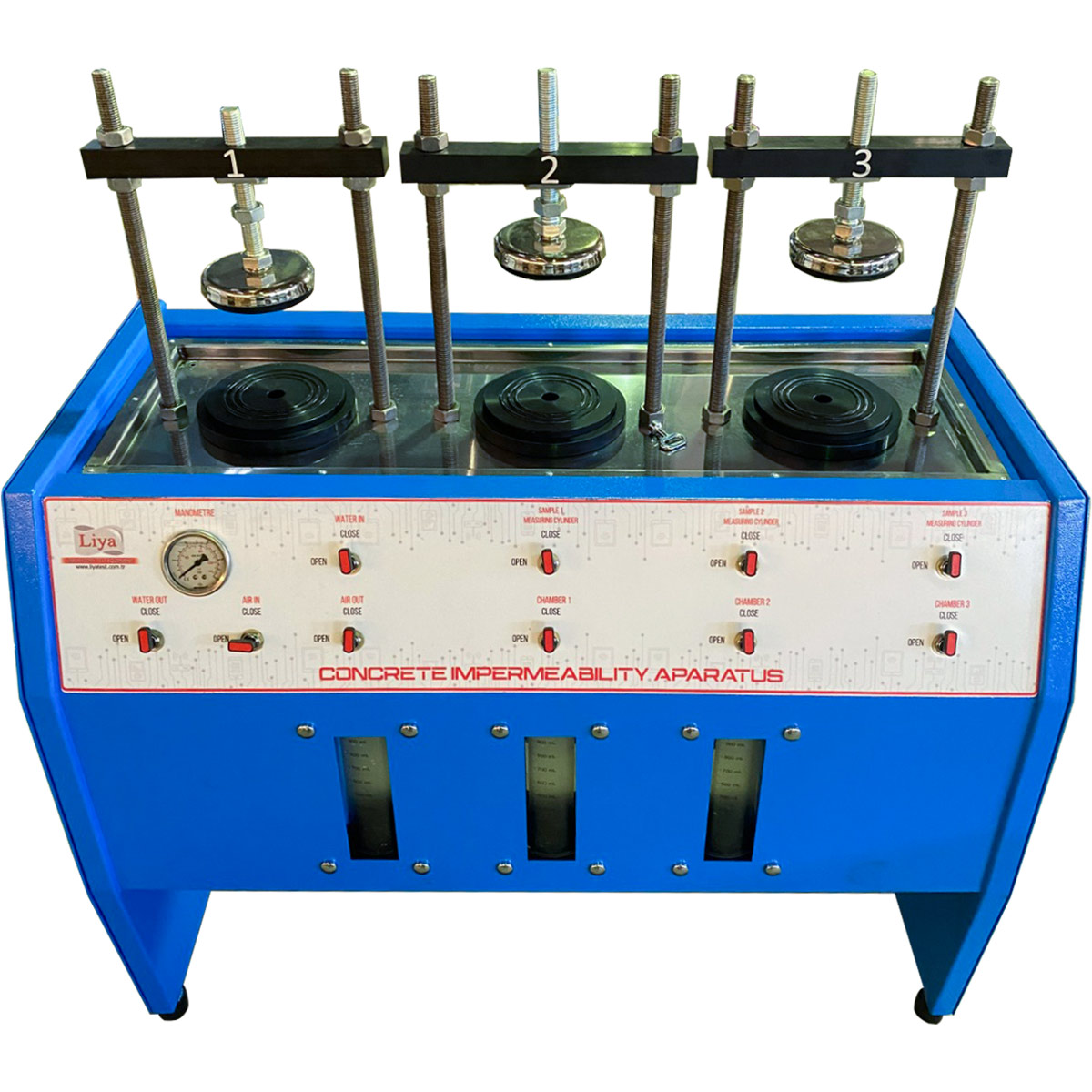
LT-C0170 Concrete Water Permeability Test Set | 3 Specimen Capacity
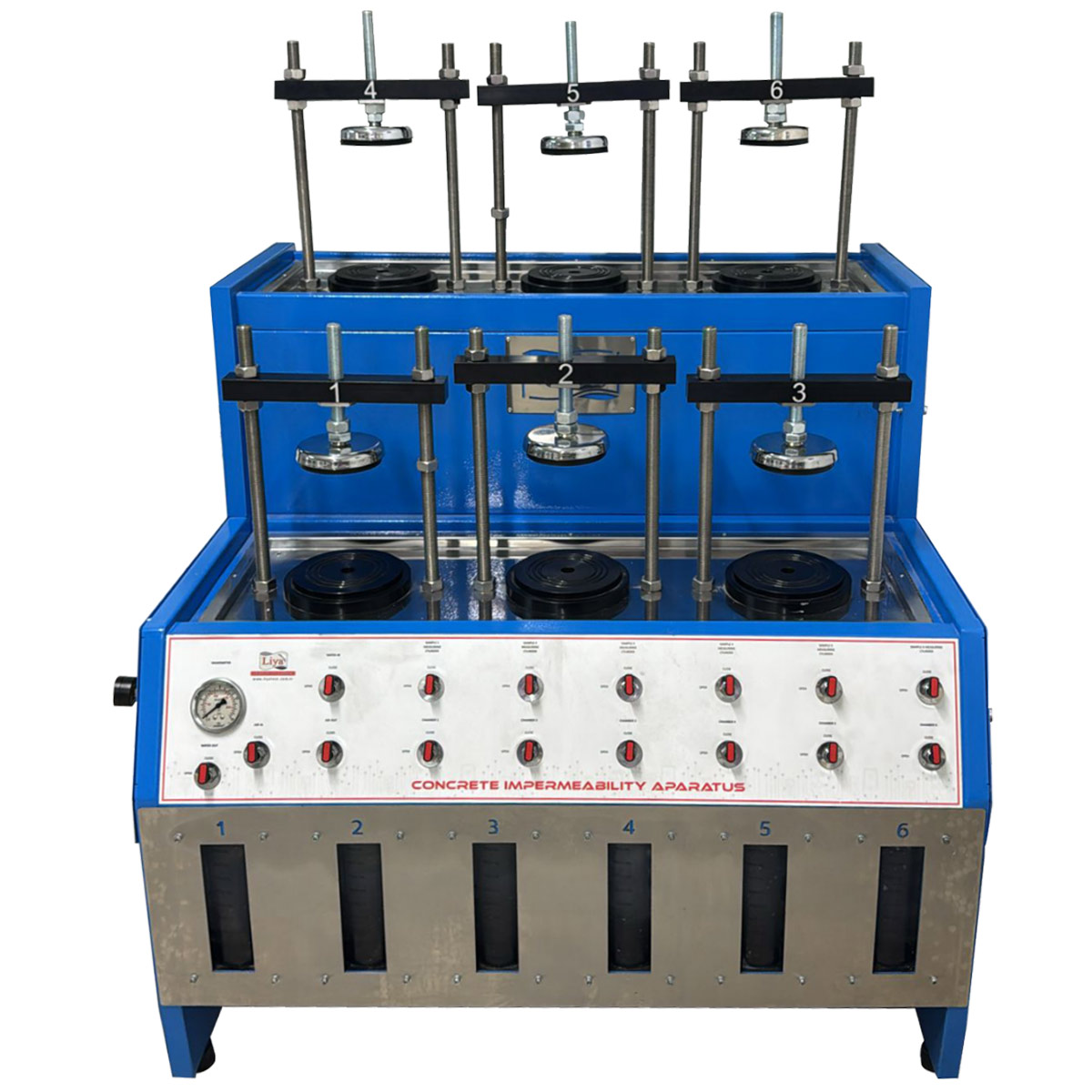
LT- C0171 Concrete Water Permeability Test Set | 6-Specimen Capacity
LT- G0225 Air Compressor | 8 bar, 25 L
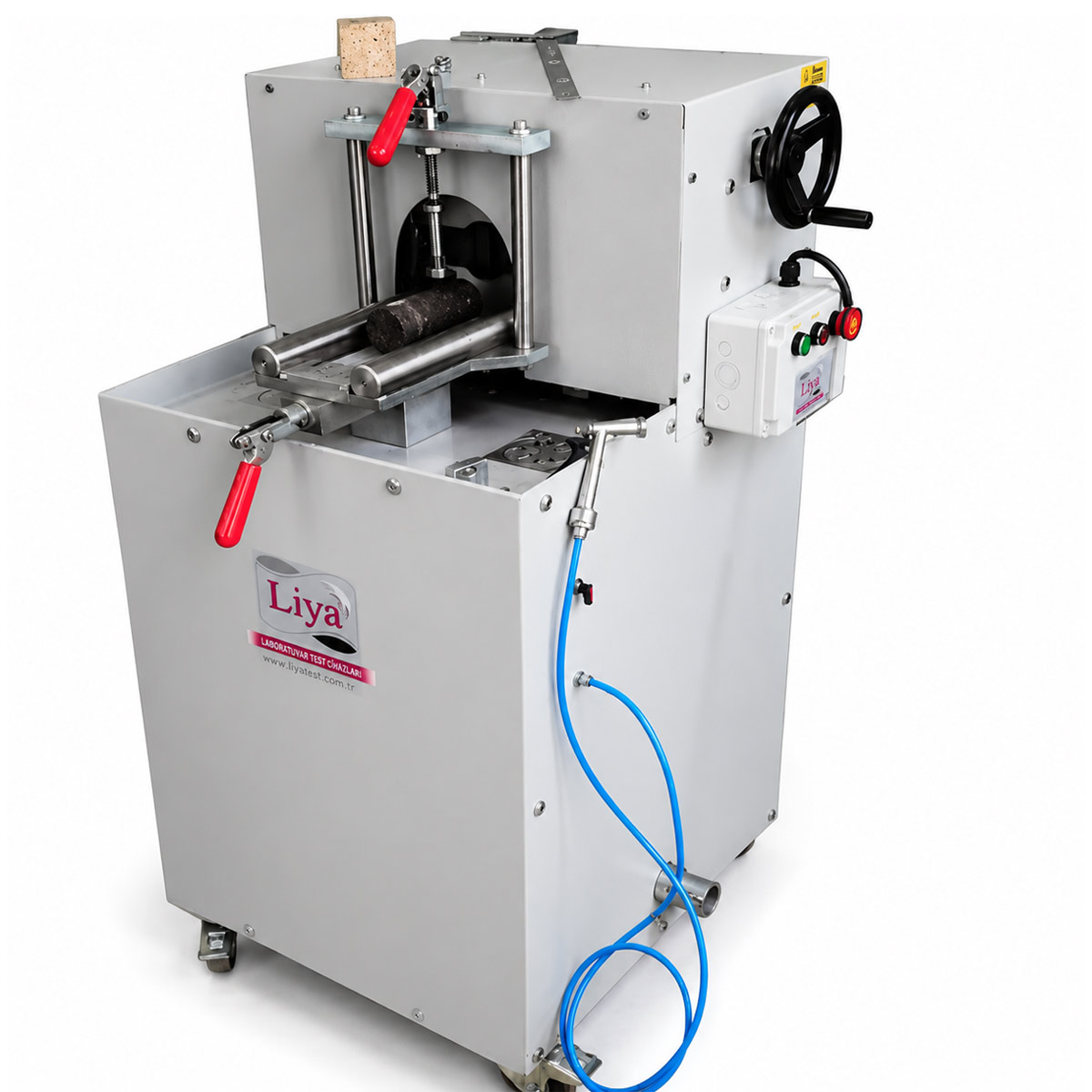
Concrete Water Permeability Test Set determines the depth of penetration of water under pressure in hardened concrete specimens. The system applies controlled water pressure to the specimen surface for a specified test period. After testing, the specimen is split and the maximum water penetration depth is measured. LİYA Test offers 3-specimen and 6-specimen models, allowing laboratories to select the appropriate capacity for routine or high-volume testing.
- Application: Determination of water penetration depth in hardened concrete
- Model Options: 3-specimen and 6-specimen capacities
- LT-C0170: Tests up to 3 specimens simultaneously
- LT-C0171: Tests up to 6 specimens simultaneously
- Cube Specimens: Supports 150 × 150 × 150 mm and 200 × 200 × 200 mm
- Cylinder Specimens: Supports 100 × 200 mm and 150 × 300 mm
- Maximum Pressure: 8 bar
- Pressure Control: Approximately 0.2 bar adjustment sensitivity
- Integrated Water Tank: Pressurized air directs water toward the specimens
- Independent Test Cells: Each specimen operates with an individual sealing gasket
- Pressure Regulation: Regulator and pressure gauge support controlled testing
- Air Compressor: Available separately
- Standard: EN 12390-8
| Product Code | Product Name | Dimensions (cm) | Weight (kg) | Power Supply |
| LT-C0170 | Concrete Water Permeability Test Set, 3-Specimen Capacity | 50 × 60 × 180 | 240 | — |
| LT-C0171 | Concrete Water Permeability Test Set, 6-Specimen Capacity | 50 × 60 × 180 | 280 | — |
| LT-G0225 | Air Compressor, 8 bar, 25 L | — | — | 220 V |

LT_BETON_PERMEABİLİTE_
What Is a Concrete Water Permeability Test Set?
The Concrete Water Permeability Test determines the depth of water penetration into hardened concrete under controlled pressure. The system applies pressurized water to the specimen surface for a defined period. After the test, the laboratory splits the specimen and measures the maximum penetration depth.
This test provides useful information about the resistance of concrete to water ingress. Therefore, it can support quality-control studies for concrete used in water-retaining structures, tunnels, basements, coastal structures and other moisture-exposed applications.
However, permeability results should not be evaluated alone. Concrete composition, curing conditions and environmental exposure also influence long-term performance.
3-Specimen and 6-Specimen Models
LİYA Test offers two different testing capacities.
The LT-C0170 can test up to three specimens simultaneously, while the LT-C0171 provides capacity for six specimens.
Both models support 150 × 150 × 150 mm and 200 × 200 × 200 mm cube specimens. They can also accommodate 100 × 200 mm and 150 × 300 mm cylindrical specimens.
Therefore, laboratories can work with different specimen geometries using the same test principle.
Controlled Pressure System
The system uses compressed air to pressurize the integrated water tank. A regulator controls the test pressure, while the pressure gauge allows the operator to monitor the applied value.
The equipment can apply pressures up to 8 bar. In addition, the operator can adjust the pressure with approximately 0.2 bar sensitivity.
This controlled arrangement helps laboratories maintain similar pressure conditions during repeated tests.
Independent and Sealed Test Cells
Each test position uses an individual sealing gasket. The gasket helps prevent water from escaping around the edges of the specimen.
Before testing, the operator should inspect the seals and confirm that each specimen sits correctly inside the test cell. Damaged or incorrectly positioned seals may affect the measurement.
Independent test positions also allow several specimens to be tested simultaneously while maintaining controlled sealing conditions.
How Is Water Penetration Depth Determined?
After the pressure application period is complete, the operator removes the specimen from the apparatus.
The specimen is then split in a direction perpendicular to the surface exposed to water. The wet penetration zone becomes visible on the fractured surface.
The laboratory measures the maximum penetration depth in millimeters. A lower penetration value generally indicates greater resistance to pressurized water ingress.
Testing According to EN 12390-8
EN 12390-8 specifies the determination of the depth of penetration of water under pressure in hardened concrete.
The method provides a standardized way to compare concrete mixtures under controlled laboratory conditions. ISO 1920-5 also includes procedures related to hardened concrete properties and water penetration.
Reliable Concrete Permeability Evaluation
The Concrete Water Permeability Test Set combines controlled pressure, multiple specimen configurations and independent test cells in one laboratory system.
As a result, laboratories can evaluate the resistance of hardened concrete to pressurized water in a controlled, repeatable and comparable manner. The 3-specimen and 6-specimen options also provide flexibility for different testing volumes and laboratory workloads.