
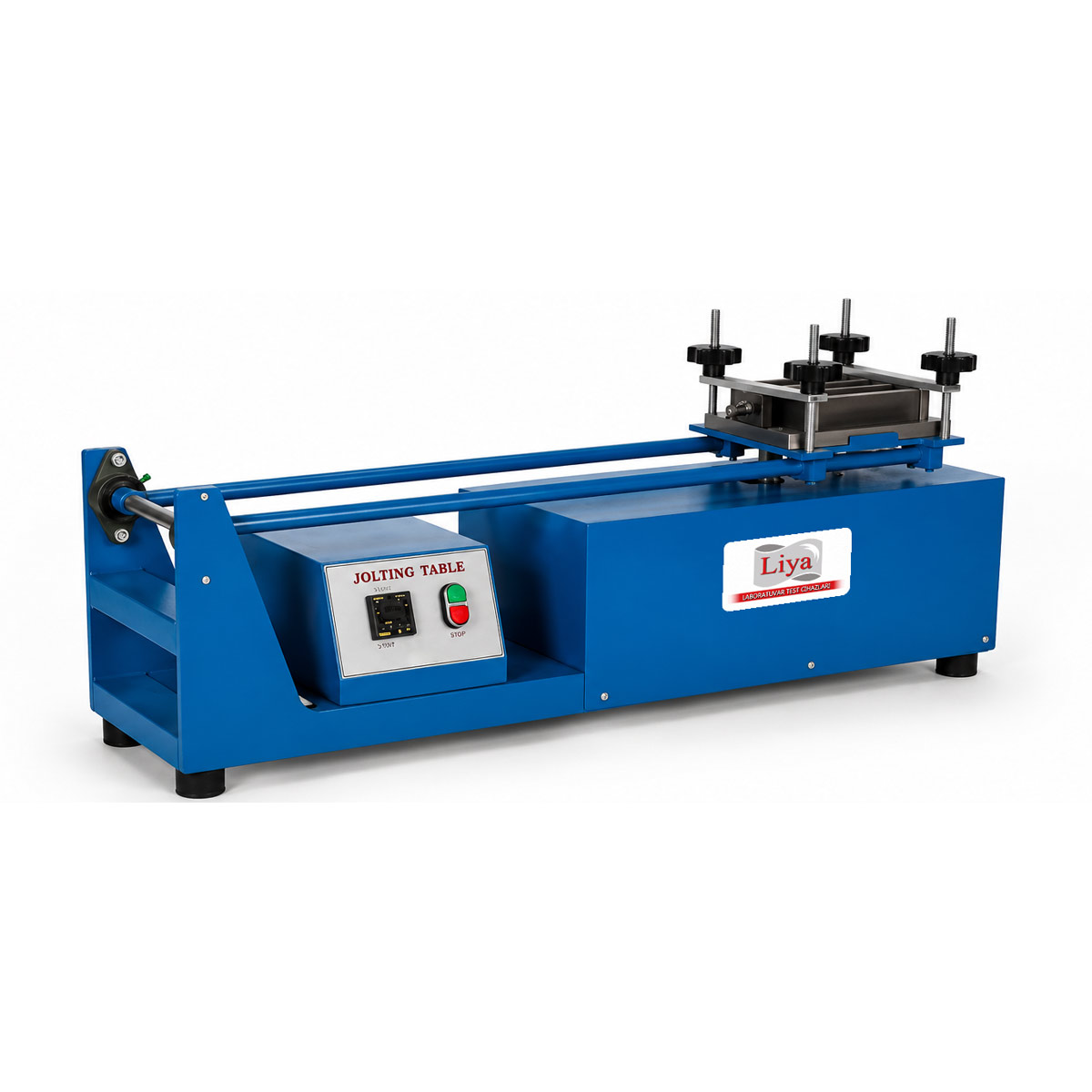
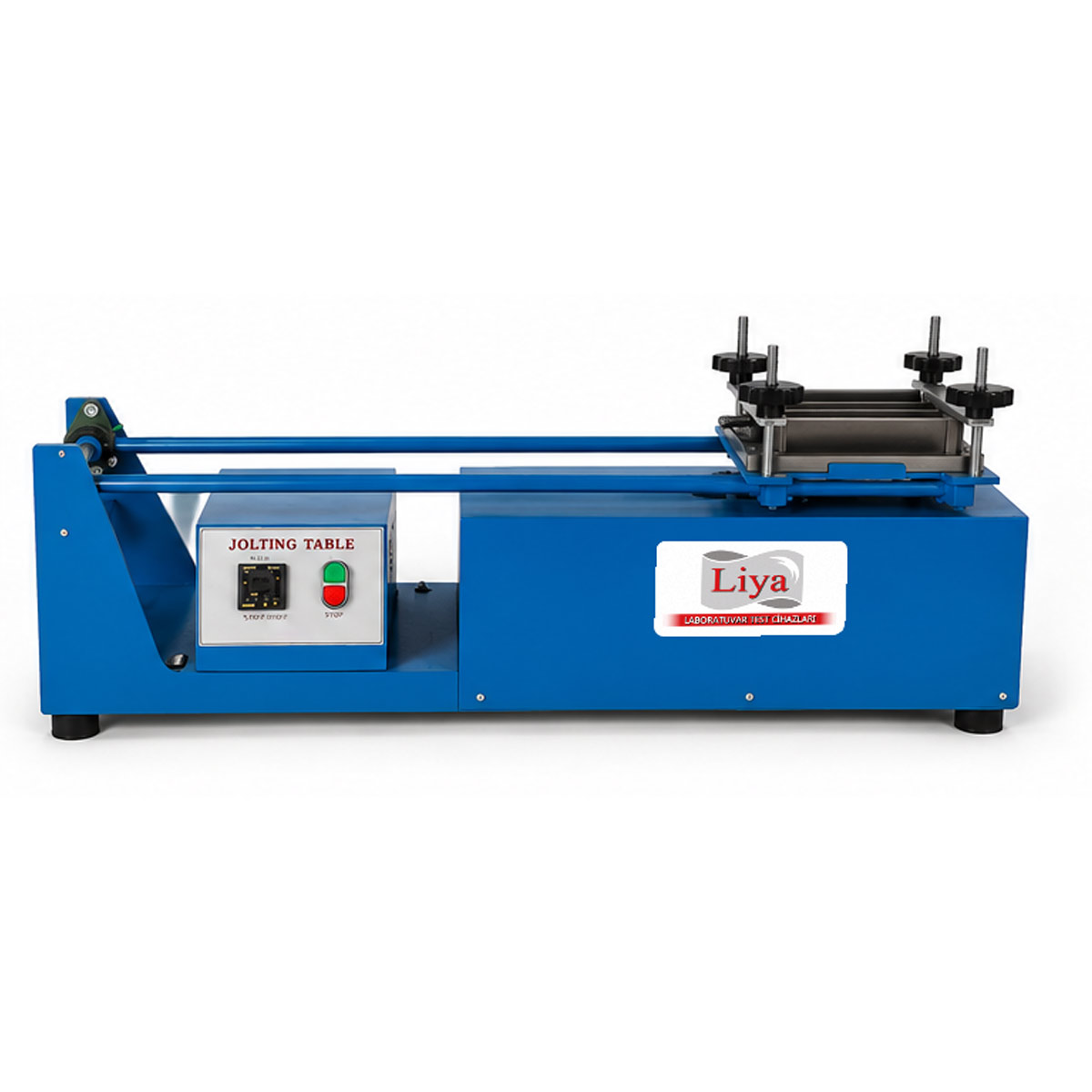
Jolting Table is designed for the controlled compaction of 40 × 40 × 160 mm cement mortar prisms used in strength testing. A motor-driven rotating cam raises and releases the mould table at 60 jolts per minute, providing a standardized 15 mm drop height. The digital counter automatically stops the machine when the preset number of jolts is completed, while the rapid mould locking system ensures practical and repeatable specimen preparation.
- Standard Mortar Specimens: Designed for three-gang 40 × 40 × 160 mm moulds.
- 60 Jolts per Minute: Motor-driven cam provides a regular compaction cycle.
- 15 mm Drop Height: Applies controlled impact energy to the fresh mortar.
- Digital Jolt Counter: Allows the required number of jolts to be preset.
- Automatic Stop: Machine stops automatically when the selected count is reached.
- Rapid Mould Locking: Secures and releases the mould quickly.
- Precisely Designed Table: Supports correct positioning of the three-gang mould.
- Protective Drive Housing: Encloses the motor and gearbox assembly.
- Optional Safety Cabinet: Sound-insulated cabinet can reduce operating noise.
- External Dimensions: 35 × 105 × 50 cm.
- Weight: Approximately 55 kg.
- Power Supply: 220 V, 50–60 Hz, 1 Ph.
- Product Code: LT-CE0070.
| Product Code | Product Name | External Dimensions (cm) | Weight (kg) | Power Supply |
| LT-CE0070 | Jolting Table | 35 × 105 × 50 | 55 | 220 V, 50–60 Hz, 1 Ph |

Cement Jolting Table for Mortar Specimen Preparation
The Cement Jolting Table is designed to compact fresh cement mortar in three-gang 40 × 40 × 160 mm prism moulds. The machine applies controlled mechanical impacts to the mould, helping fresh mortar settle evenly before curing and strength testing.
Consistent compaction is important because uncontrolled air voids can influence the mechanical properties of hardened mortar specimens. A standardized jolting cycle therefore helps laboratories prepare more comparable specimens.
60 Jolts per Minute
An electric motor drives the rotating cam mechanism. The cam raises the mould table and then allows it to fall onto the supporting stop.
The mechanism operates at 60 jolts per minute. This regular movement creates repeatable compaction conditions and reduces differences associated with manual specimen preparation.
15 mm Controlled Drop Height
The table provides a 15 mm drop height. Each cycle therefore subjects the fresh mortar to a defined mechanical impact.
This repeated action helps the mortar settle into the corners of the mould and reduces large entrapped air spaces. As a result, laboratories can prepare specimens with a more consistent internal structure.
Digital Counter and Automatic Stop
The integrated digital counter allows the operator to select the required number of jolts before starting the test.
During operation, the system counts each cycle automatically. Once the programmed number is reached, the motor stops without additional operator intervention. This feature prevents accidental under-compaction or excessive jolting.
Rapid Mould Locking System
A quick-lock mechanism secures the three-gang mould to the moving table. Correct mould positioning is important because movement during the jolting process could affect specimen geometry.
The supporting frame is designed to maintain table flatness and accurate mould centring. The motor and gearbox are also enclosed within a protective housing to keep moving components inaccessible during normal operation.
EN 196-1 Reference Compaction
EN 196-1:2016 defines the determination of cement mortar strength and includes the reference equipment and specimen preparation procedure. It recognizes jolting as the reference compaction method while allowing validated alternative procedures.
ISO 679:2009 similarly defines preparation and testing of standard cement mortar specimens and remains current following its 2025 confirmation.
As a result, the Cement Jolting Table combines controlled impact, automatic counting and reliable mould positioning for repeatable cement mortar specimen preparation.