
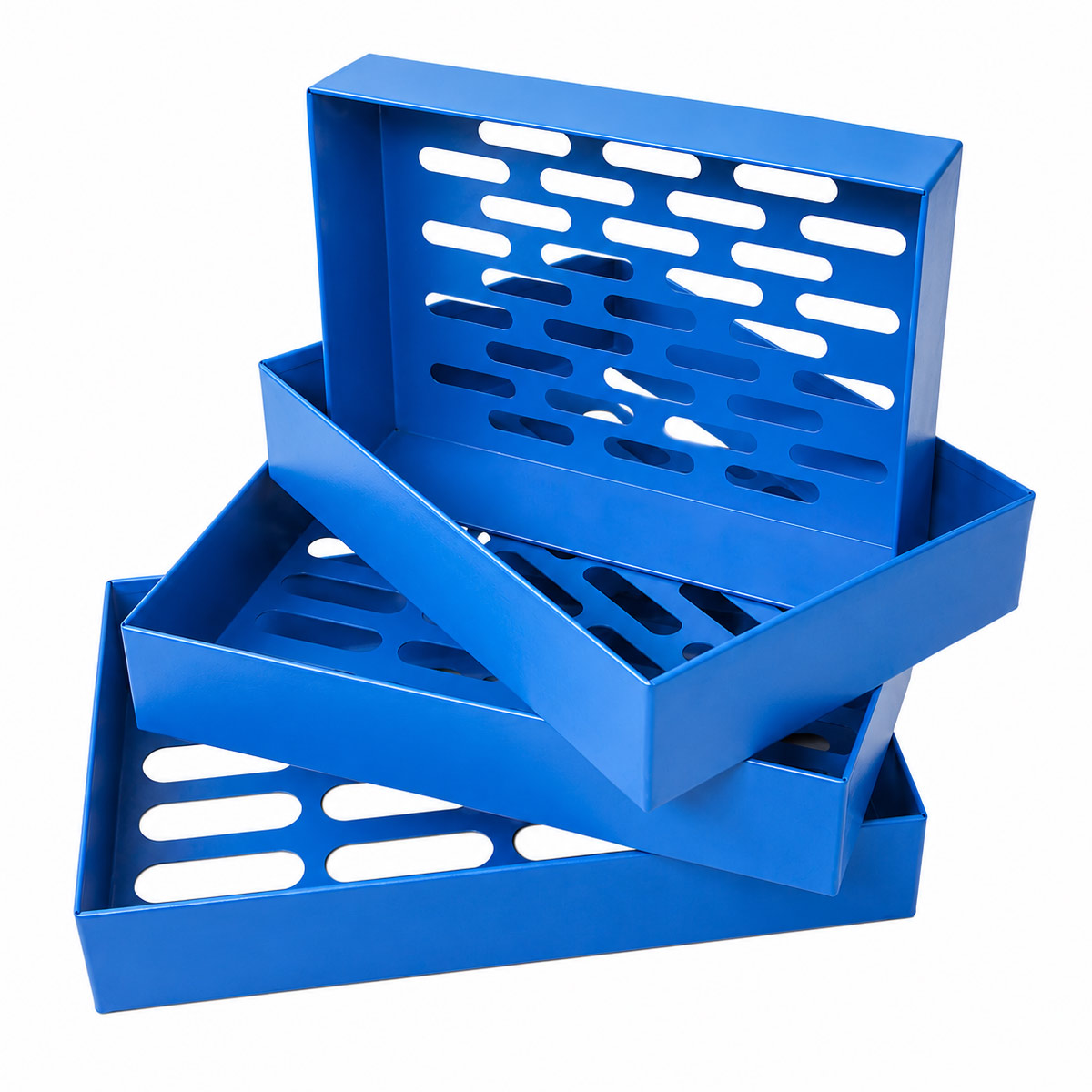
Flakiness Sieve Set
STANDART: BS 812
LT-A005/S Flakiness Sieve Set
LT-A0005 Flakiness Sieve Set | 4,9×30 mm
LT-A0006 Flakiness Sieve Set | 7,2×40 mm
LT-A0008 Flakiness Sieve Set | 14,4×60 mm
LT-A0009 Flakiness Sieve Set | 19,7×70 mm
LT-A0010 Flakiness Sieve Set | 26,3×80 mm
LT-A0011 Flakiness Sieve Set | 33,9×100 mm
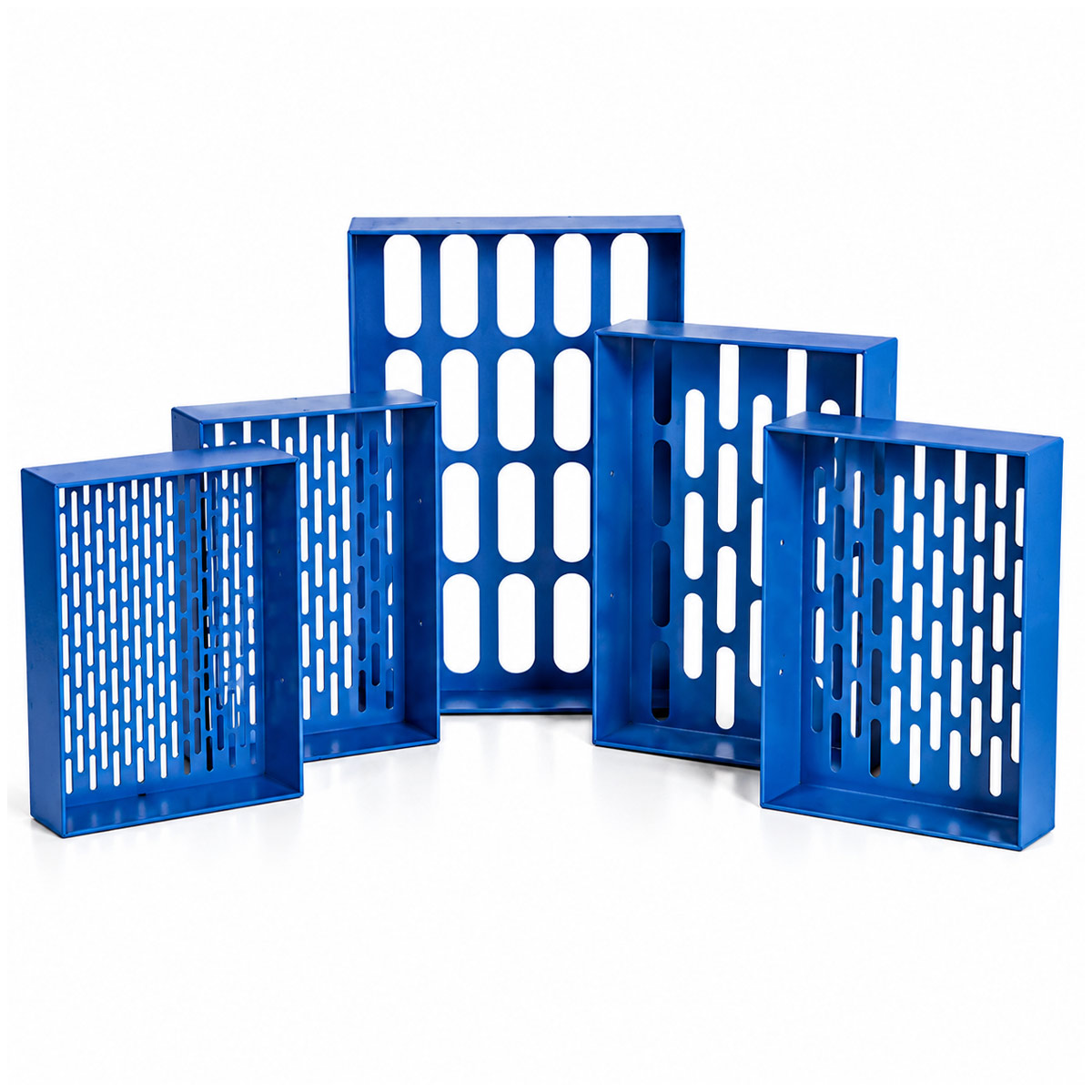
Flakiness Sieve Set is used to determine the shape characteristics and flakiness index of coarse aggregate particles. The specially sized slots separate thin and flaky particles from the remaining aggregate. This allows laboratories to evaluate aggregate samples quickly and quantitatively for quality-control applications.
- Flakiness Index Determination: Determines the mass percentage of flaky particles in coarse aggregate.
- Aggregate Shape Analysis: Supports evaluation of particle thickness and shape characteristics.
- Special Slot Sizes: Each sieve is manufactured with openings suitable for the relevant aggregate size fraction.
- Easy Classification: Flaky particles pass through the slots while thicker particles remain above.
- Seven Different Gauges: The set includes 4.9 × 30, 7.2 × 40, 10.2 × 50, 14.4 × 60, 19.7 × 70, 26.3 × 80 and 33.9 × 100 mm openings.
- Durable Metal Construction: Rigid construction supports intensive laboratory use.
- Protective Coating: Electrostatic powder coating helps protect the metal surfaces against corrosion.
- Simple Operation: Straightforward testing procedure supports efficient routine analysis.
- Easy Cleaning: Open-slot construction simplifies cleaning after testing.
- Quality Control: Suitable for comparing different aggregate sources and production batches.
- Standard Reference: BS 812 / BS 812-105.1
| Product Code | Product Name | Slot Opening (mm) |
| LT-A005/S | Flakiness Sieve Set | Complete Set |
| LT-A0005 | Flakiness Sieve | 4.9 × 30 |
| LT-A0006 | Flakiness Sieve | 7.2 × 40 |
| LT-A0007 | Flakiness Sieve | 10.2 × 50 |
| LT-A0008 | Flakiness Sieve | 14.4 × 60 |
| LT-A0009 | Flakiness Sieve | 19.7 × 70 |
| LT-A0010 | Flakiness Sieve | 26.3 × 80 |
| LT-A0011 | Flakiness Sieve | 33.9 × 100 |

LT_YASSILIK ELEK_
What Is a Flakiness Sieve Set?
The Flakiness Sieve Set is used to evaluate the shape characteristics of coarse aggregate particles. The system separates thin and flaky particles through specially dimensioned slots. The laboratory then weighs the separated particles and calculates the flakiness index as a percentage of the total sample mass.
Particle shape can influence the packing behaviour and performance of aggregates in concrete and road construction materials. For this reason, regular shape evaluation provides useful information during aggregate quality control. BS 812-105.1 describes a method for determining the flakiness index of coarse aggregates.
Specially Sized Slot Openings
The Flakiness Sieve Set consists of individual gauges with slot dimensions suitable for different aggregate size fractions.
The available slot openings are 4.9 × 30 mm, 7.2 × 40 mm, 10.2 × 50 mm, 14.4 × 60 mm, 19.7 × 70 mm, 26.3 × 80 mm and 33.9 × 100 mm.
Before using the flakiness gauges, the operator separates the aggregate sample into the required size fractions with standard test sieves. Each fraction is then tested using the corresponding flakiness sieve.
Thin and flaky particles pass through the appropriate slots, while thicker particles remain on the gauge.
How Is the Flakiness Index Test Performed?
First, the operator dries the aggregate sample and records its initial mass. The material is then separated into the required particle-size fractions.
Each fraction is tested individually using the corresponding Flakiness Sieve. The particles should pass through the openings naturally and should not be forced through the slots.
The particles passing through each gauge are collected separately and weighed using a suitable laboratory balance.
Finally, the total mass of the flaky particles is compared with the total dry mass of the test sample. The result is expressed as the flakiness index percentage.
Under the BS 812-105.1 method, particles are classified as flaky when their thickness is less than approximately 0.6 times the mean sieve size of the relevant size fraction.
Aggregate Shape and Quality Control
The flakiness index provides a numerical indication of aggregate particle shape.
A higher proportion of thin particles may influence packing, compaction and the behaviour of aggregate within a mixture. For this reason, the result can be useful when comparing different quarries, aggregate sources or production batches.
The test does not replace other aggregate quality tests. Instead, laboratories can evaluate the flakiness index together with grading, density, abrasion and mechanical resistance results.
Durable Laboratory Construction
The rigid metal construction helps the gauges maintain their shape during regular laboratory use.
An electrostatic powder-coated surface provides additional protection against moisture and corrosion. The operator should nevertheless protect the slot openings from impact or deformation because changes in their dimensions can affect test results.
After each test, the sieves should be cleaned using a soft brush. Particles trapped inside the slots should not be removed with tools that could damage or enlarge the openings.
Flakiness Index Testing According to BS 812
BS 812-105.1 describes the determination of the flakiness index of coarse aggregate particles by separating particles according to their thickness.
The Flakiness Sieve Set provides the required range of slot openings for different aggregate fractions and supports repeatable laboratory testing.
As a result, the system offers a simple and practical solution for aggregate shape analysis, flakiness index determination and routine quality control in construction-material laboratories.