
Solvent Recovery Unit | Trichloroethylene
STANDART:
LT-AS0110 Solvent Recovery Unit | Trichloroethylene
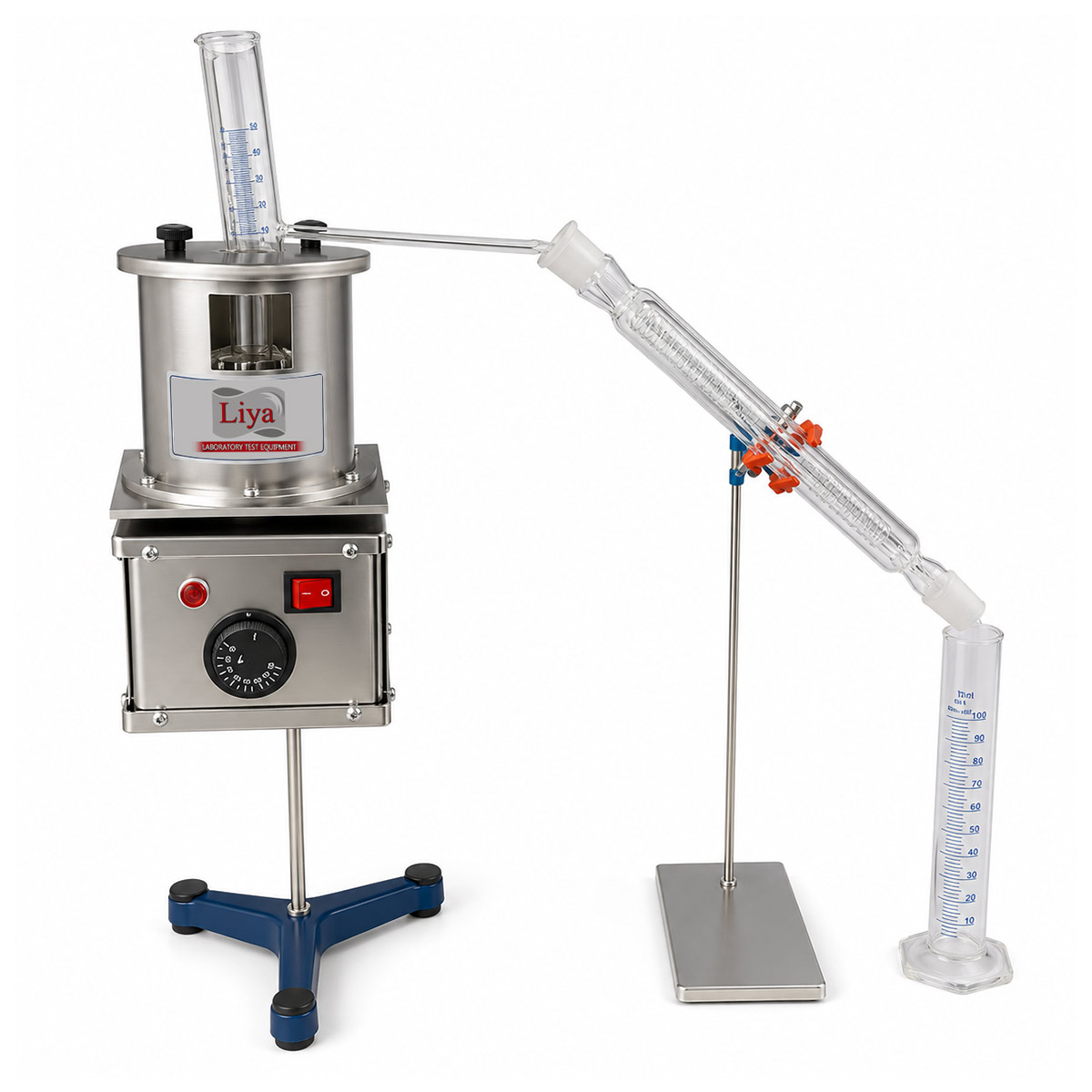
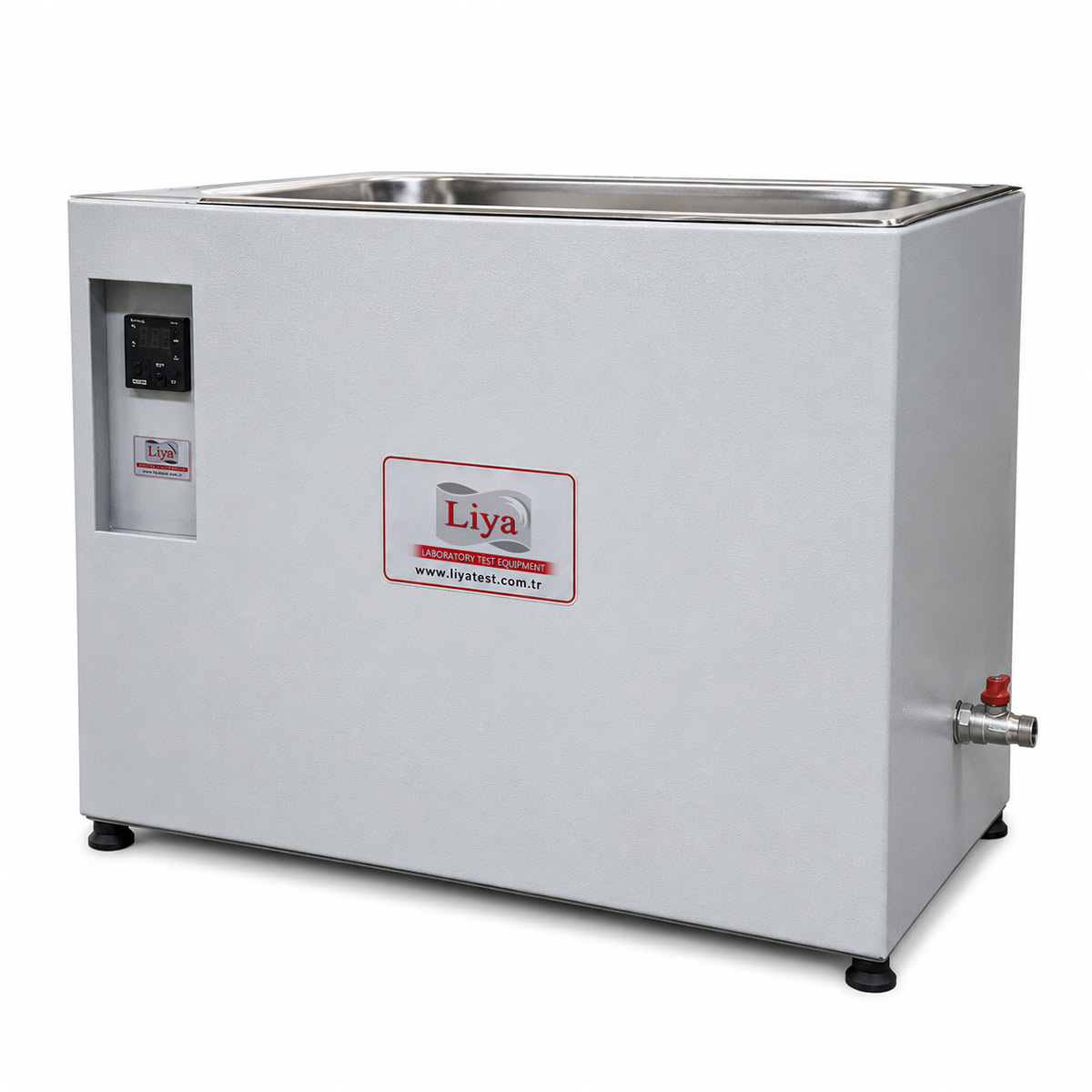
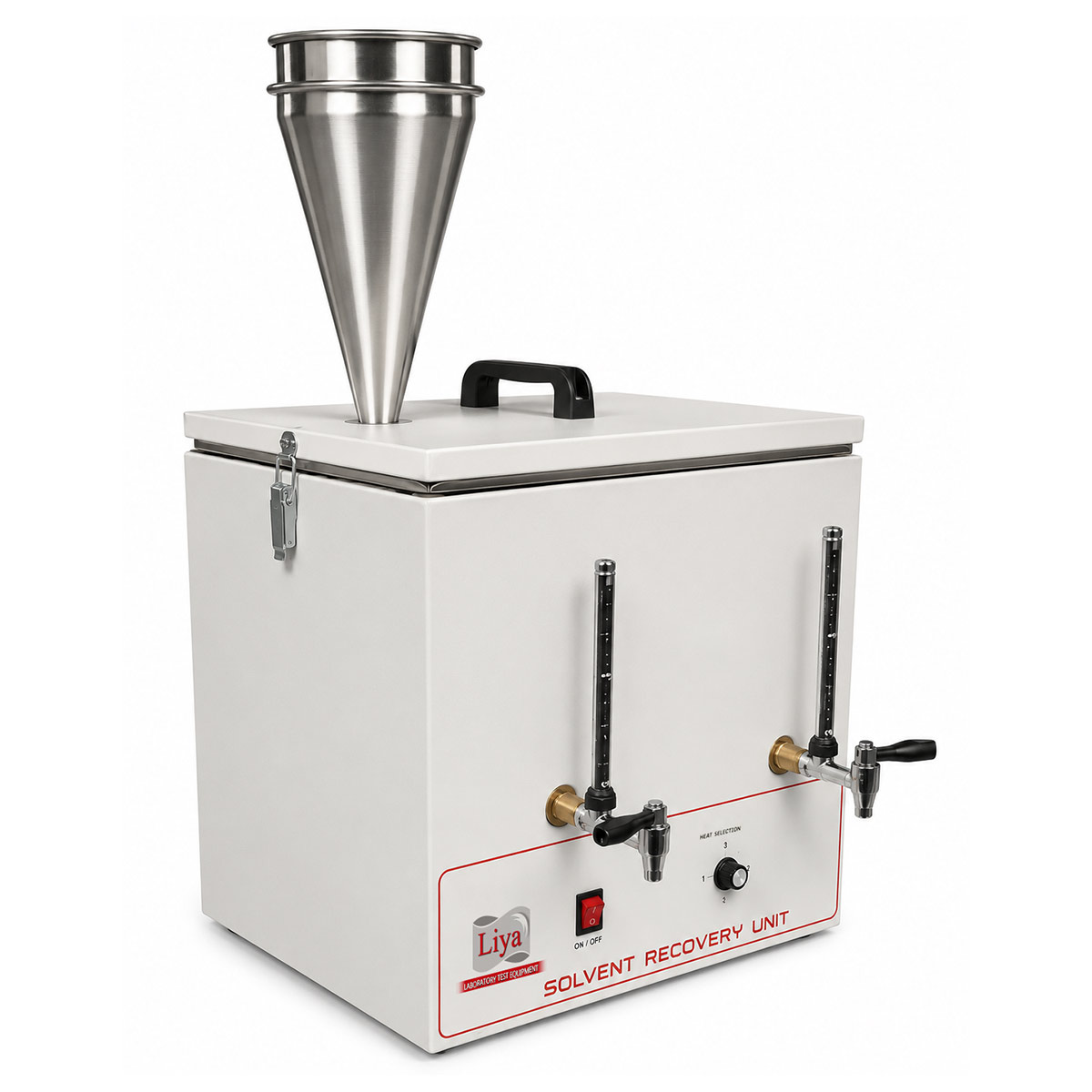
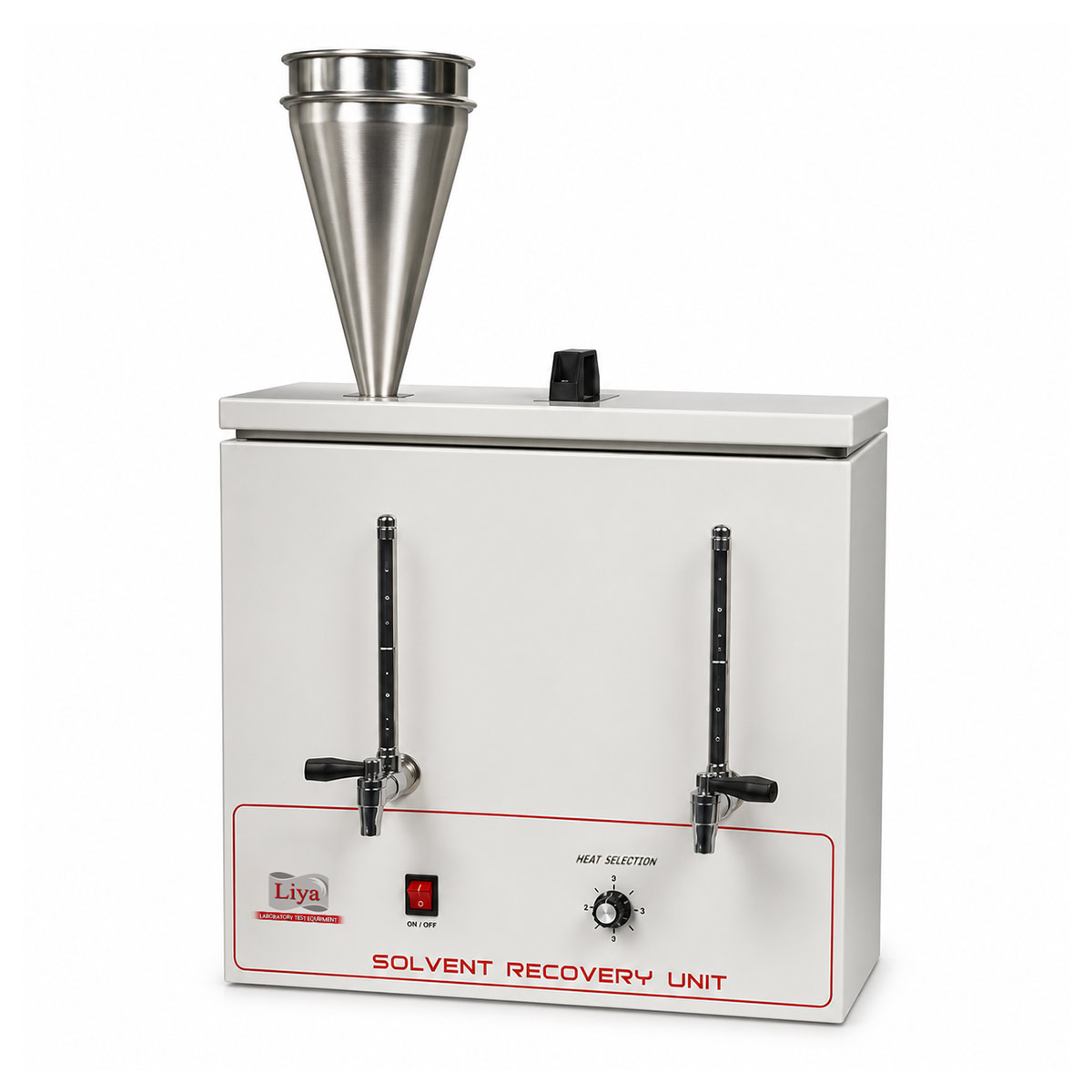
The Solvent Recovery Unit recovers contaminated solvent used in asphalt laboratory applications through controlled distillation. The compact system separates solvent from bitumen and other residues, allowing suitable recovered solvent to be reused in laboratory processes.
- 10 L/h recovery capacity: Processes up to approximately 10 litres of solvent per hour.
- Distillation-based recovery: Separates solvent from bitumen and other contaminants through controlled heating.
- Two-tank system: Separate tanks are provided for clean and contaminated solvent.
- Stainless steel interiors: Internal tank surfaces provide corrosion resistance and support long service life.
- Electric heating system: Provides the thermal energy required for controlled solvent evaporation.
- Water cooling system: Condenses solvent vapour back into liquid form and requires connection to a water supply.
- Solvent level monitoring: Separate liquid-level indicators allow clean and dirty solvent quantities to be observed.
- Complete connection set: Supplied with 2 m plastic tubing, tube clamps, 0.6 mm sieve insert and lid.
- Compact design: External dimensions of approximately 32 × 40 × 65 cm minimise laboratory space requirements.
- Standard electrical supply: Operates with 220 V, 50–60 Hz, 1 Ph power.
| Product Code | Product Name | External Dimensions (cm) | Weight (kg) | Power Supply |
| LT-AS0110 | Solvent Recovery Unit | 32 × 40 × 65 | 25 | 220 V, 50–60 Hz, 1 Ph |

What Is a Solvent Recovery Unit?
The Solvent Recovery Unit is designed to recover contaminated solvent used during asphalt laboratory operations. The system separates solvent from bitumen and other residues through controlled distillation. Therefore, laboratories can reduce solvent consumption by recovering suitable material for reuse.
Solvents used in extraction and similar laboratory procedures become contaminated over time. Direct reuse may no longer be appropriate once bitumen, aggregate dust and other residues accumulate. The LT-AS0110 provides a compact system for controlled solvent recovery.
Liya Test specifies a processing capacity of approximately 10 litres per hour for the unit.
10 Litre per Hour Recovery Capacity
The unit can recover up to approximately 10 L/h of solvent. This capacity supports laboratories that routinely perform asphalt extraction and related procedures.
Higher recovery throughput helps laboratories process accumulated contaminated solvent efficiently. Suitable recovered solvent can then be managed according to the laboratory’s internal procedures and applicable safety requirements.
Controlled Distillation System
The electric heater raises the temperature of the contaminated solvent in a controlled manner. During heating, the solvent evaporates while less volatile bituminous and solid residues remain in the dirty-solvent section.
The generated vapour then moves towards the cooling system. Water cooling reduces the vapour temperature and condenses it back into liquid form.
This process separates recovered solvent from the contaminants remaining after distillation.
Separate Clean and Dirty Solvent Tanks
The LT-AS0110 contains two separate tanks. One holds contaminated solvent before processing, while the other collects recovered solvent.
The internal surfaces of the containers are made from stainless steel. This construction provides corrosion resistance and supports long-term laboratory use. Separate level indicators also allow the operator to observe the quantity of clean and dirty solvent inside the system.
Electric Heating and Water Cooling
An electrical heater provides the energy required for distillation. The cooling section then condenses the solvent vapour using circulating water.
According to Liya Test, the cooling system only requires connection to a suitable water tap. This self-contained arrangement simplifies installation in laboratories with an appropriate water supply.
Complete Laboratory Configuration
The Solvent Recovery Unit is supplied with the basic components required for installation and operation. The standard package includes 2 metres of plastic tubing, tube clamps, a sieve insert with 0.6 mm openings and a lid.
These accessories help laboratories set up the recovery system without sourcing each connection component separately.
Compact Laboratory Design
The LT-AS0110 measures approximately 32 × 40 × 65 cm and weighs about 25 kg. Its compact construction reduces the amount of bench or floor space required.
The system operates from a 220 V, 50–60 Hz, single-phase power supply, making it compatible with standard laboratory electrical infrastructure.
Overall, the LT-AS0110 Solvent Recovery Unit combines 10 L/h processing capacity, dual solvent tanks, electrical heating and water cooling in one compact system. Therefore, asphalt laboratories can manage contaminated solvent more efficiently and reduce routine solvent consumption.