
Pneumatic Slump Test Set
STANDART: ASTM C143; AASHTO T119
LT-C0095 Pneumatic Slump Test Set
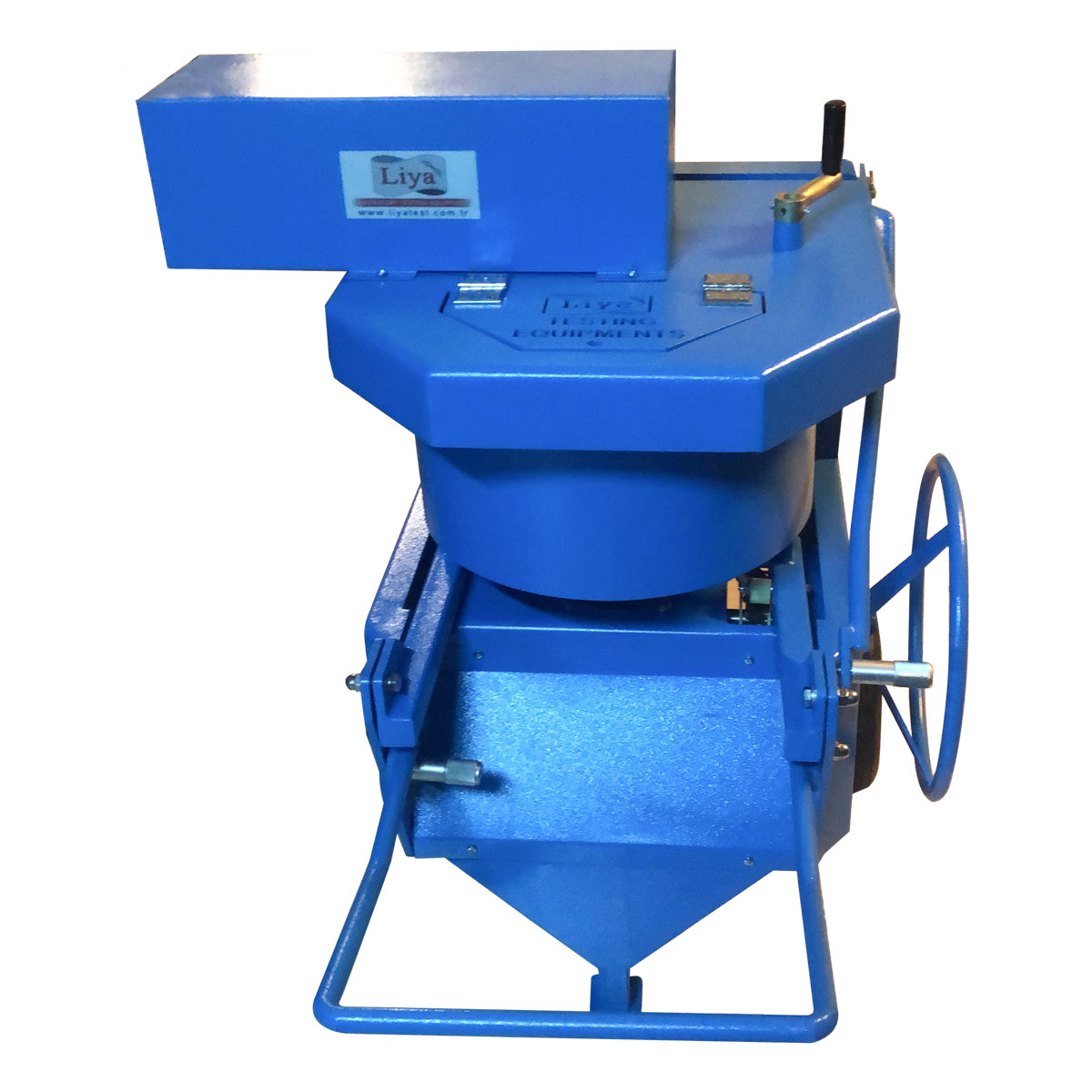
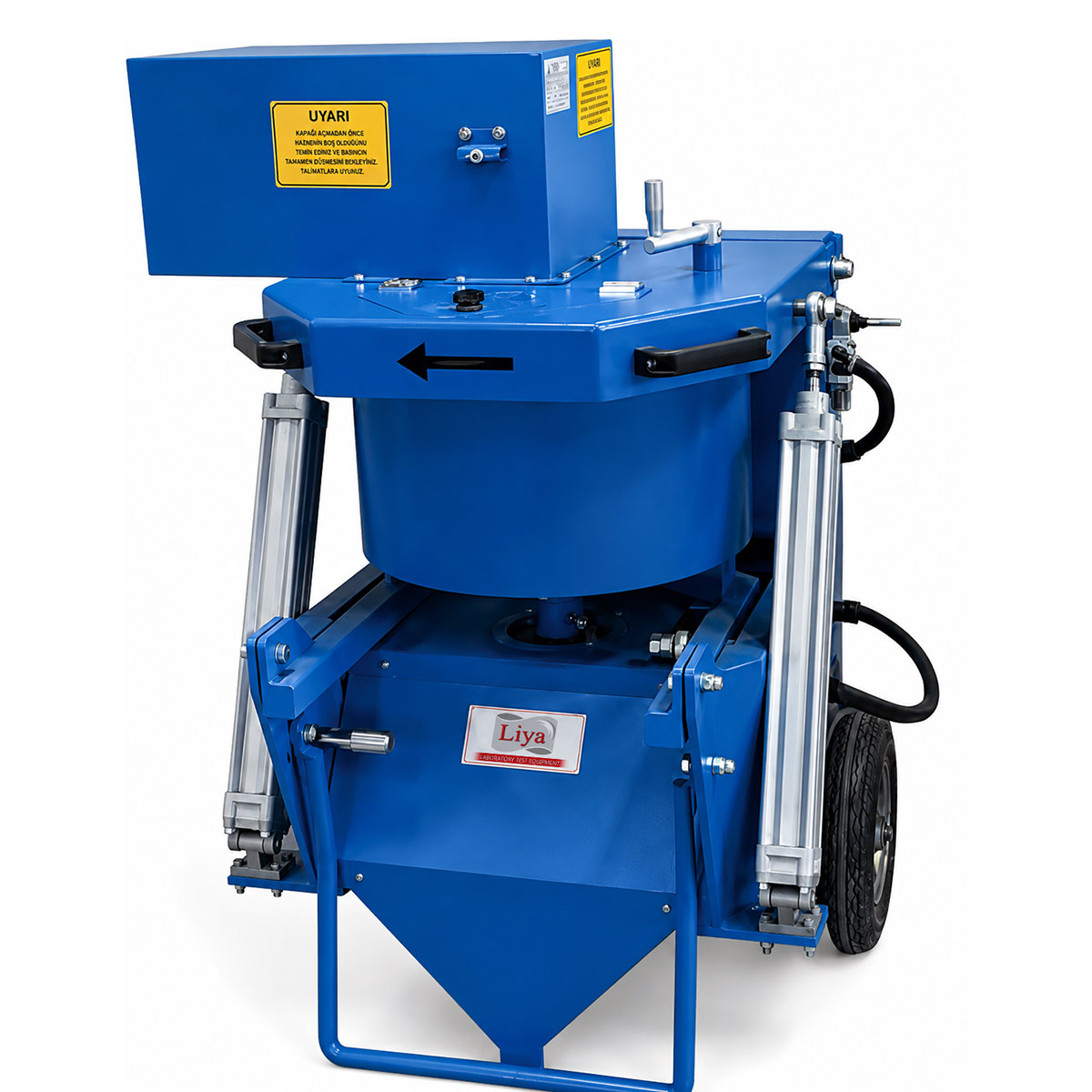
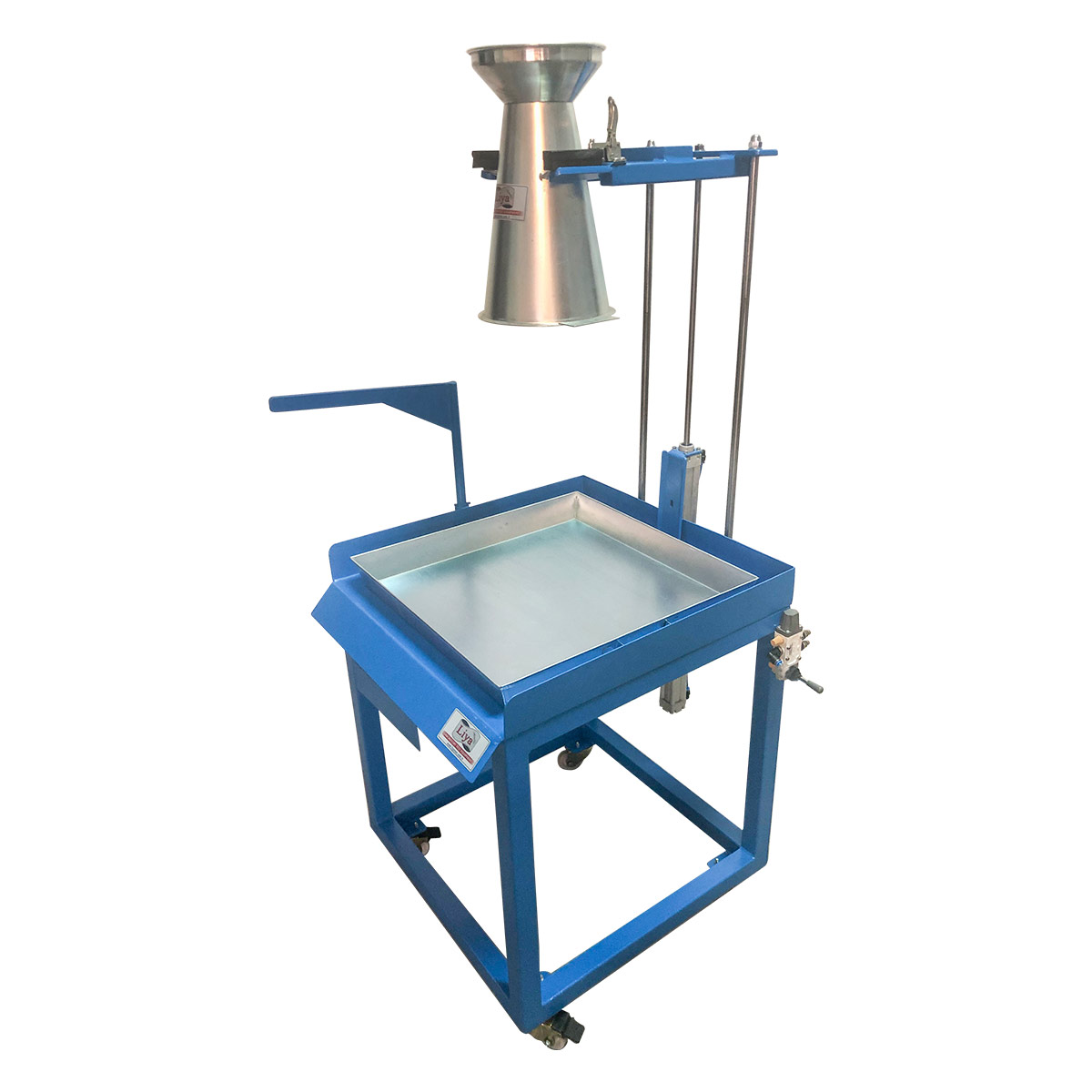
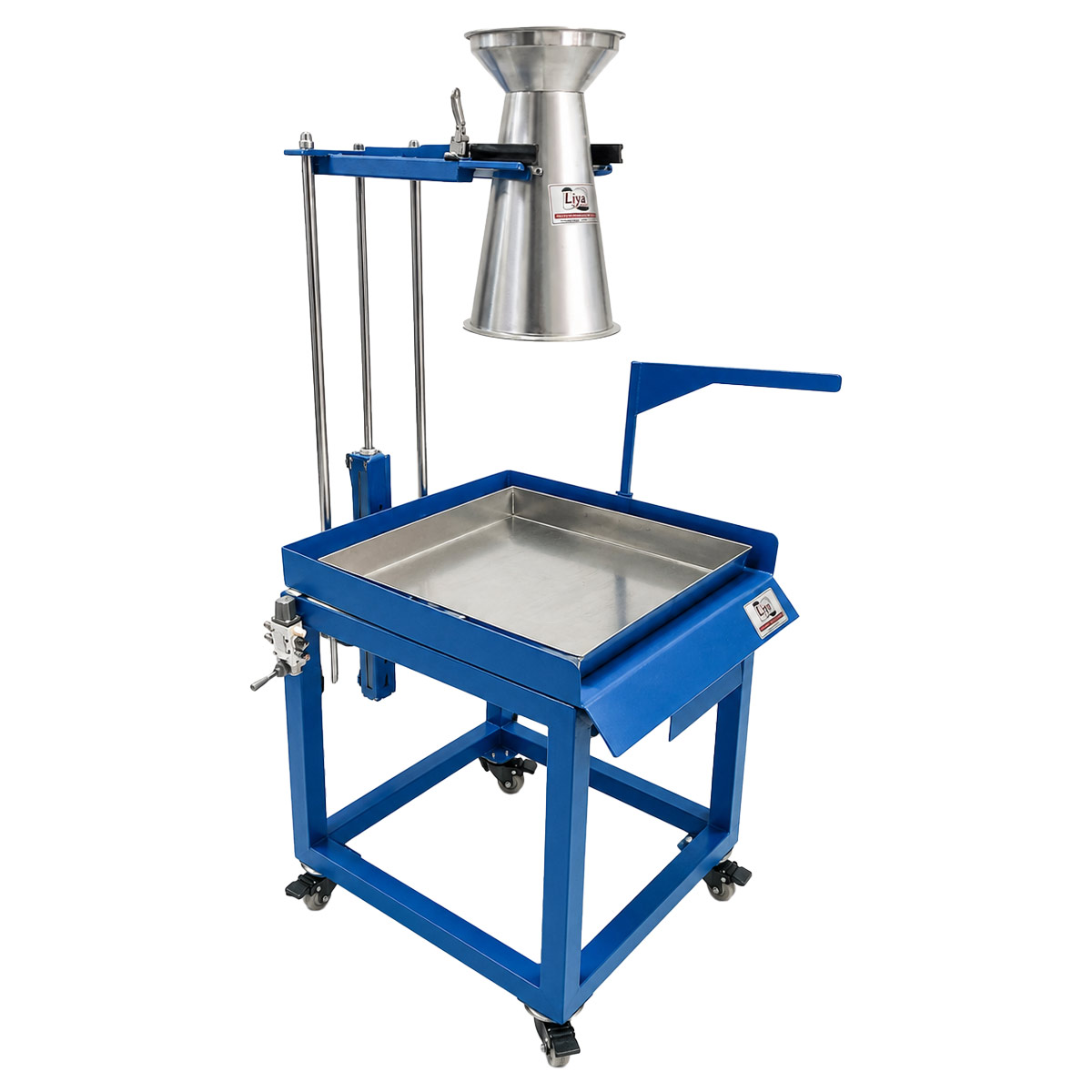
Pneumatic Slump Test Set determines the consistency and workability of fresh concrete by measuring the slump value. The pneumatic lifting mechanism raises the standard slump cone vertically at a controlled rate. This system helps reduce lateral movement and irregular lifting during the test. As a result, laboratories and field teams can perform more consistent and repeatable slump measurements.
- Test Method: Determination of fresh concrete slump
- Pneumatic Lifting: Raises the slump cone smoothly and at a controlled rate
- Vertical Movement: Helps maintain correct cone alignment during lifting
- Repeatable Testing: Reduces variations caused by manual cone removal
- Base Tray: Provides a stable working surface
- Standard Slump Cone: Metal cone for fresh concrete consistency testing
- Filling Funnel: Supports controlled filling of the cone
- Tamping Rod: Used to compact each concrete layer according to the test method
- Steel Ruler: Allows practical measurement of the slump value
- Complete Set: Includes slump cone, tray, funnel, tamping rod, rubber mallet and steel ruler
- Overall Dimensions: 55 × 80 × 145 cm
- Approximate Weight: 40 kg
- Standards: ASTM C143/C143M, AASHTO T119
| Product Code | Product Name | Overall Dimensions (cm) | Weight (kg) |
| LT-C0095 | Pneumatic Slump Test Set | 55 × 80 × 145 | 40 |

LT_BETON_PNOMATIKSLUMP_
What Is a Pneumatic Slump Test Set?
The Pneumatic Slump Test Set determines the consistency and workability of fresh concrete by measuring its slump value. The system raises the standard slump cone vertically in a controlled manner. The fresh concrete can then settle freely under its own weight.
In a conventional test, the operator removes the cone manually. However, sideways movement or uneven lifting may disturb the concrete mass. The pneumatic mechanism helps reduce these variations. As a result, laboratories can achieve more consistent and comparable test conditions.
Advantages of the Pneumatic Lifting System
The pneumatic mechanism raises the slump cone smoothly and vertically. This controlled movement helps prevent unwanted lateral displacement during cone removal.
Therefore, the operator can focus on specimen preparation and measurement instead of manually lifting the cone.
Controlled lifting is particularly useful during repetitive testing. Different operators can follow a more consistent procedure, which helps reduce variations between tests.
How Is the Slump Test Performed?
First, the operator places the base tray on a flat and stable surface. The slump cone is then positioned securely on the tray.
Fresh concrete is placed into the cone in the required layers. The operator compacts each layer with the tamping rod according to the applicable test procedure.
Next, excess concrete is removed from the top surface. Once specimen preparation is complete, the pneumatic lifting mechanism raises the cone vertically.
The concrete then subsides under its own weight. The operator measures the difference between the original cone height and the highest point of the slumped concrete using the steel ruler.
This value is recorded as the slump result.
Evaluation of Fresh Concrete Consistency
The slump value provides rapid information about the consistency of fresh concrete. However, the result does not directly indicate compressive strength.
Water content, aggregate grading, admixtures and concrete temperature can all influence the measured slump. Therefore, quality-control teams should evaluate the result together with the concrete mix design and other relevant test data.
Consistent sampling, filling and compaction procedures are also important. The operator should follow the same method during every test to improve comparability.
Complete and Ready-to-Use Test Set
The system includes the essential components required for routine slump testing. The package contains a slump cone, filling funnel, base tray, tamping rod, rubber mallet and steel ruler.
This complete configuration allows laboratories and field teams to begin testing without assembling several separate components.
The rigid base tray provides a stable working surface. In addition, the filling funnel simplifies concrete placement, while the steel ruler allows direct measurement of the final slump.
Testing According to ASTM C143/C143M
ASTM C143/C143M defines the slump test method for hydraulic-cement concrete. The procedure is widely used for assessing the consistency of plastic and cohesive fresh concrete in both laboratory and field applications.
The product also supports testing according to AASHTO T119, which covers the slump of hydraulic cement concrete.
Repeatable Fresh Concrete Slump Testing
The Pneumatic Slump Test Set combines controlled cone lifting, straightforward operation and a complete accessory package.
By reducing variations associated with manual cone removal, the system helps users perform fresh concrete consistency tests under more repeatable conditions.
As a result, the Pneumatic Slump Test Set provides a practical solution for laboratories and field teams that require controlled, efficient and consistent slump testing of fresh concrete.