
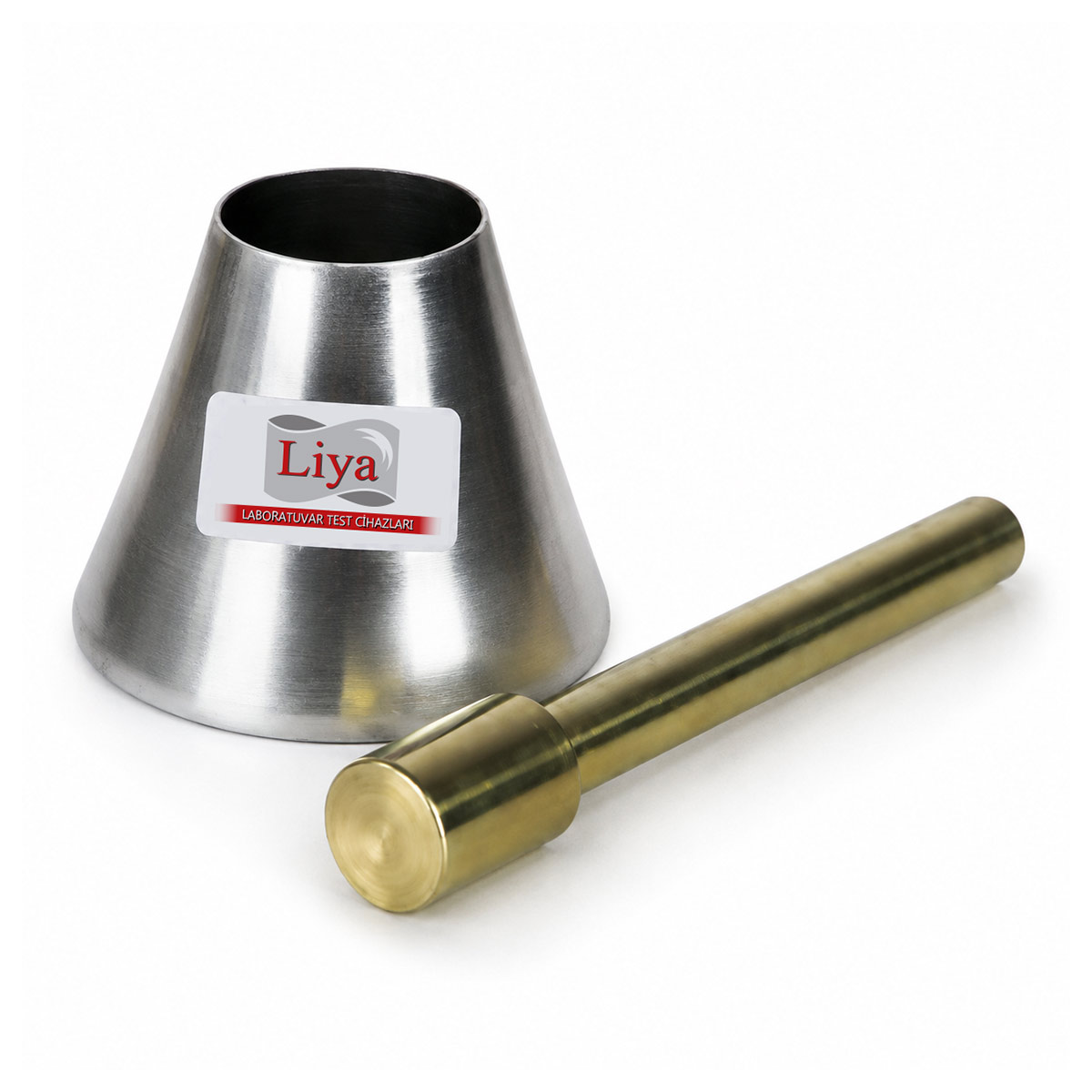
Sand Absorption Cone and Tamper
STANDART: EN 1097–6, BS 812, ASTM C127-C128
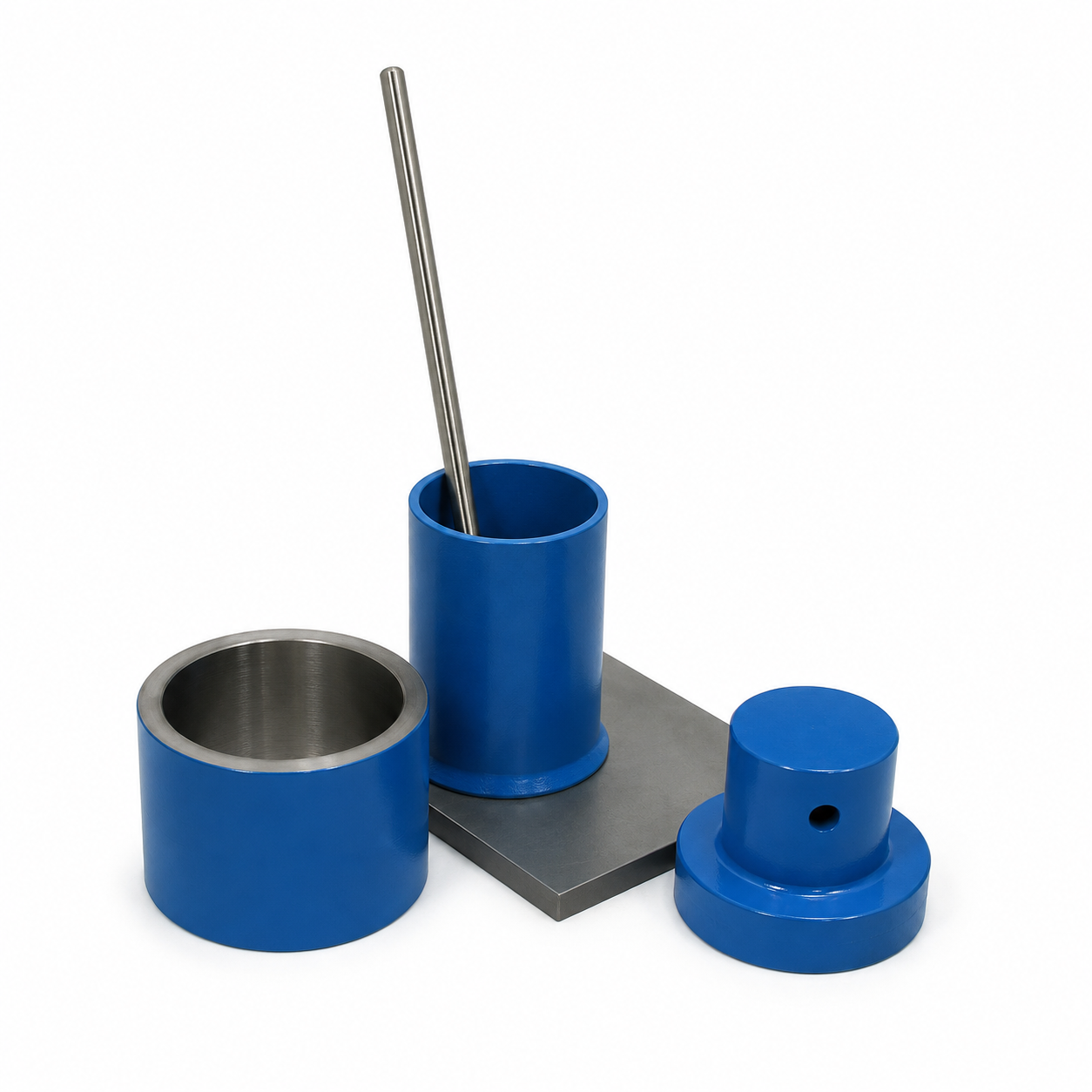
LT-A0052 Sand Absorption Cone and Tamper
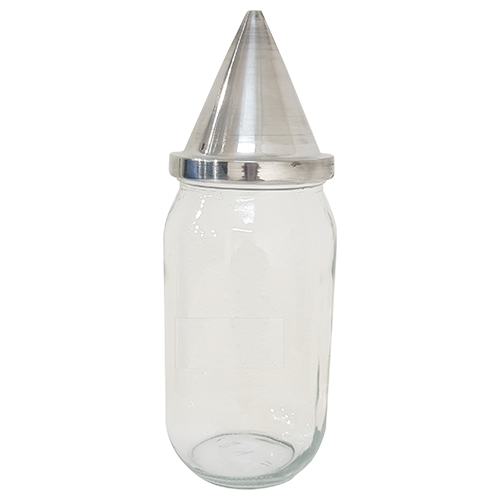
LT-A0052/1 Sand Absorption Cone
LT-A0052/2 Tamper
Sand Absorption Cone and Tamper is used to determine the saturated surface-dry (SSD) condition of fine aggregates during relative density and water absorption testing. The set consists of a corrosion-protected metal cone and tamper. Its compact and simple design supports consistent sample preparation in aggregate laboratories.
- Fine Aggregate Testing: Supports relative density and water absorption tests of fine aggregates.
- SSD Condition Check: Helps determine when aggregate reaches the saturated surface-dry condition.
- Two-Piece Set: Includes the Sand Absorption Cone and Tamper.
- Corrosion-Resistant Construction: Manufactured from plated steel for laboratory durability.
- Compact Dimensions: Complete set measures 9 × 9 × 18 cm.
- Lightweight Design: Complete set weighs approximately 0.5 kg.
- Separate Components: Cone and tamper can also be ordered individually.
- Manual Operation: Requires no electrical power.
- Product Code: Complete set is supplied as LT-A0052.
- Standards: EN 1097-6, BS 812-2, ASTM C128
| Product Code | Product Name | Dimensions (cm) | Weight (kg) |
| LT-A0052 | Sand Absorption Cone and Tamper | 9 × 9 × 18 | 0.5 |
| LT-A0052/1 | Sand Absorption Cone | — | 0.3 |
| LT-A0052/2 | Tamper | — | 0.2 |

LT_ABRAHAMHUNISI_
What Is a Sand Absorption Cone and Tamper?
The Sand Absorption Cone and Tamper is used during relative density and water absorption testing of fine aggregates. Its primary function is to help determine whether the prepared aggregate sample has reached the saturated surface-dry, or SSD, condition.
In the SSD condition, the permeable pores within the aggregate particles contain water while the particle surfaces are essentially free from excess moisture. Correct identification of this condition is important because it directly affects the calculations used in fine aggregate density and absorption testing.
ASTM C128 covers the determination of relative density and absorption of fine aggregates and specifically distinguishes oven-dry, saturated surface-dry and apparent relative density values. The current active edition is ASTM C128-25.
Determining the SSD Condition
The operator first prepares the fine aggregate according to the applicable test method.
As the aggregate approaches the saturated surface-dry condition, a portion of the material is loosely placed into the metal cone. The sample is then tamped according to the specified procedure.
After tamping, the cone is carefully lifted vertically.
The behaviour of the fine aggregate after removal of the cone indicates its surface moisture condition. If the material retains too much of the moulded shape, excess surface moisture may still be present. When the aggregate begins to slump in the manner specified by the test method, the sample has reached the required SSD condition.
This step helps the laboratory proceed to subsequent weighing and pycnometer measurements under controlled moisture conditions.
Compact Two-Piece Test Set
The complete set consists of a metal sand absorption cone and tamper.
The components are manufactured from plated steel to provide resistance against corrosion during regular laboratory use. Liya lists the complete apparatus with overall dimensions of 9 × 9 × 18 cm and an approximate weight of 0.5 kg.
The cone can also be ordered separately under product code LT-A0052/1, while the tamper is available as LT-A0052/2.
Why Is the SSD Condition Important?
Fine aggregate can contain both absorbed moisture and free surface moisture.
If excess surface water remains on the particles during testing, the measured masses may not represent the required SSD condition. On the other hand, excessive drying can remove water from the aggregate pores and shift the sample toward the oven-dry condition.
For this reason, the cone-and-tamper procedure provides a practical method for identifying the correct moisture state before density and absorption calculations are completed.
Fine Aggregate Density and Water Absorption Testing
Relative density values are widely used when calculating the absolute volume occupied by aggregates in concrete, asphalt and other proportioned mixtures. Water absorption values also help determine how much moisture an aggregate can retain within its permeable pores. ASTM C128 identifies both properties as important parameters in aggregate evaluation.
The test therefore supports routine aggregate quality control, mix design calculations and comparison of different aggregate sources.
Testing According to EN 1097-6
EN 1097-6:2022 covers the determination of particle density and water absorption of aggregates. The standard calculates particle density using mass and displaced-water measurements and defines water absorption as absorbed water expressed relative to the oven-dried aggregate mass.
The Sand Absorption Cone and Tamper provides a simple, compact and repeatable solution for preparing fine aggregate samples and identifying the SSD condition required by relevant aggregate test procedures.