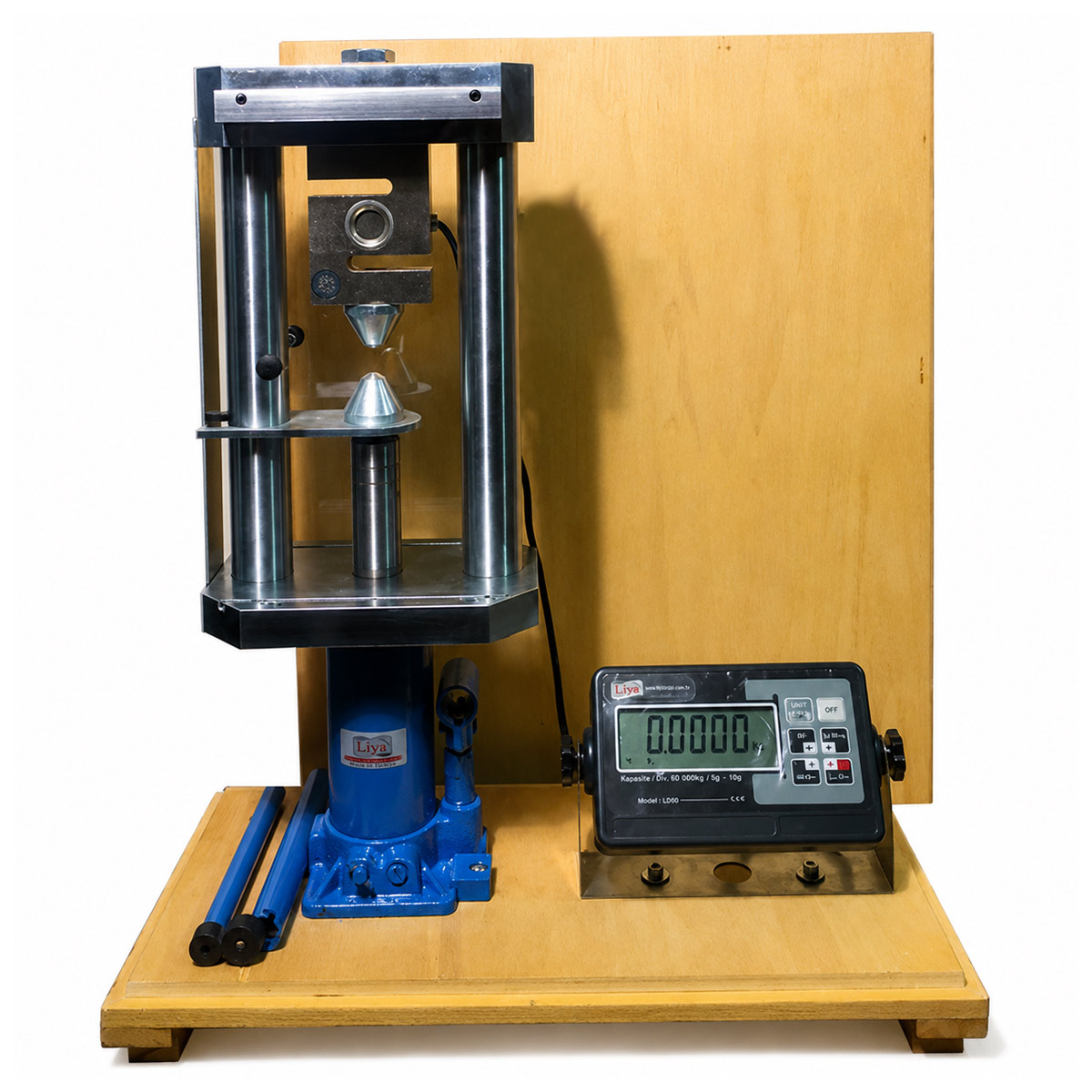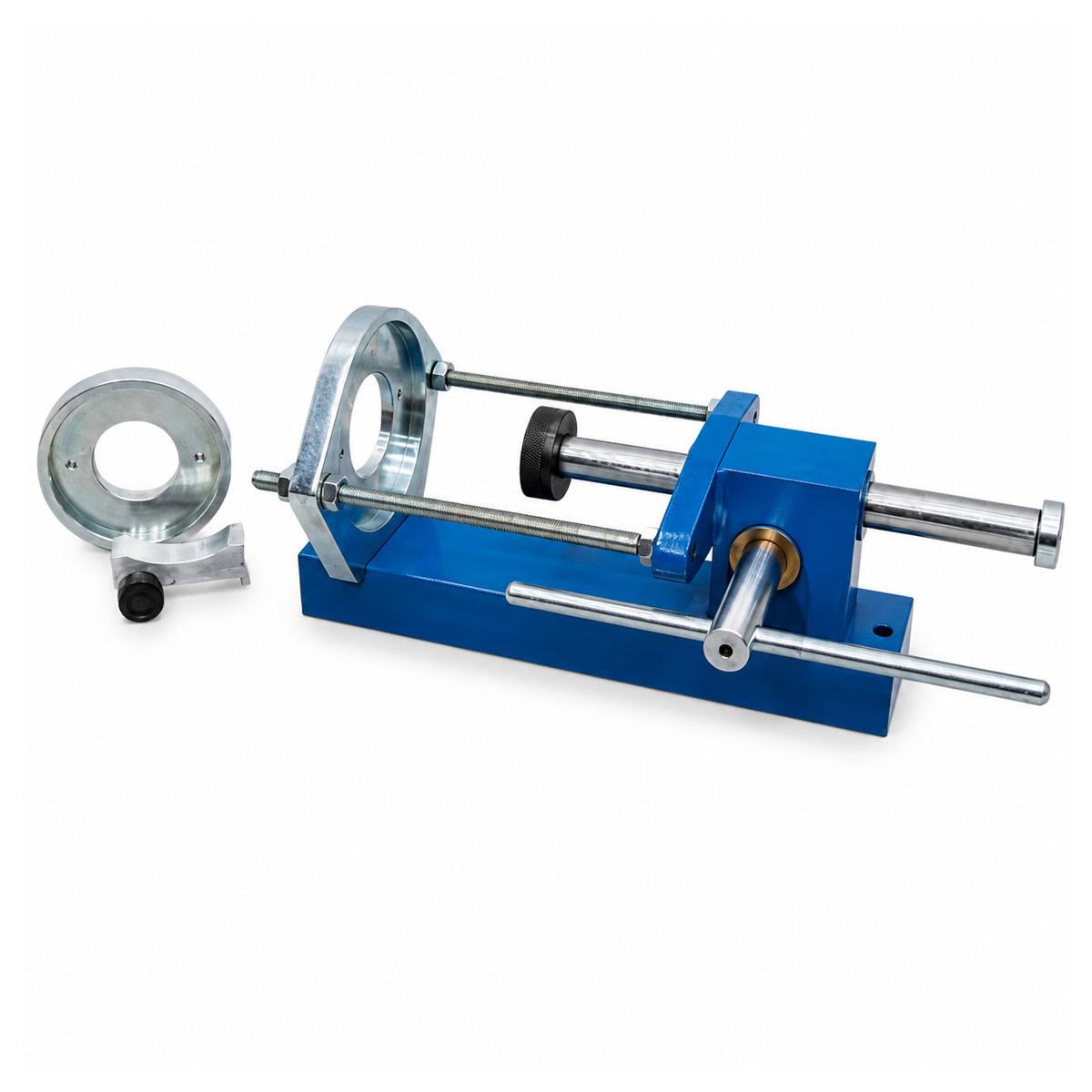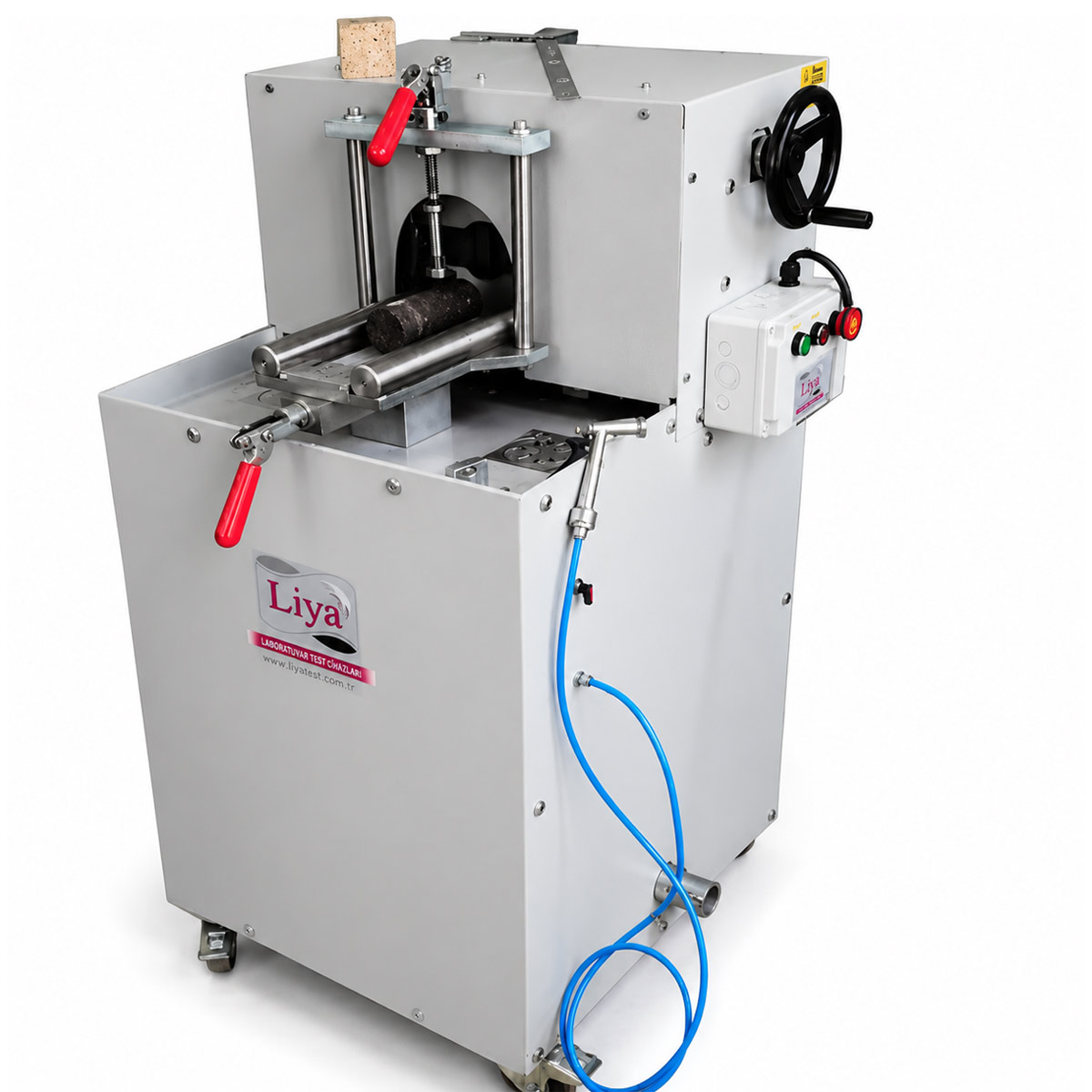

Compression Jig Assembly for Rock Core Specimens
STANDART: ASTM D2938
LT-R0065 Compression Jig Assembly for Rock Core Specimens
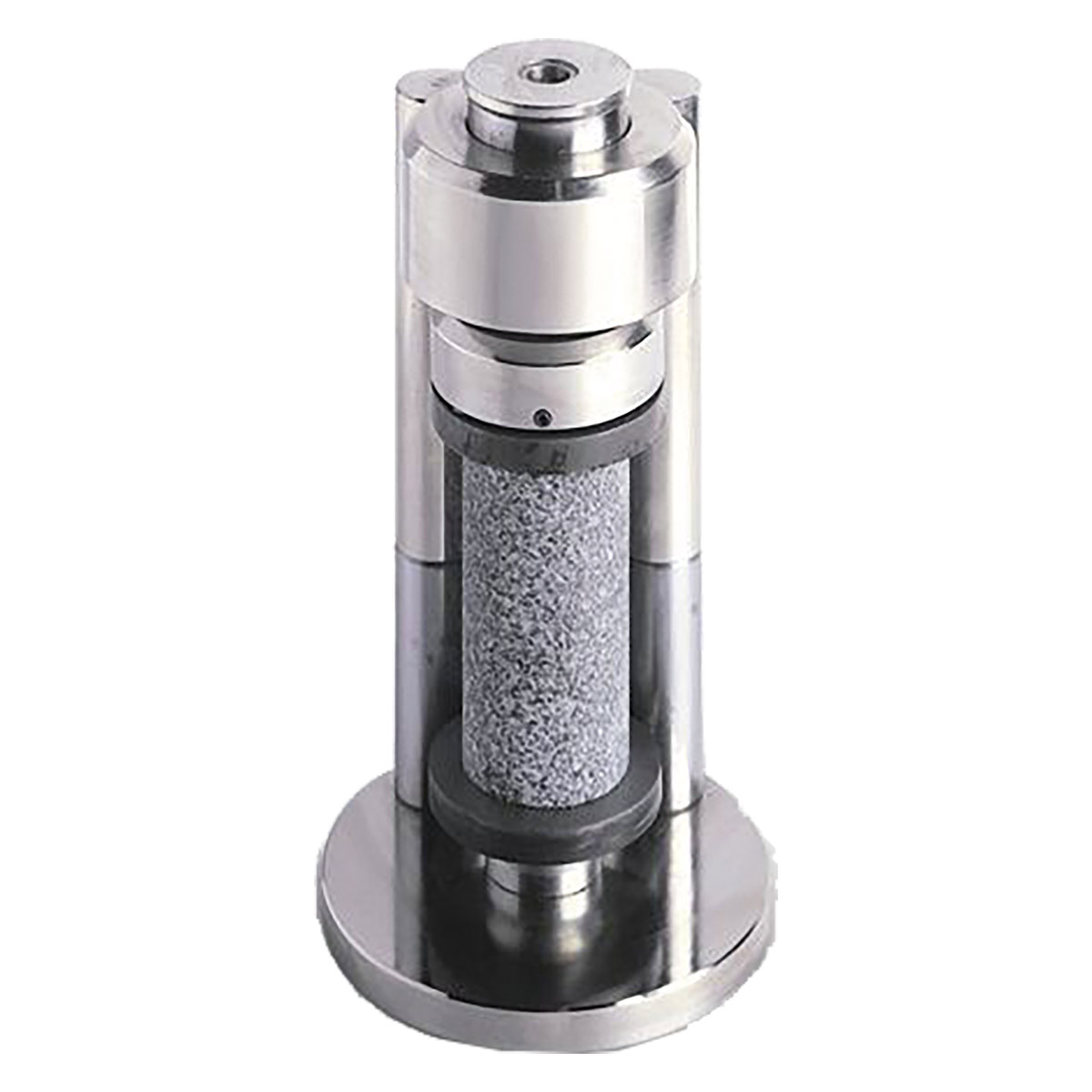
Compression Jig Assembly for Rock Core Specimens is designed for uniaxial compressive strength testing of cylindrical rock and natural stone core specimens. The rigid two-column frame holds the specimen securely between hardened compression platens. A spherically seated upper platen helps compensate for minor alignment differences and supports more uniform axial load transfer. The jig is suitable for rock cores approximately Ø50–55 mm in diameter and 100–110 mm in height.
- Rock Core Compression Testing: Supports uniaxial compressive strength testing.
- Suitable Specimen Diameter: Designed for approximately Ø50–55 mm rock cores.
- Suitable Specimen Height: Supports specimens approximately 100–110 mm high.
- Rigid Two-Column Frame: Provides stable mechanical support during loading.
- Spherical Upper Platen: Helps improve alignment and load distribution.
- Fixed Lower Platen: Provides a stable support surface for the specimen.
- Hardened Compression Platens: Minimum platen hardness is 58 HRC.
- Natural Stone Testing: Can also be used with suitable natural stone core specimens.
- External Loading Machine Required: The jig itself does not generate the test load.
- Compact Design: External dimensions are 12 × 12 × 25 cm.
- Weight: Approximately 10 kg.
- Product Code: LT-R0065.
| Product Code | Product Name | External Dimensions (cm) | Weight (kg) |
| LT-R0065 | Compression Jig Assembly for Rock Core Specimens | 12 × 12 × 25 | 10 |

LT_KAYA_BASMAJIGI
Rock Compression Jig for Uniaxial Core Testing
The Rock Compression Jig is designed to hold intact rock core specimens during uniaxial compressive strength testing. The jig itself does not create the load. Instead, it is installed inside a compression testing machine with sufficient capacity to apply the required axial force.
The system provides a rigid and controlled specimen support arrangement. Therefore, laboratories can position cylindrical rock or natural stone cores accurately before starting the compression test.
Ø50–55 mm Rock Core Specimens
The jig is designed for cylindrical specimens approximately 50 to 55 mm in diameter and 100 to 110 mm in height.
Correct specimen dimensions are important during rock compression testing. The end surfaces should also be flat and parallel. Poor specimen geometry may cause uneven contact and influence the measured failure load.
Rigid Two-Column Frame
The main structure consists of a rigid two-column frame. This arrangement maintains the position of the upper and lower compression platens during loading.
The lower platen is fixed to the base. Meanwhile, the upper platen moves vertically and incorporates a spherical seating arrangement. This design helps the platen settle more uniformly against the specimen surface.
Spherically Seated Upper Platen
Minor alignment differences can cause stress concentrations in a rock core. The spherical upper platen helps compensate for small deviations between the specimen surface and loading axis.
However, the spherical seat should not be used to compensate for badly prepared specimens. Rock cores still need properly prepared ends before testing.
Hardened Compression Platens
The compression platens have a minimum hardness of 58 HRC. The hardened surface reduces wear during repeated loading cycles.
Stable platen geometry is important because both surfaces transfer the axial test force directly into the rock specimen. Users should therefore keep the platen surfaces clean and inspect them regularly for damage.
How Is the Compression Jig Used?
First, the operator places the jig inside a suitable compression testing machine. The prepared rock core is then centred on the lower platen.
The upper platen is lowered until it makes proper contact with the specimen. After alignment is checked, the compression machine applies axial force at the required test rate.
The loading continues until the specimen fails. The testing system records the maximum applied load, which can then be used to determine the uniaxial compressive strength according to the selected procedure.
ASTM D7012-23 Method C
ASTM D7012-23 Method C covers uniaxial compressive strength testing of intact rock cores. The standard specifies strength determination without requiring strain measurement. Method D is used when elastic properties and deformation measurements are also required.
As a result, the Rock Compression Jig combines a rigid frame, hardened platens and spherical seating in a compact system for controlled uniaxial rock-core testing.