
Standard Sand for Density Tests
STANDART: BS 1377:9, 1924:2
LT-S0020 Standard Sand for Density Tests | No: 30-50
LT-S0021 Standard Sand for Density Tests | No: 16-30
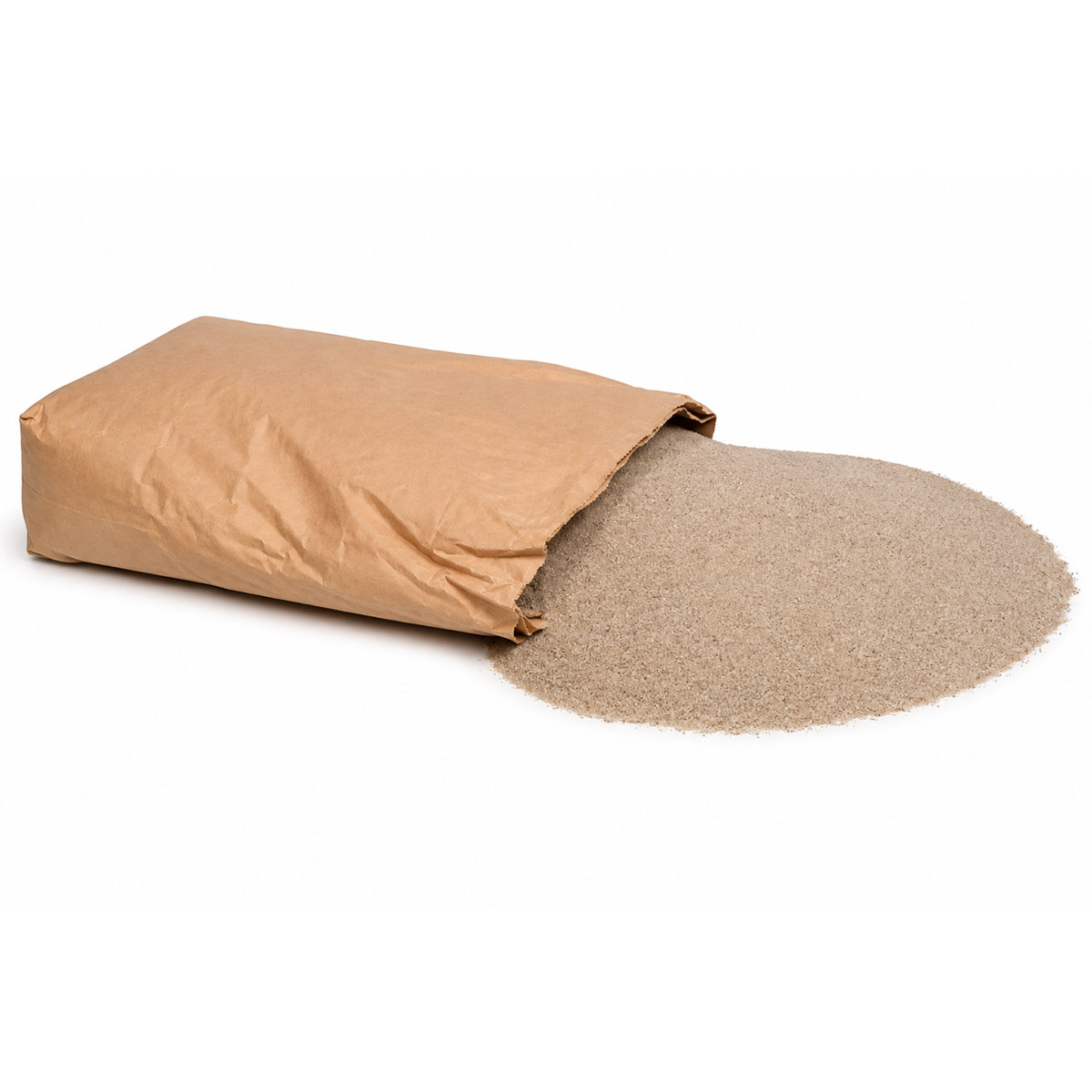
The Standard Sand for Density Tests is designed for field density testing using the sand replacement method. Controlled particle-size ranges help determine the volume of an excavated test hole by filling it with calibrated, free-flowing sand. LİYA offers two different grading options in 1000 g packages for different density testing applications.
- Field density testing: Supports determination of in-situ soil density by the sand replacement method.
- Two grading options: Available in two controlled particle-size ranges.
- LT-S0020 grading: 300–600 µm.
- LT-S0020 sieve range: Passes No.30 / 600 µm and is retained on No.50 / 300 µm.
- LT-S0021 grading: 600 µm–1.18 mm.
- LT-S0021 sieve range: Passes No.16 / 1.18 mm and is retained on No.30 / 600 µm.
- Pack quantity: Each product is supplied in a 1000 g package.
- Sand replacement applications: Used with suitable sand density or sand replacement apparatus.
- Test-hole volume: Helps determine excavation volume through calibrated sand displacement.
- Compaction control: Supports field checks of compacted soil and road layers.
- Controlled particle size: Consistent grading supports repeatable test preparation.
- Product codes: LT-S0020 and LT-S0021.
| Product Code | Product Name | Specifications |
| LT-S0020 | Standard Sand for Density Tests, 1000 g | No.30 (600 µm) to No.50 (300 µm) |
| LT-S0021 | Standard Sand for Density Tests, 1000 g | No.16 (1.18 mm) to No.30 (600 µm) |

What Is Standard Sand for Density Tests?
Standard Sand for Density Tests is used in field testing methods that determine the in-situ density of soils by measuring the volume of an excavated test hole.
During the test, the operator excavates a small hole in the prepared soil surface and collects the removed material. A known, calibrated sand is then allowed to flow into the excavation through a suitable sand replacement apparatus.
The amount of sand required to fill the hole helps determine the excavation volume. This value can then be evaluated together with the mass and moisture content of the removed soil to calculate field density.
LİYA supplies the product in two controlled particle-size ranges under product codes LT-S0020 and LT-S0021.
LT-S0020 – 300 to 600 µm Standard Sand
The LT-S0020 option has a particle-size range between 300 and 600 µm.
The sand passes the No.30 sieve, corresponding to 600 µm, while being retained on the No.50 sieve, corresponding to 300 µm.
This controlled grading provides a relatively uniform sand fraction for use in compatible density-testing equipment.
LİYA supplies LT-S0020 in 1000 g packages.
LT-S0021 – 600 µm to 1.18 mm Standard Sand
The LT-S0021 version provides a coarser grading.
The material passes the No.16 sieve, corresponding to 1.18 mm, and is retained on the No.30 sieve, corresponding to 600 µm.
Like LT-S0020, the product is supplied in a 1000 g package. The selected sand grade should match the relevant test procedure, apparatus and laboratory calibration method.
How Is Standard Sand Used in Field Density Testing?
The operator first prepares the test location and excavates a hole of suitable dimensions. All removed material is collected for mass and moisture-content determination.
A sand replacement apparatus containing calibrated test sand is then positioned over the opening. The valve is opened and the sand flows into the test hole until the excavation and cone volume are completely filled.
The mass of sand used is determined from the difference between the initial and final apparatus masses.
Because the bulk density of the test sand is established beforehand, the quantity of sand filling the hole can be used to calculate the excavation volume.
ASTM D1556/D1556M-24
The current ASTM reference for the sand-cone method is ASTM D1556/D1556M-24 — Standard Test Method for Density and Unit Weight of Soil in Place by Sand-Cone Method. ASTM lists the 2024 edition as active.
The method is widely used for field control of compacted soils in earth embankments, road fills and structural backfills. It can also be applied to suitable natural soils and aggregates.
The standard does not mean that LT-S0020 or LT-S0021 should automatically be advertised as ASTM-certified sand. For that reason, I would list ASTM D1556/D1556M-24 as a RELATED STANDARD unless the exact sand calibration and conformity are confirmed.
BS 1377-9:2025
The existing LİYA page lists BS 1377:9. The current version is BS 1377-9:2025 – Methods of test for soils for civil engineering purposes – In-situ tests.
BSI states that this edition includes seven methods for determining in-situ density, making it directly relevant to the field-density application in which this test sand is used.
Therefore, the old generic reference should be updated to:
BS 1377-9:2025
BS 1924-2:2025
The second standard currently shown on the LİYA page is BS 1924:2.
The current edition is BS 1924-2:2025, published in August 2025. It covers preparation and testing of unbound, hydraulically bound and stabilized civil-engineering materials and includes density-related test methods among its scope.
Therefore, the current product page should show the complete version number rather than the old undated reference.
Controlled Sand for Reliable Volume Measurement
The sand used in a sand replacement test should remain consistent throughout calibration and field testing. Changes in grading, moisture or bulk density can affect the calculated test-hole volume.
For this reason, the user should keep the sand dry, avoid contamination and establish the appropriate bulk-density value using the selected testing procedure before field measurements.
Overall, Standard Sand for Density Tests provides controlled grading options for sand replacement and field-density applications. The two available particle-size ranges allow laboratories and field teams to select a sand fraction compatible with their test equipment and procedure.