
Steel Beam Mould
STANDART: EN 12390-1, ASTM C39, C192
LT-C0018 Steel Beam Mould | 10x10x40 Cm
LT-C0019 Steel Beam Mould | 10x10x50 Cm
LT-C0020 Steel Beam Mould | 10x10x60 Cm
LT-C0021 Steel Beam Mould | 10x10x75 Cm
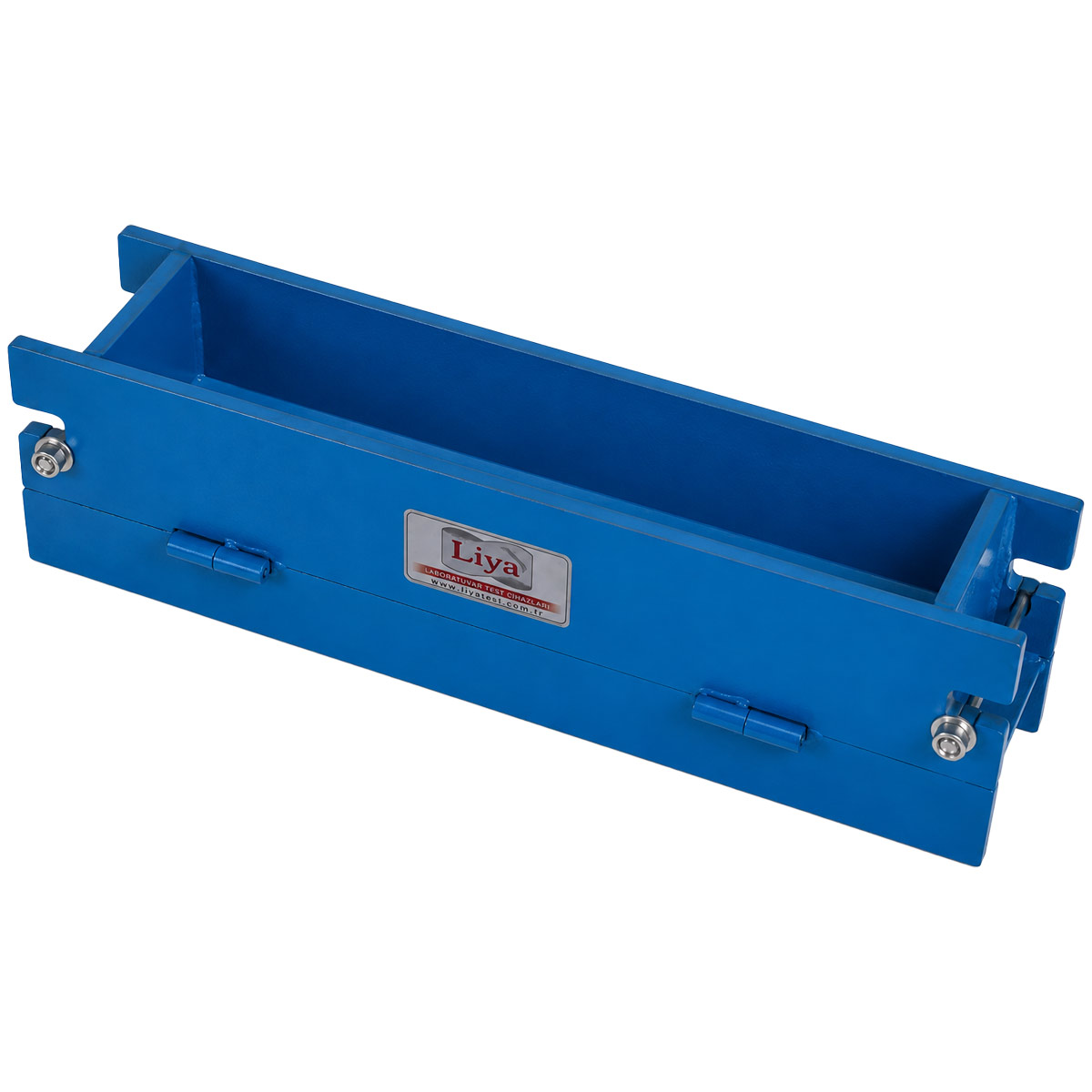
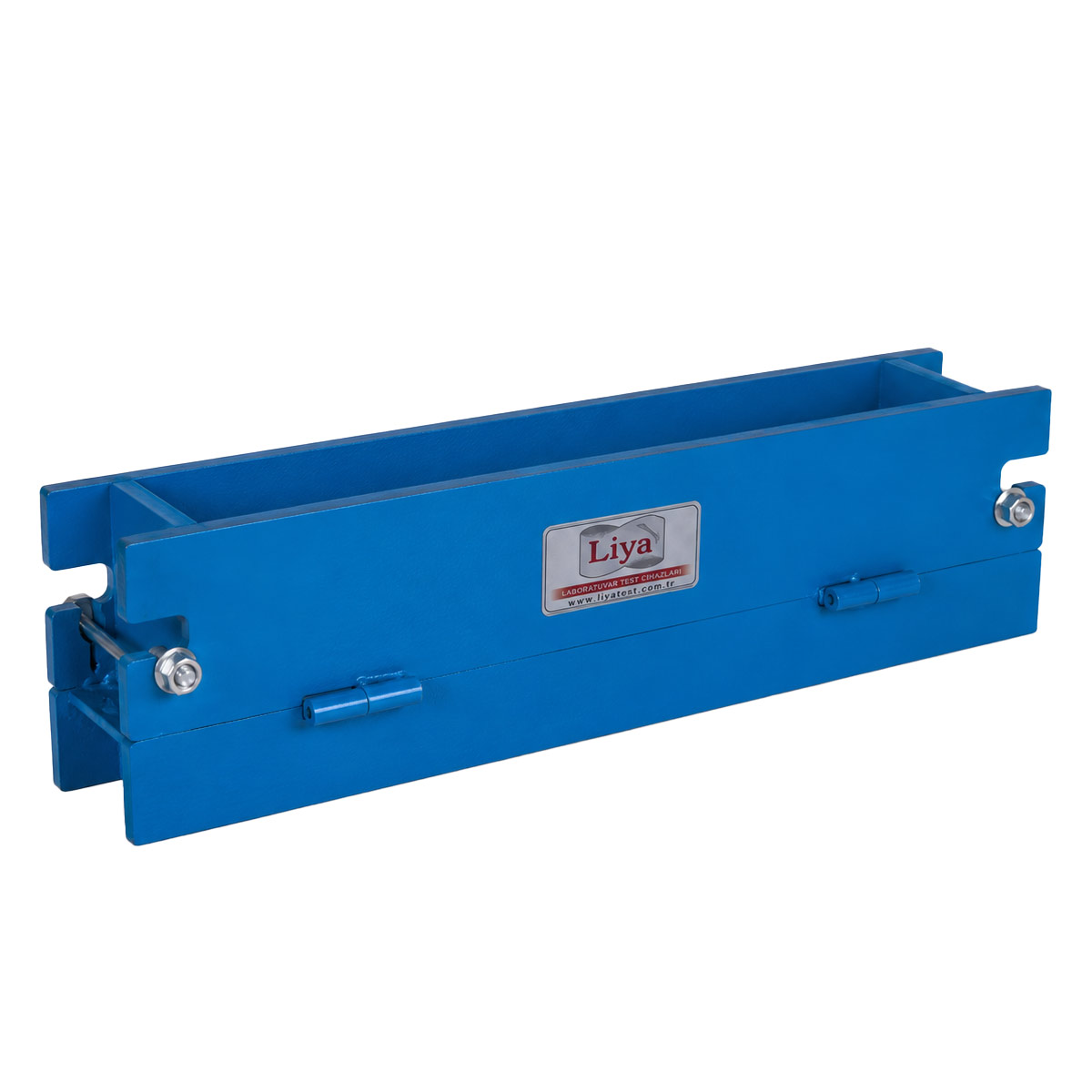
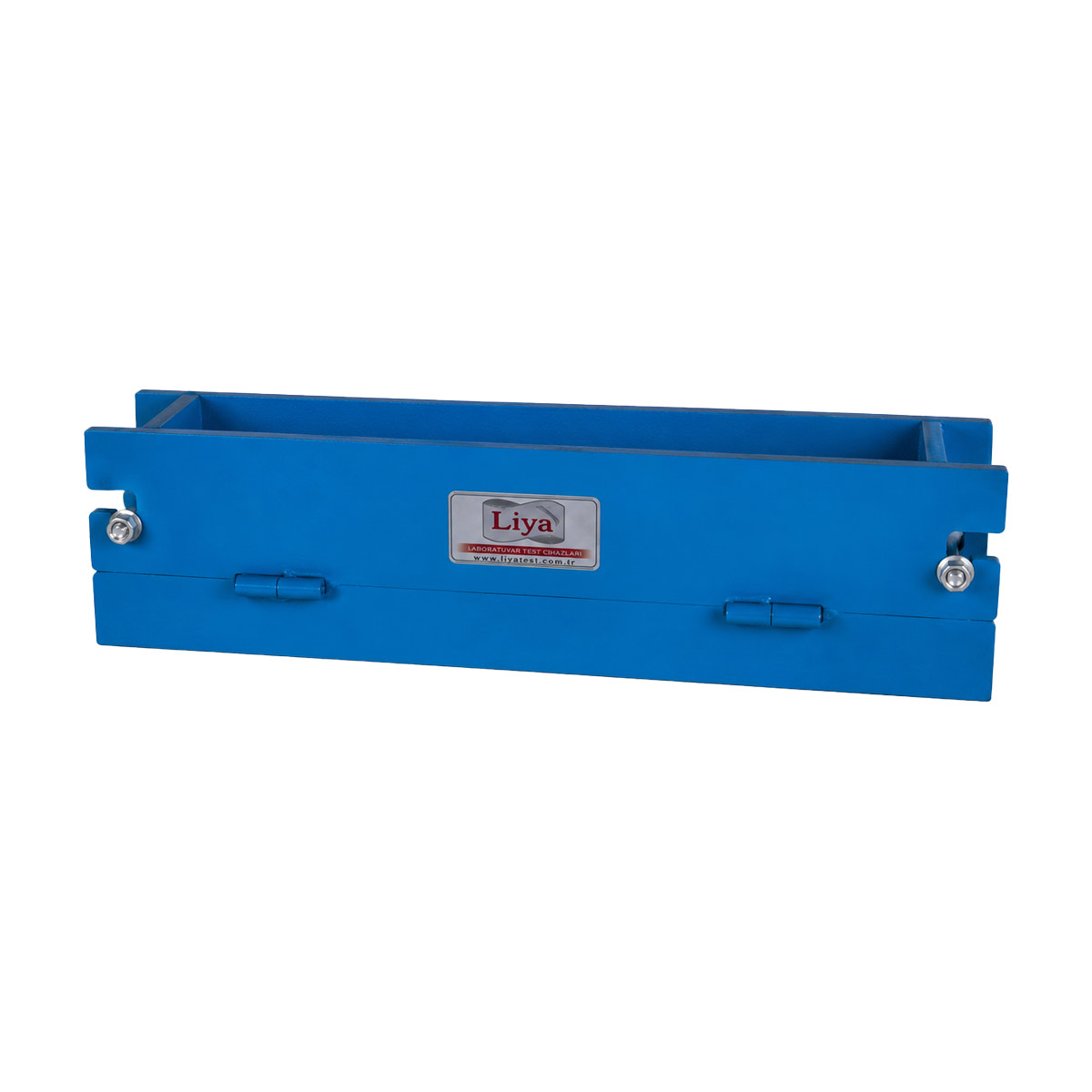
Steel Beam Moulds are designed to prepare prismatic concrete specimens for flexural strength testing. Their rigid steel construction maintains the required specimen geometry during filling and compaction. Smooth internal surfaces help produce concrete beams with straight edges and consistent dimensions. Removable side plates and a lockable base plate simplify demoulding and cleaning after the initial curing period.
- Four Size Options: 100 × 100 × 400 mm, 100 × 100 × 500 mm, 150 × 150 × 600 mm and 150 × 150 × 750 mm
- Prismatic Specimen Preparation: Produces concrete beam specimens for flexural testing
- Rigid Steel Construction: Helps maintain dimensional stability during filling and compaction
- Dimensional Stability: Supports consistent specimen width, depth and length
- Removable Side Plates: Simplify specimen removal after initial curing
- Lockable Base Plate: Helps keep the mould stable during concrete placement
- Smooth Internal Surfaces: Support consistent specimen surfaces and defined edges
- Easy Cleaning: Removable components simplify maintenance after testing
- Repeatable Specimen Preparation: Supports comparison of concrete mixtures under consistent conditions
- Standards: EN 12390-1, ASTM C39, ASTM C192
| Product Code | Product Name | Internal Dimensions (cm) | Overall Dimensions (cm) | Weight (kg) |
| LT-C0018 | Steel Beam Mould | 10 × 10 × 40 | 17 × 51 × 15 | 18.5 |
| LT-C0019 | Steel Beam Mould | 10 × 10 × 50 | 17 × 60 × 16 | 20.5 |
| LT-C0020 | Steel Beam Mould | 15 × 15 × 60 | 22 × 70 × 22 | 38.5 |
| LT-C0021 | Steel Beam Mould | 15 × 15 × 75 | 22 × 85 × 22 | 40 |
What Are Steel Beam Moulds?
Steel Beam Moulds are used to prepare prismatic concrete specimens for flexural strength testing. The moulds give fresh concrete a defined shape and consistent dimensions during casting. As a result, laboratories can compare different concrete mixtures under similar specimen conditions.
Specimen dimensions and surface quality can directly influence subsequent testing. Therefore, the mould must maintain its geometry during filling and compaction. The rigid steel construction helps achieve this requirement and supports the preparation of uniform concrete beam specimens.
Four Different Beam Mould Sizes
LİYA Test offers four different mould dimensions.
The LT-C0018 produces 100 × 100 × 400 mm specimens, while the LT-C0019 prepares 100 × 100 × 500 mm concrete beams.
For larger specimens, the LT-C0020 provides dimensions of 150 × 150 × 600 mm. The LT-C0021 produces larger 150 × 150 × 750 mm specimens.
These options allow laboratories to select the appropriate mould according to the required specimen geometry and test arrangement.
Rigid and Modular Steel Construction
The mould body uses a rigid steel structure that helps resist deformation during concrete placement and compaction. Therefore, the internal dimensions remain more stable while the specimen is being prepared.
Removable side plates and the base section simplify demoulding. After the concrete reaches sufficient initial strength, the operator releases the connections and removes the specimen carefully.
This modular design also provides easier access to the internal surfaces during cleaning.
How Is a Concrete Beam Specimen Prepared?
First, the operator cleans the internal surfaces and checks all mould connections. A suitable release agent can then be applied where required.
Fresh concrete is placed into the mould in accordance with the relevant preparation procedure. The operator compacts each layer using the specified method and then finishes the top surface.
After the initial curing period, the specimen is removed from the mould and transferred to the required curing environment.
EN 12390-2 covers important procedures related to filling, compaction and curing of concrete specimens.
Use in Flexural Strength Testing
EN 12390-1 specifies the shape, dimensions and tolerances of concrete specimens used for strength testing. It also includes requirements related to moulds used for producing prismatic specimens.
For flexural testing, EN 12390-5 covers the determination of flexural strength of hardened concrete specimens.
In ASTM applications, ASTM C192/C192M covers laboratory preparation and curing of concrete test specimens. ASTM C78/C78M describes flexural strength testing of concrete beams using third-point loading.
Reliable Concrete Beam Preparation
The Steel Beam Moulds combine rigid construction, removable components and several specimen dimensions in one product range.
As a result, laboratories can prepare concrete beam specimens with consistent geometry, defined edges and repeatable dimensions. The four available sizes provide flexibility for different flexural test arrangements and concrete research applications.