
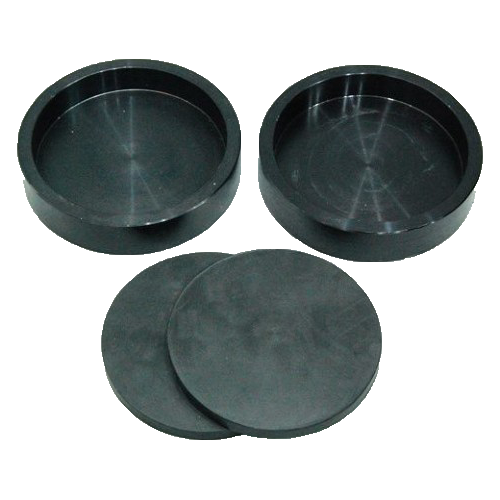
Neoprene Pads
STANDART: AASHTO T22, T851; ASTM C1231
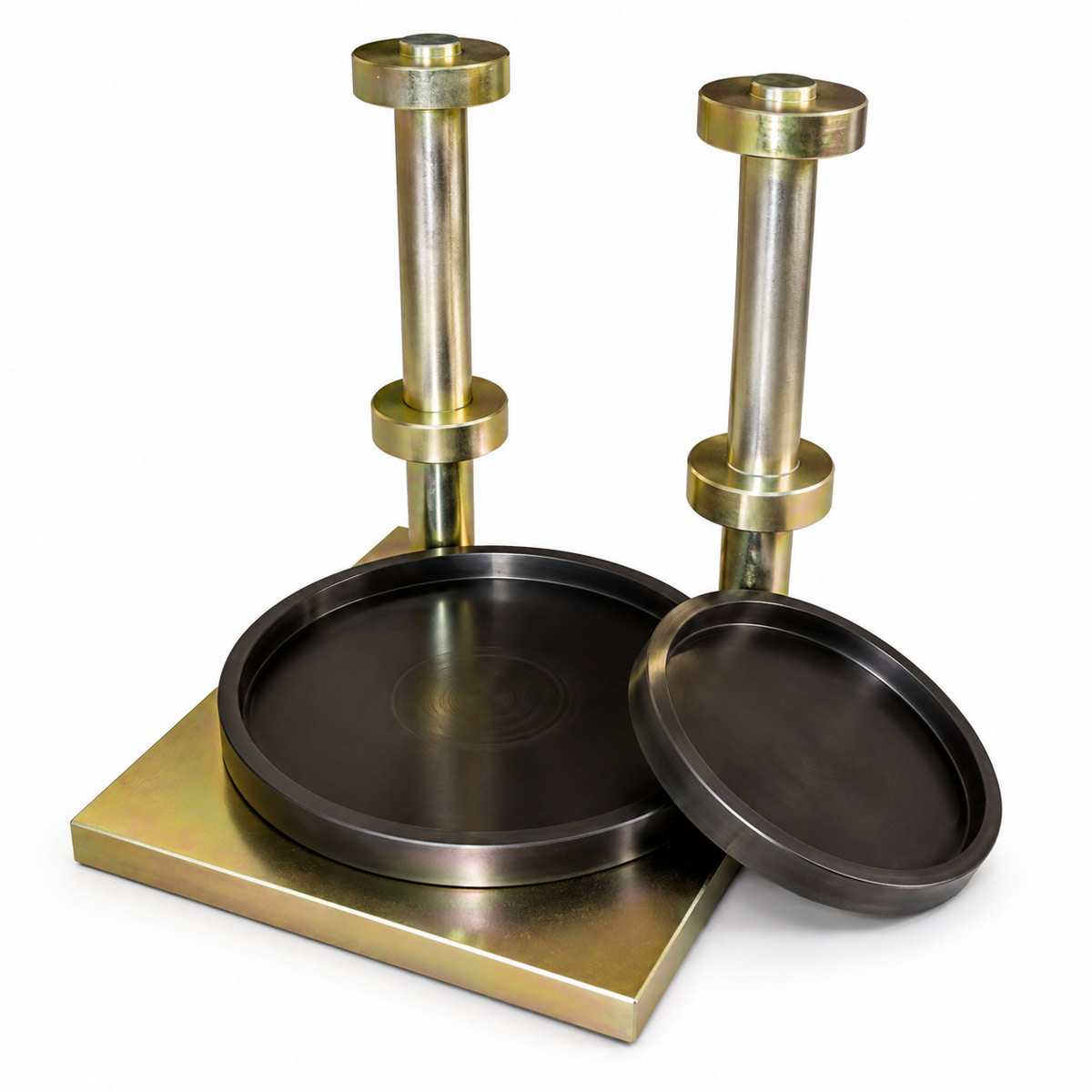
LT-C0050 Neoprene Pad Retainer | Ø 150 mm
LT-C0051 Neoprene Pad Retainer | Ø 100 mm
LT-C0050/1 Neoprene Pad | Ø 150 mm
LT-C0051/1 Neoprene Pad | Ø 100 mm
-
Neoprene Pads are used for the unbonded capping of cylindrical concrete specimens during compressive strength testing. The pads provide a compliant contact surface between the specimen and the compression platen, helping distribute the applied load more uniformly across the specimen end. Used together with suitable steel retainers, the reusable neoprene pads provide a practical alternative to traditional sulphur capping.
- Application: Compression testing of cylindrical concrete specimens
- Capping Method: Unbonded capping
- Available Diameters: Ø100 mm and Ø150 mm
- Uniform Load Distribution: Helps transfer compressive force evenly to the specimen
- Surface Compensation: Reduces the effect of minor specimen-end irregularities
- Reusable Design: Suitable pads can be used repeatedly within the limits of the applicable test method
- Fast Specimen Preparation: Eliminates sulphur melting, pouring and cooling operations
- Cleaner Operation: Reduces capping material handling and laboratory waste
- Steel Retainers: Available for both Ø100 mm and Ø150 mm pads
- Applications: Concrete laboratories, universities and quality-control facilities
- Primary Standard: ASTM C1231/C1231M
- Reference: AASHTO T 22
| Product Code | Product Name | Diameter (mm) | Weight (kg) |
| LT-C0050 | Neoprene Pad Retainer | Ø150 | 0.5 |
| LT-C0051 | Neoprene Pad Retainer | Ø100 | 0.5 |
| LT-C0050/1 | Neoprene Pad | Ø150 | 0.5 |
| LT-C0051/1 | Neoprene Pad | Ø100 | 0.5 |

What Are Neoprene Pads?
Neoprene Pads are reusable accessories used for unbonded capping of cylindrical concrete specimens during compressive strength testing. The pad is positioned between the specimen end and the compression loading system inside a suitable steel retainer.
The resilient neoprene material helps accommodate minor irregularities on the specimen surface. As the compressive load increases, the pad helps distribute the force more uniformly across the end of the concrete cylinder.
This method provides a practical alternative to bonded capping systems such as sulphur mortar when the specimen and pad meet the requirements of the applicable test procedure.
Uniform Load Distribution
Uniform load transfer is important during concrete compression testing.
If the specimen end is uneven, the applied force may concentrate on limited areas. This can cause premature failure or influence the measured compressive strength.
The Neoprene Pads deform slightly under load and help compensate for small surface variations. This creates more consistent contact between the specimen and loading platen.
Suitable steel retainers keep the neoprene pad correctly positioned throughout the test.
Ø100 mm and Ø150 mm Options
LİYA Test offers two pad diameters for common cylindrical concrete specimens.
The LT-C0050/1 is a Ø150 mm Neoprene Pad, while the LT-C0051/1 provides a Ø100 mm option.
Matching retainers are also available:
- LT-C0050: Ø150 mm Neoprene Pad Retainer
- LT-C0051: Ø100 mm Neoprene Pad Retainer
The correct pad and retainer combination should always be selected according to the specimen diameter.
Practical Alternative to Sulphur Capping
Traditional sulphur capping requires the compound to be melted, poured and allowed to cool before the specimen can be tested.
Unbonded neoprene capping removes many of these preparation stages. The operator places the suitable pad inside the retainer and positions it on the specimen end.
This approach reduces specimen preparation time and eliminates the need to handle hot sulphur capping material during routine testing.
It also helps keep the preparation area cleaner and reduces disposable capping material consumption.
Reusable Capping System
One of the main advantages of Neoprene Pads is their reusable design.
A suitable pad can be used for multiple compression tests when its hardness, physical condition and number of permitted uses remain within the limits of the applicable standard.
The operator should inspect the pads regularly for excessive deformation, cracking or other damage.
Pads that no longer meet the required condition should be replaced before further testing.
How Are Neoprene Pads Used?
First, the operator checks the concrete cylinder ends and selects the correct pad diameter.
The neoprene pad is inserted into the steel retainer. The retainer assembly is then positioned on the specimen end.
The specimen is centred in the compression testing machine and loaded according to the required test procedure.
During loading, the pad helps transfer the compressive force across the specimen surface. After the test, the operator removes and inspects the pad before using it again.
ASTM C1231/C1231M Unbonded Capping
ASTM C1231/C1231M covers the use of unbonded caps in the determination of compressive strength of hardened cylindrical concrete specimens.
The standard defines requirements related to pad properties, retainers, specimen strength and permitted reuse.
AASHTO T 22 covers compressive strength testing of cylindrical concrete specimens and is therefore relevant to the final compression-test application.
Reliable Concrete Cylinder Preparation
The Neoprene Pads combine quick installation, reusable construction and uniform load distribution in a simple capping system.
Available in Ø100 mm and Ø150 mm sizes, the pads and matching retainers support common cylindrical concrete specimen configurations.
As a result, laboratories can reduce specimen preparation time while maintaining a practical and repeatable setup for concrete compression testing.