
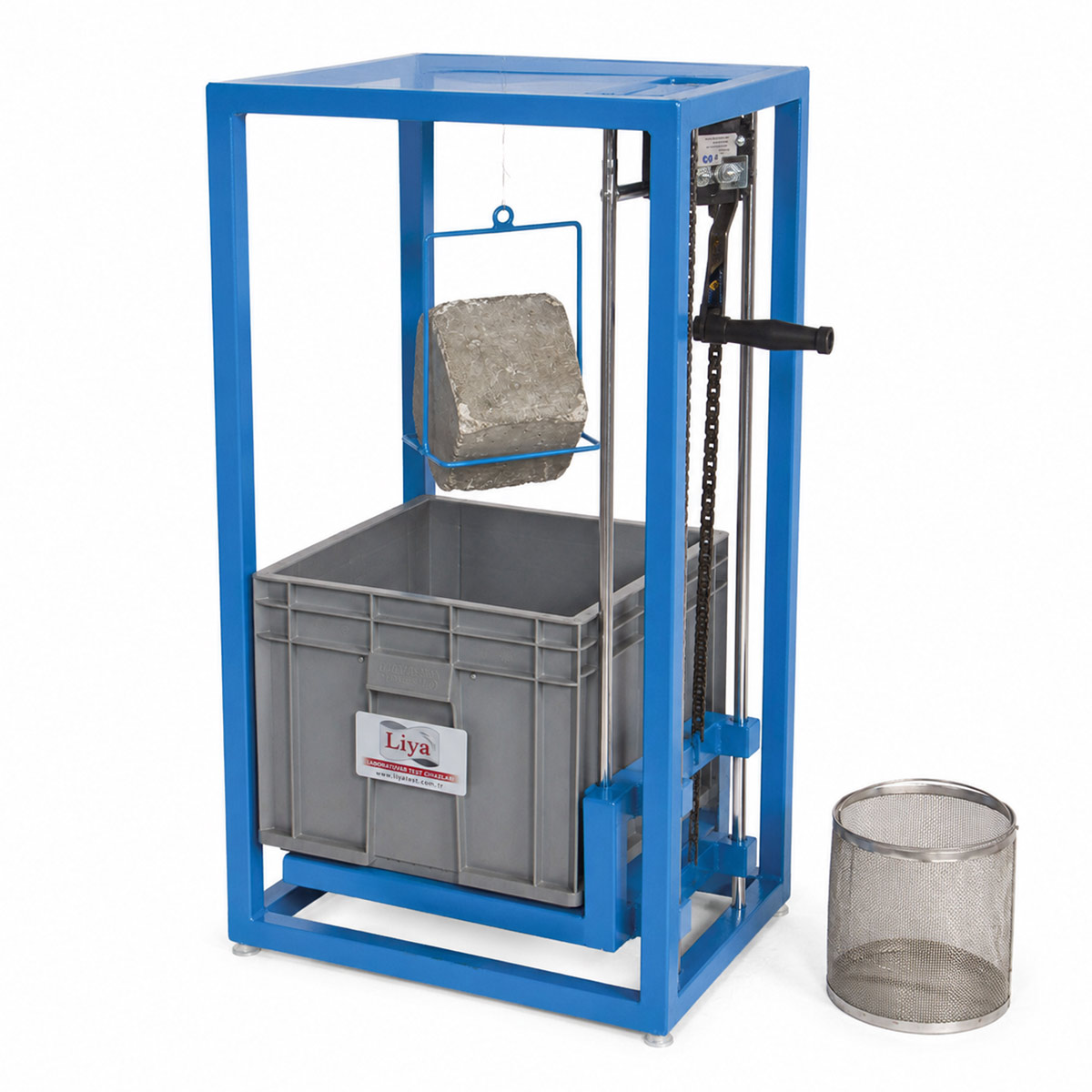
Specific Gravity Test Set
STANDART: TS EN 1097-6, 12390-7
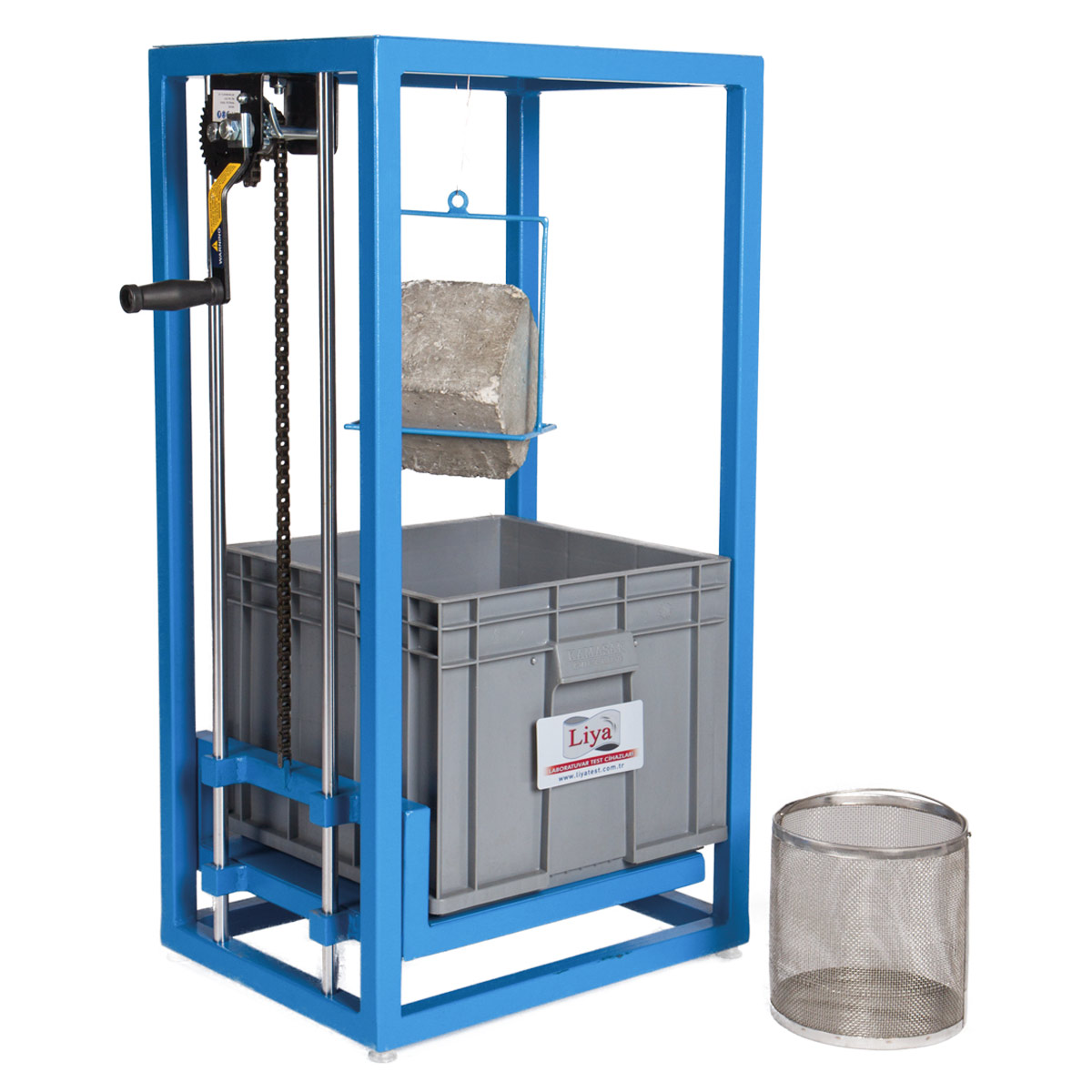
LT-C0066 Specific Gravity Test Set
LT-C0066/1 Specific Gravity Frame
LT-C0066/2 Cube Specimen Holder
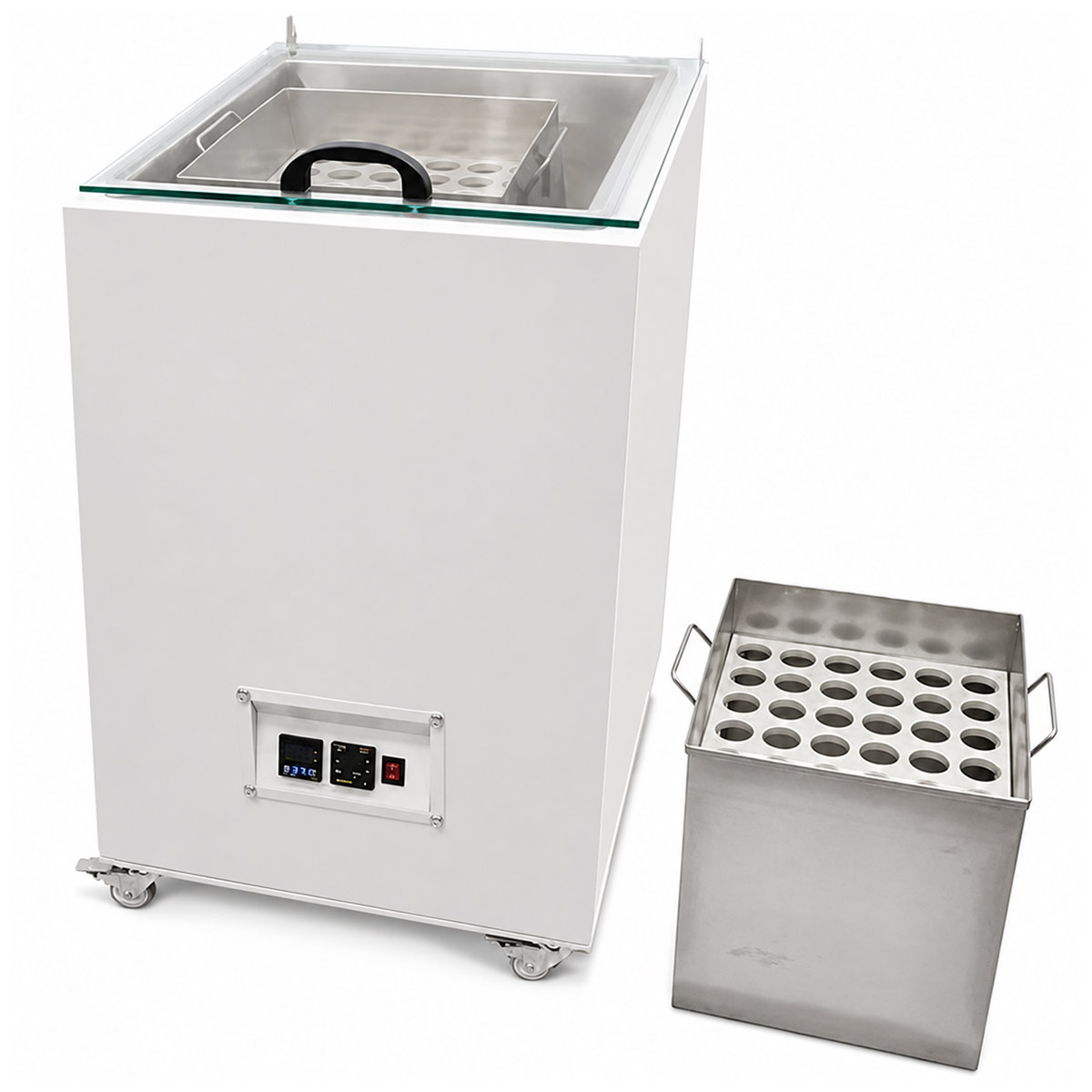
LT-C0066/3 Plastic Water Container | 28x38x30 cm
LT-C0066/4 Plastic Water Container | 40x40x30 cm
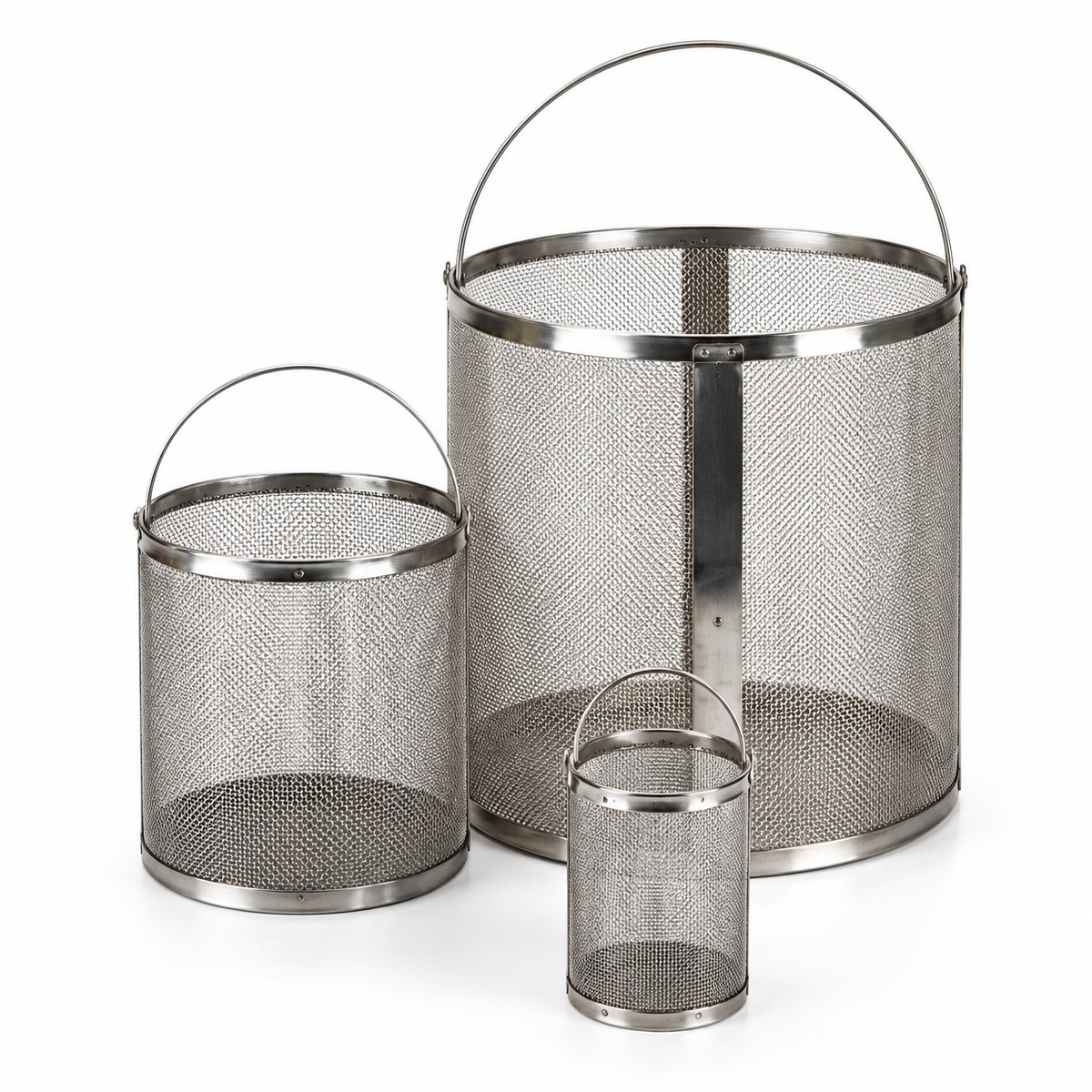
LT-C0660 Wire Basket
Specific Gravity Test Set supports the determination of density and specific gravity of hardened concrete and aggregate specimens by hydrostatic weighing. The system allows the operator to compare the specimen mass in air and while immersed in water. Using these values, laboratories can calculate specimen volume and density. The complete system includes a specific gravity frame, cube specimen holder, plastic water container and wire basket, providing a practical setup for different testing requirements.
- Product Code: LT-C0066
- Product Name: Specific Gravity Test Set
- Test Method: Hydrostatic weighing
- Application: Density testing of hardened concrete and aggregates
- Complete Set: Frame, cube specimen holder, plastic water container and wire basket
- Concrete Specimen Holder: Supports stable underwater weighing of cube specimens
- Wire Basket: Suitable for hydrostatic weighing of aggregate specimens
- Water Container Options: Different sizes are available according to specimen dimensions
- Balance Compatibility: Designed for use with a balance featuring an under-balance weighing facility
- Recommended Balance Readability: 0.1 g or 0.5 g
- Main Frame Dimensions: 40 × 50 × 98 cm
- Approximate Set Weight: 25 kg
- Standards: EN 1097-6, EN 12390-7
| Product Code | Product Name | Overall Dimensions (cm) | Weight (kg) |
| LT-C0066 | Specific Gravity Test Set | 40 × 50 × 98 | 25 |
| LT-C0066/1 | Specific Gravity Frame | 40 × 50 × 98 | 25 |
| LT-C0066/2 | Cube Specimen Holder | 23 × 13 × 20 | 2.5 |
| LT-C0066/3 | Plastic Water Container, Small | 28 × 38 × 30 | 0.3 |
| LT-C0066/4 | Plastic Water Container, Large | 40 × 40 × 30 | 0.35 |
| LT-G0660 | Wire Basket, Ø20 × 20 cm, 3.35 mm | Ø20 × 20 | 1.5 |

LT_ÖZGÜLAGIRLIK_
What Is a Specific Gravity Test Set?
The Specific Gravity Test Set supports density and specific gravity measurements of hardened concrete and aggregate specimens. The system compares the specimen mass in air with its apparent mass while immersed in water. Laboratories can then use these values to calculate specimen volume and density.
Hydrostatic weighing is particularly useful for specimens with irregular shapes. Instead of determining every geometric dimension separately, the method uses the buoyancy effect of water. Therefore, laboratories can evaluate different concrete and aggregate specimens with the same basic test arrangement.
How Does Hydrostatic Weighing Work?
First, the operator prepares the specimen according to the relevant test procedure. The specimen mass in air is then measured using a suitable precision balance.
Next, the specimen is placed in the cube specimen holder or wire basket and completely immersed in water. During this stage, the specimen should not touch the sides or bottom of the water container.
A balance with an under-balance weighing facility records the apparent mass of the specimen in water. The laboratory then uses the mass in air and the submerged mass to determine volume and density.
For reliable results, the operator should also control water temperature, surface air bubbles and specimen moisture condition. In addition, the balance should be zeroed before each weighing procedure.
Complete Hydrostatic Weighing System
The LT-C0066 Specific Gravity Test Set includes a specific gravity frame, cube specimen holder, plastic water container and wire basket.
The main frame measures 40 × 50 × 98 cm and weighs approximately 25 kg. Its rigid structure provides stable support during underwater weighing.
The manufacturer recommends using the system with a balance that offers 0.1 g or 0.5 g readability and an under-balance weighing function. The balance is ordered separately.
Concrete Density Measurement
The cube specimen holder keeps hardened concrete specimens stable while they are immersed in water. This arrangement simplifies hydrostatic weighing and helps prevent unwanted contact with the water container.
EN 12390-7 specifies methods for determining the density of hardened concrete. Depending on the procedure, laboratories may test specimens in different moisture conditions and determine both their mass and volume.
The resulting density value helps users compare different concrete mixtures and evaluate material characteristics.
Aggregate Density and Water Absorption Testing
The wire basket provides a practical solution for hydrostatic weighing of aggregate specimens. Its open construction allows water to move freely around the material during testing.
EN 1097-6 covers the determination of particle density and water absorption of aggregates. For suitable coarse aggregate fractions, the wire-basket method supports the required underwater weighing procedure.
Smaller aggregate fractions may require different methods, such as pycnometer-based testing. Therefore, laboratories should select the appropriate procedure according to aggregate size and the applicable standard.
Different Water Container Options
The product range includes two plastic water containers. LT-C0066/3 measures 28 × 38 × 30 cm, while LT-C0066/4 measures 40 × 40 × 30 cm.
These alternatives allow users to select a container according to specimen dimensions and the required immersion setup.
Reliable Density and Specific Gravity Testing
The Specific Gravity Test Set combines a rigid weighing frame, different specimen holders and suitable water containers in one practical laboratory system.
As a result, laboratories can perform hydrostatic weighing of concrete and aggregate specimens in a controlled and repeatable manner. The system supports density and specific gravity testing according to EN 12390-7 and EN 1097-6 while offering flexibility for different specimen types and sizes.