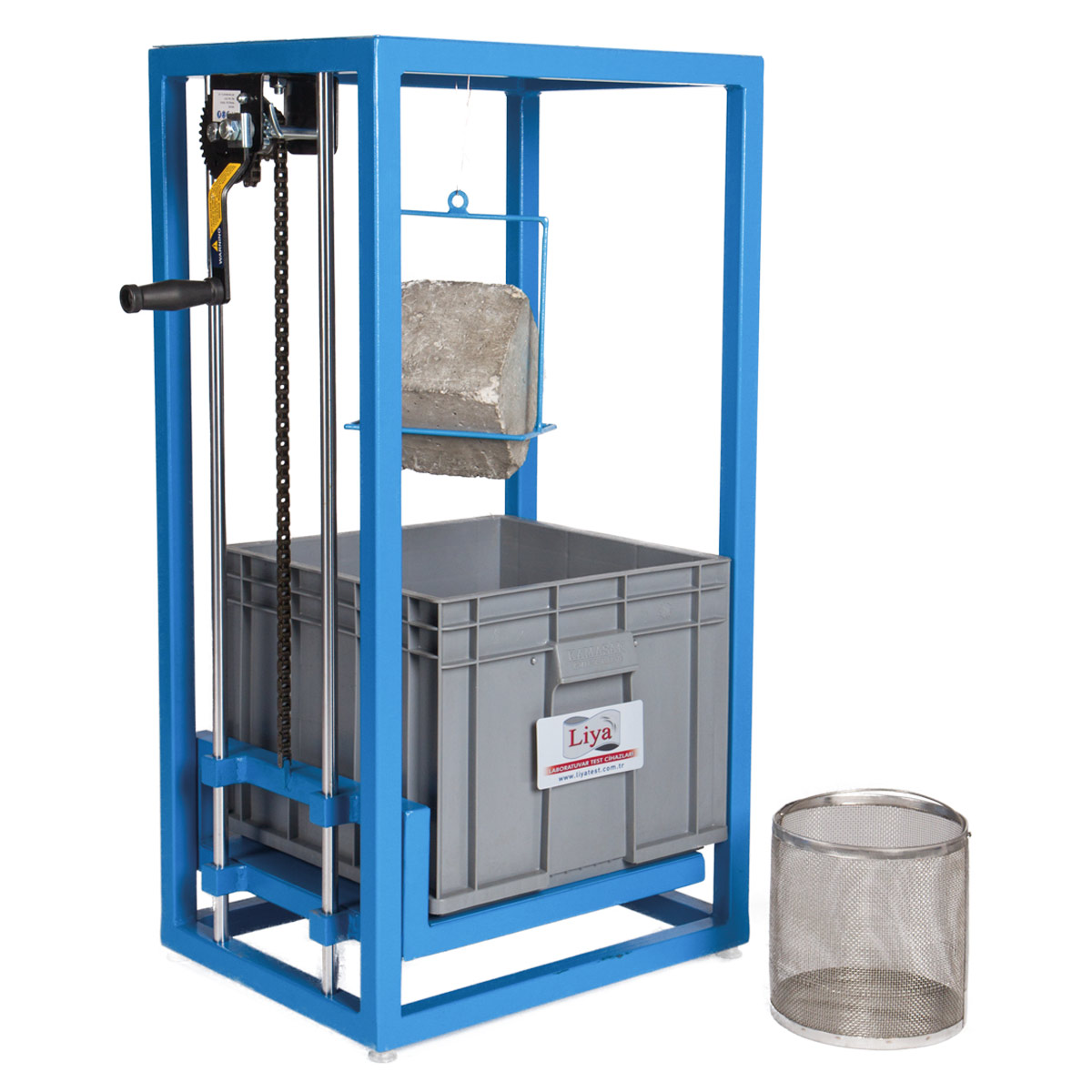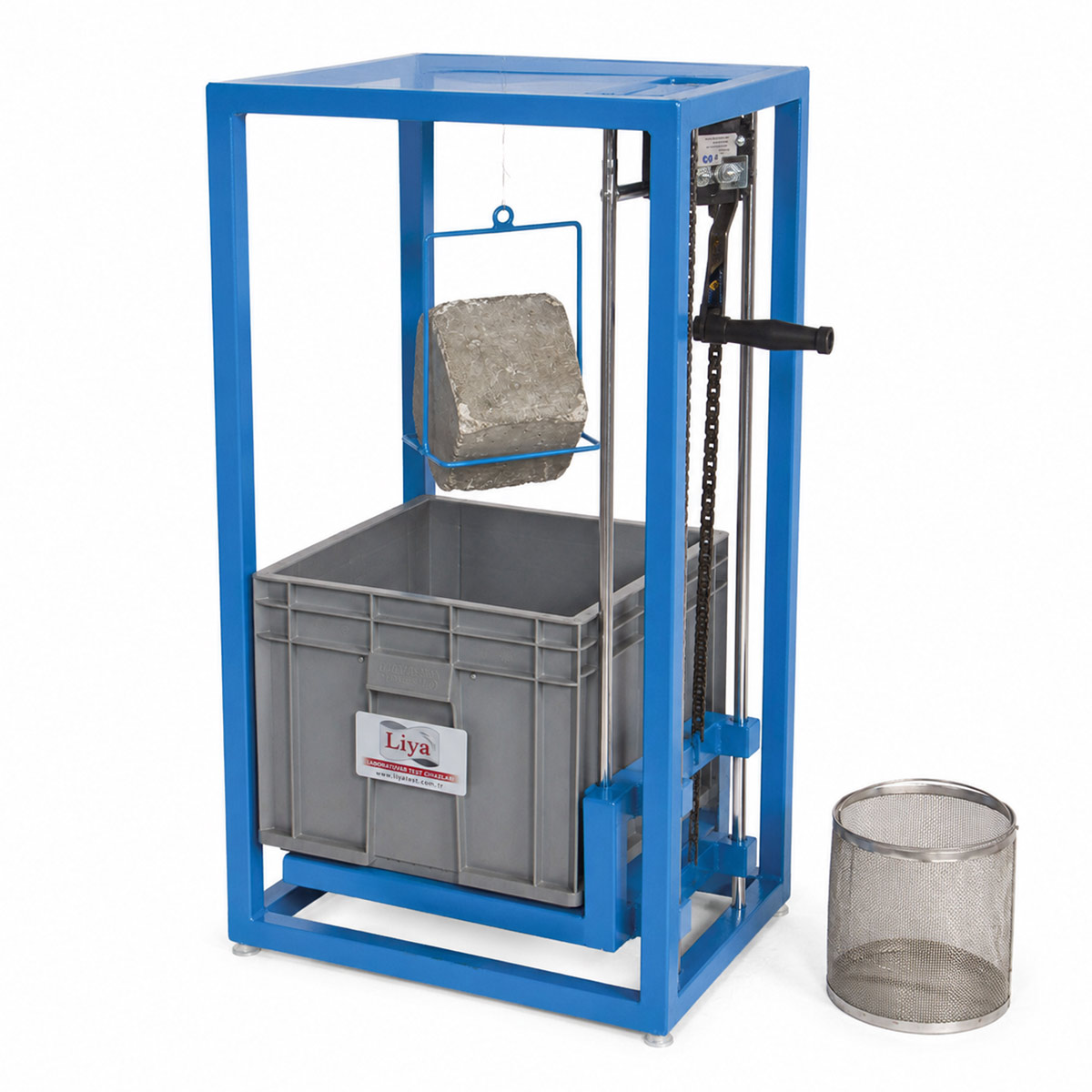

Compacting Factor Test Apparatus
STANDART: BS 5075, 1881:103
LT-C0044 Compacting Factor Test Apparatus
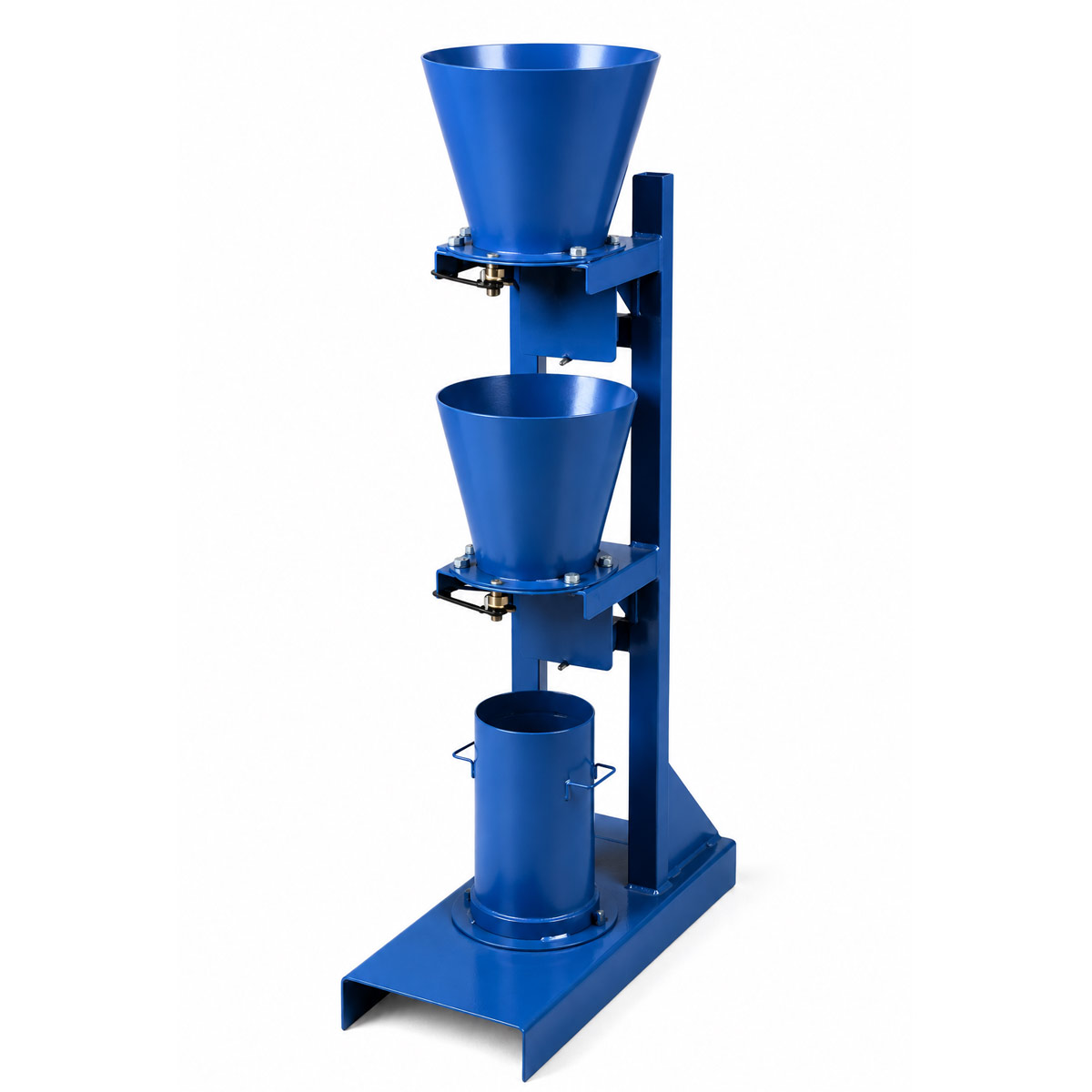
Compacting Factor Test Apparatus determines the workability of fresh concrete by comparing the mass of partially compacted and fully compacted concrete. The test is particularly suitable for concrete mixtures with low to medium workability, where conventional slump testing may provide limited information. The apparatus consists of two conical hoppers, a cylindrical collecting container and a rigid steel frame. Quick-release hinged doors allow the concrete to fall freely under its own weight, while removable components simplify cleaning after each test.
- Product Code: LT-C0044
- Product Name: Compacting Factor Test Apparatus
- Application: Workability testing of fresh concrete
- Suitable Concrete: Low and medium workability mixtures
- Test Principle: Comparison of partially and fully compacted concrete mass
- Hopper System: Two vertically arranged conical hoppers
- Release Mechanism: Quick-opening hinged doors
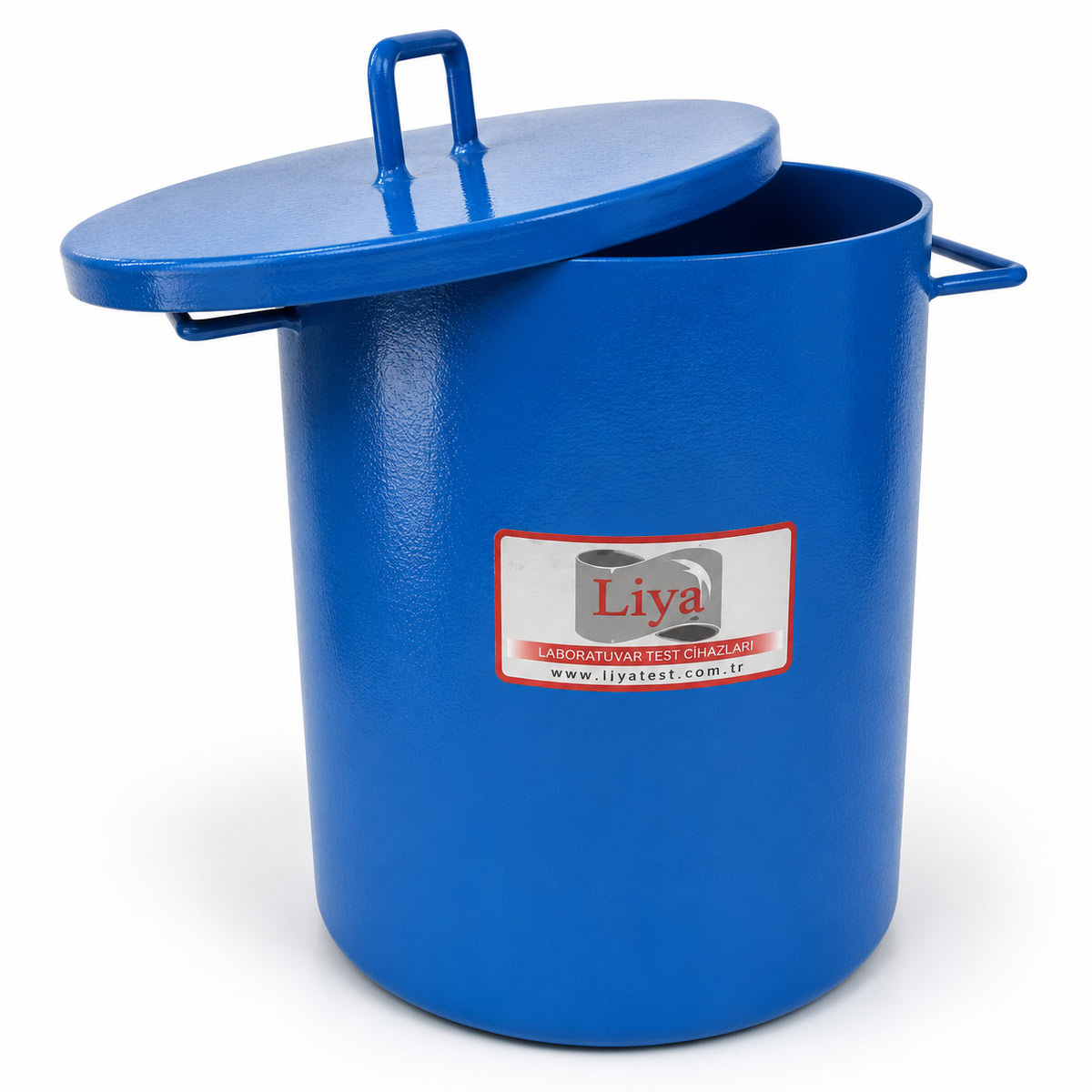
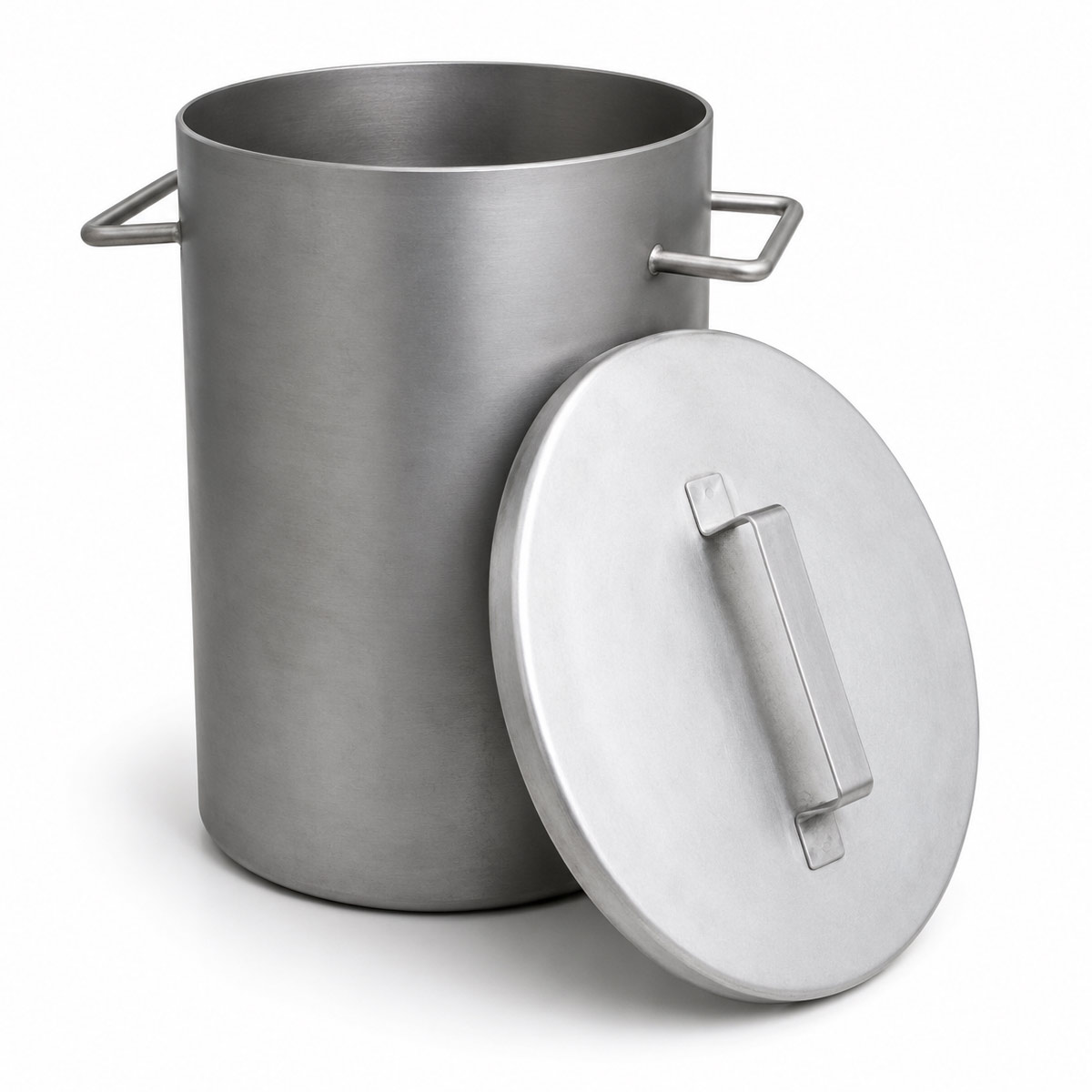
- Collecting Container: Cylindrical container
- Frame Construction: Rigid steel structure
- Cleaning: Removable hoppers simplify maintenance
- Overall Dimensions: 30 × 40 × 130 cm
- Approximate Weight: 40 kg
- Standards: BS 5075, BS 1881:103
| Product Code | Product Name | Overall Dimensions (cm) | Weight (kg) |
| LT-C0044 | Compacting Factor Test Apparatus | 30 × 40 × 130 | 40 |

LT_BETON_SIKISTIRMAFAKTORU_
What Is a Compacting Factor Test Apparatus?
The Compacting Factor Test Apparatus determines the workability of fresh concrete by comparing the mass of partially compacted concrete with the mass of fully compacted concrete.
The method is particularly useful for low and medium workability mixtures. In very stiff concrete, the slump value may remain too low to provide detailed information. The compacting factor method offers an alternative way to evaluate how easily the concrete settles under its own weight.
The apparatus consists of two conical hoppers, a cylindrical collecting container and a rigid supporting frame. Each hopper includes a quick-release hinged door that allows the concrete to fall into the section below.
How Is the Compacting Factor Test Performed?
First, the operator cleans the internal surfaces and closes both hopper doors. Fresh concrete is then placed into the upper hopper without additional compaction.
The first door opens and allows the concrete to fall freely into the lower hopper. Next, the second door opens and the concrete drops into the cylindrical collecting container.
The operator removes excess concrete from the top of the cylinder and determines the mass of the partially compacted concrete.
In the second stage, the same cylinder is filled with fully compacted concrete. The operator then determines its mass again.
The laboratory compares these two values to calculate the compacting factor. This result indicates how easily the concrete can achieve compaction under its own weight.
Evaluation of Test Results
A higher compacting factor generally indicates that the concrete can achieve compaction more easily. In contrast, a lower value may indicate a stiffer mixture that requires more compaction energy.
However, laboratories should not evaluate this result in isolation. Aggregate shape, grading, air content and mixture proportions can also influence fresh-concrete behaviour.
For reliable comparisons, operators should use the same sampling, weighing and full-compaction procedures for each mixture.
Two-Hopper Test System
The vertically arranged hoppers allow concrete to move through the apparatus under gravity. Their conical shape directs the material toward the quick-release doors.
The rigid frame keeps the hoppers and cylindrical container correctly aligned. This arrangement allows the concrete to fall directly into the next section without unnecessary interference.
In addition, the removable hopper design simplifies cleaning after testing. Proper cleaning is important because hardened concrete around the door mechanism may affect its movement during later tests.
Rigid Laboratory Construction
The LT-C0044 has overall dimensions of 30 × 40 × 130 cm and an approximate weight of 40 kg.
Its steel frame provides stable support during filling, release and weighing operations. The user should place the apparatus on a firm and level surface before beginning the test.
The operator should also check that both hinged doors move freely. Concrete residue around the hinges may slow the release and affect the test procedure.
Use in Concrete Laboratories
The Compacting Factor Test Apparatus can support fresh-concrete testing in ready-mixed concrete plants, research centres and construction-material laboratories.
The method allows laboratories to compare different concrete mixtures using a numerical workability value. It is especially useful when evaluating stiff mixtures that show only limited deformation during conventional slump testing.
As a result, the Compacting Factor Test Apparatus combines a straightforward test method, rigid construction and easy-to-clean components. It provides laboratories with a practical solution for evaluating the workability and compaction behaviour of fresh concrete in a consistent and repeatable manner.