
Schmidt Hammer | Concrete Rebound Hammer
STANDART: EN 12504-2, 13791; ASTM C 805; C 5873; BS 1881:202; NF P18-417; DIN 1048; UNI 9189
LT-C0150 Schmidt Hammer | Concrete Rebound Hammer, N Type
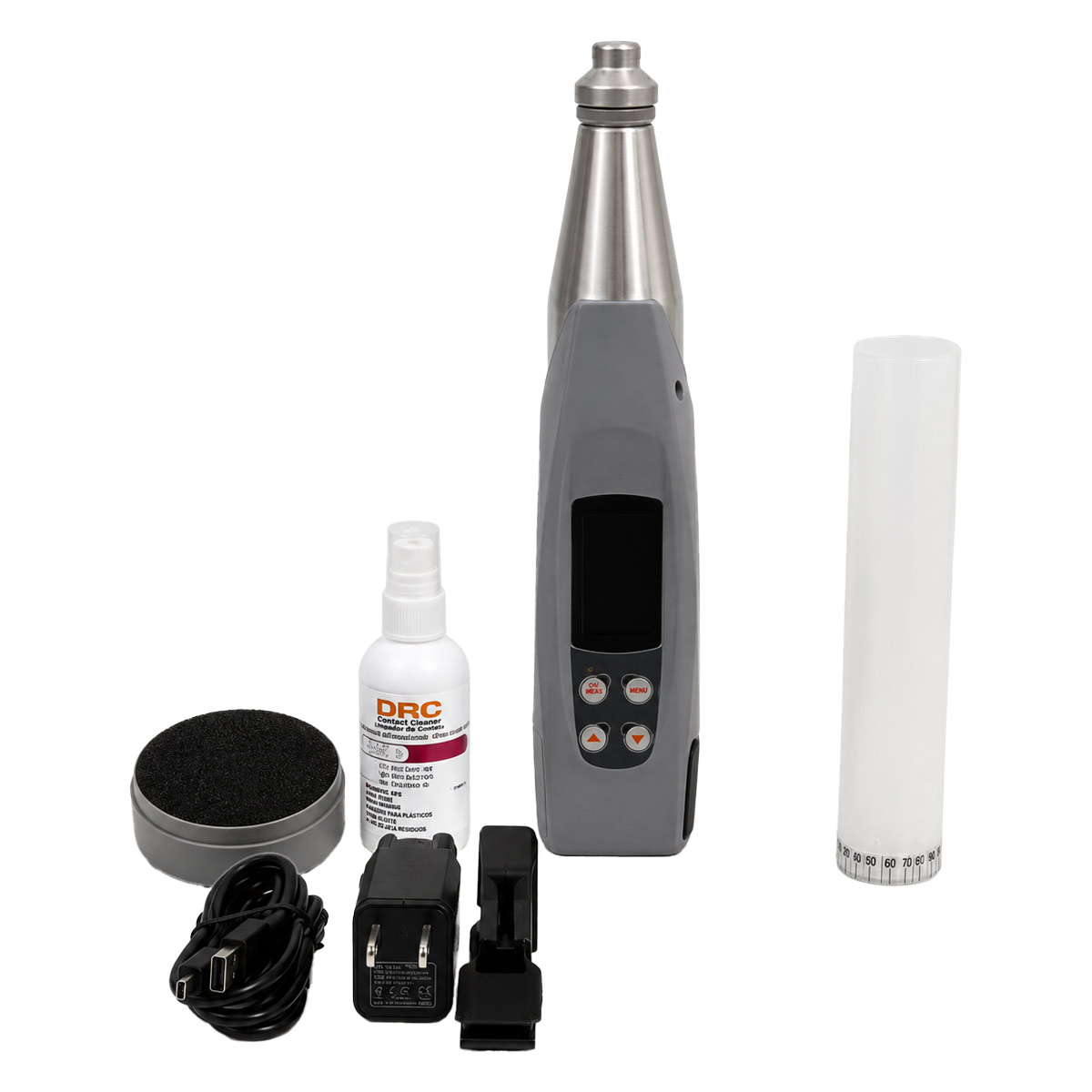
LT-C0151 Schmidt Hammer | Concrete Test Hammer, Made in Italy
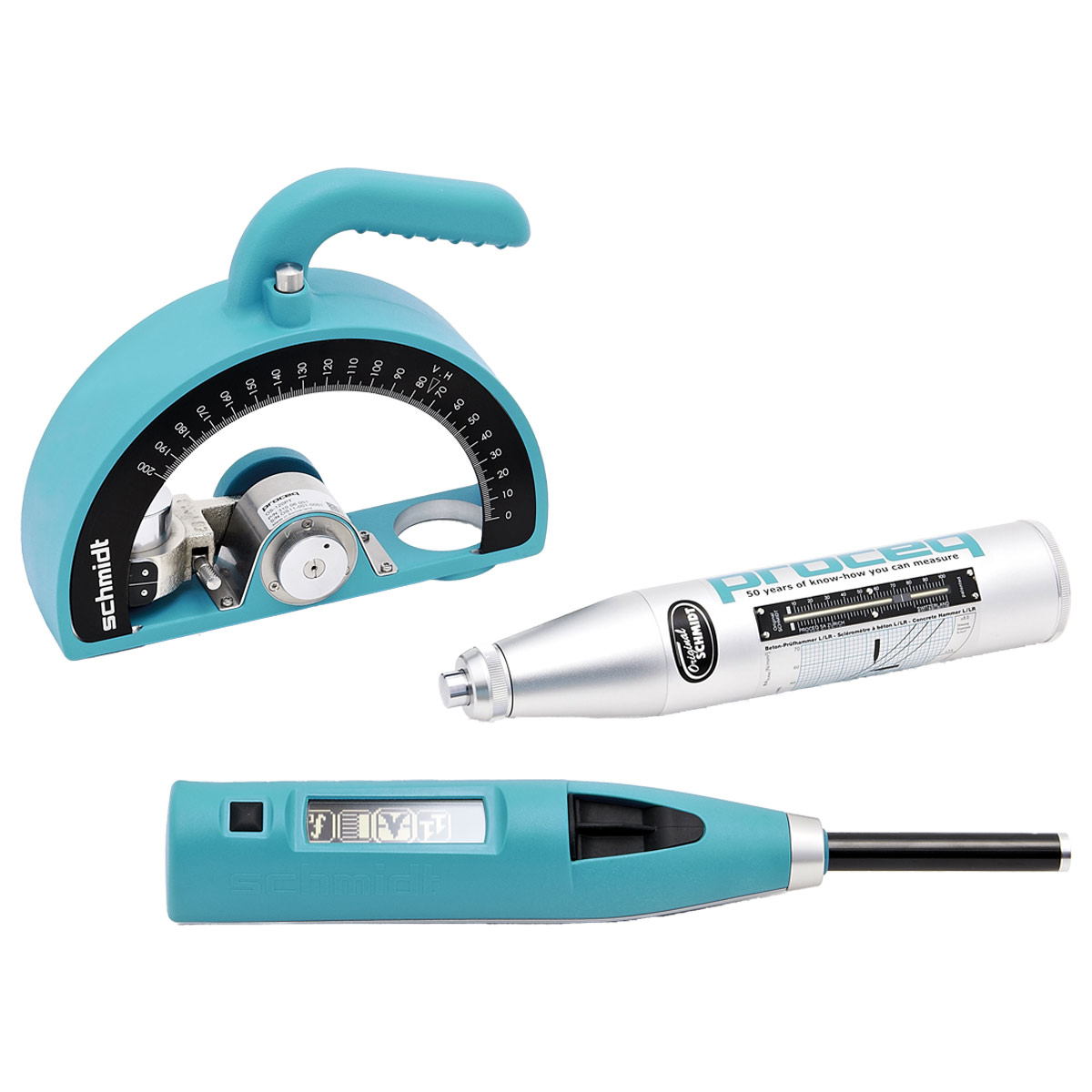
LT-C0152 Digital Schmidt Hammer | Digi-Schmidt, Proceq
LT-C0153 Electronic Concrete Rebound Hammer | Silver Schmidt, PC Connection
LT-C0154 Schmidt Hammer | Concrete Test Hammer, Proceq
LT-C0155 Digital Schmidt Hammer | Concrete Test Hammer, Made in Italy
Schmidt Hammer, also known as a Concrete Rebound Hammer, provides a fast and non-destructive method for evaluating the surface hardness and uniformity of hardened concrete. The spring-loaded impact mechanism applies a controlled impact to the concrete surface and measures the resulting rebound value. This allows users to compare different areas of a concrete structure and identify locations that may require further investigation. The product range includes mechanical, digital and PC-connected models for laboratory and field applications.
- Non-Destructive Testing: Measures concrete surface rebound without significant damage.
- Impact Energy: N-Type model applies approximately 2.207 J.
- Working Range: Suitable for concrete in the approximate range of 10–70 N/mm².
- Fast Rebound Measurement: Results can be read directly from the instrument.
- Concrete Uniformity Evaluation: Supports comparison of different areas of a structure.
- Multiple Model Options: Mechanical, digital and electronic models are available.
- Portable Construction: Suitable for laboratory and field use.
- Surface Preparation: Grinding stone supports preparation of suitable test surfaces.
- Calibration Support: A calibration anvil can be used to check hammer performance.
- Digital Options: Selected models provide electronic data handling and PC connectivity.
- Standards / References: EN 12504-2, EN 13791, ASTM C805/C805M, BS 1881 Part 202, NF P18-417, DIN 1048, UNI 9189
| Product Code | Product Name | Dimensions (cm) | Weight (kg) | Feature |
| LT-C0150 | Schmidt Hammer, N Type | 35 × 18 × 10 | 2 | Standard Model |
| LT-C0151 | Schmidt Hammer | 30 × 15 × 40 | 4 | Made in Italy |
| LT-C0152 | Digital Schmidt Hammer, Digi-Schmidt | 30 × 15 × 40 | 4 | Proceq |
| LT-C0153 | Electronic Rebound Hammer, Silver Schmidt | 30 × 15 × 40 | 4 | PC Connection |
| LT-C0154 | Schmidt Hammer | 30 × 15 × 40 | 4 | Proceq |
| LT-C0155 | Digital Schmidt Hammer | 30 × 15 × 40 | 4 | Made in Italy |

LT_BETON_SCHMIDT_
What Is a Schmidt Hammer?
The Schmidt Hammer is a portable instrument used to measure the rebound value of hardened concrete surfaces. A spring-loaded mechanism drives a steel plunger against the concrete. The instrument then records the rebound response.
This method allows engineers and technicians to compare concrete uniformity at different locations without causing significant damage to the structure. For this reason, the test is widely used on buildings, bridges, tunnels, precast elements and laboratory specimens.
However, the rebound value does not directly represent compressive strength. A reliable strength estimate requires a suitable correlation for the specific concrete mixture and test conditions.
N-Type Impact Mechanism
The N-Type Schmidt Hammer operates with an impact energy of approximately 2.207 J. This energy level makes the instrument suitable for testing normal-weight concrete surfaces.
According to the product information, the system supports evaluations within an approximate concrete strength range of 10–70 N/mm².
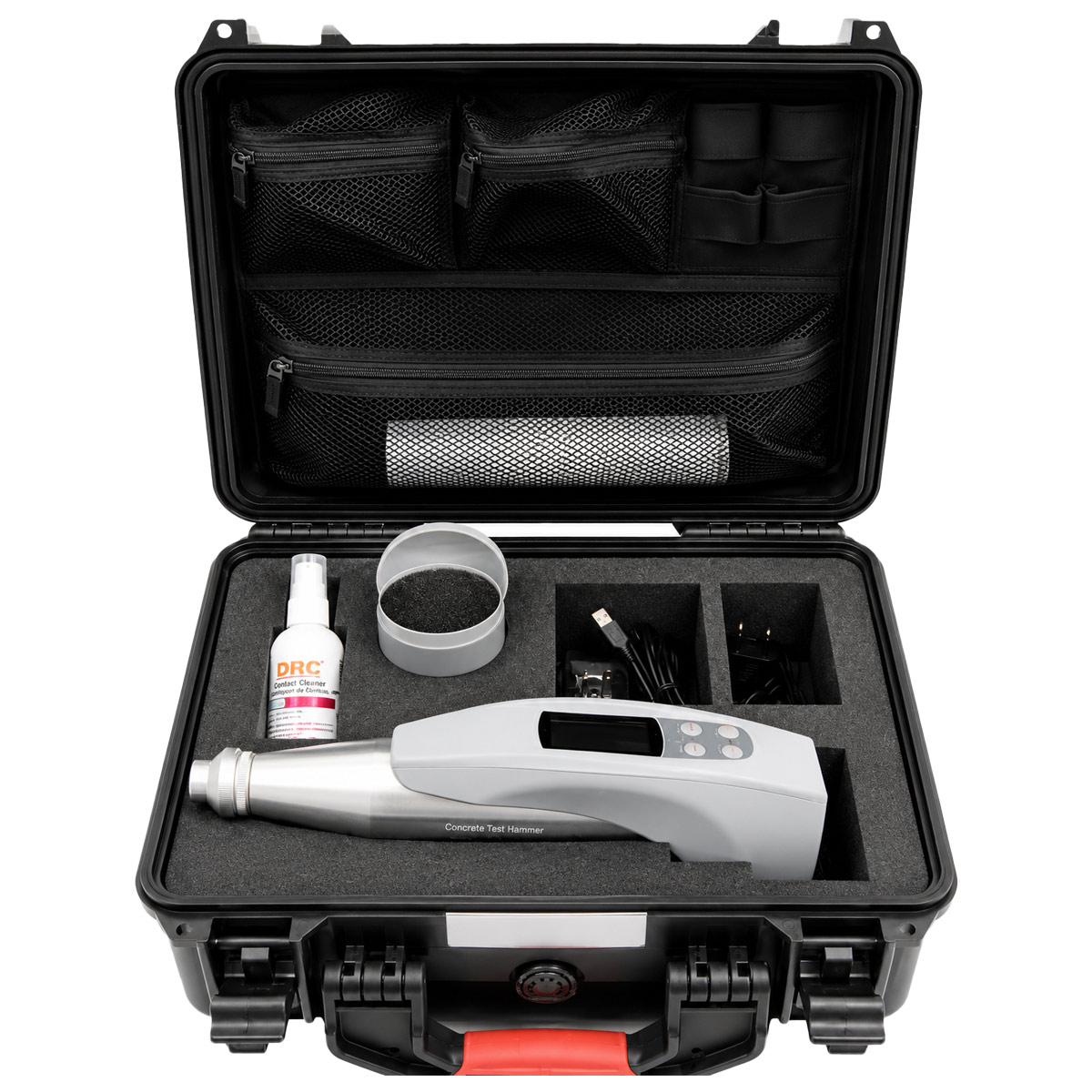
Its compact body also makes field measurements easier. In addition, the supplied carrying case protects the instrument during transportation.
How Is the Schmidt Hammer Test Performed?
First, the operator selects a clean and suitable concrete surface. Loose particles and irregular areas should be removed before testing.
Next, the hammer is held perpendicular to the surface. The operator slowly presses the plunger until the internal mechanism releases the impact.
The instrument then displays the rebound value. Users should take several readings within the same test area instead of relying on a single result.
Afterward, the laboratory evaluates the acceptable readings according to the applicable test procedure.
Factors That Influence Rebound Results
Surface condition can influence the measured rebound value. Moisture, carbonation, aggregate type and impact direction may all affect the result.
Therefore, the operator should maintain similar test conditions when comparing different locations.
Testing from several positions also improves the quality of the evaluation. If results vary significantly, additional investigation may be required.
Mechanical and Digital Model Options
LİYA Test offers several Schmidt Hammer configurations.
The range includes standard mechanical models as well as Digi-Schmidt and Silver Schmidt options. Digital models simplify data reading and storage, while selected versions support PC connectivity.
This model variety allows laboratories and field teams to choose equipment according to the required level of data management and testing frequency.
Calibration Check
A calibration anvil helps verify the operating condition of the hammer. The user can perform several impacts on the anvil and compare the readings with the manufacturer’s reference range.
If the values fall outside the expected range, the instrument should be inspected before further testing.
Regular checks support consistent rebound measurements and reduce the risk of using an instrument that requires maintenance.
Testing According to EN 12504-2 and ASTM C805
EN 12504-2 describes the determination of rebound number on hardened concrete surfaces. The method supports the assessment of uniformity and comparison of concrete areas.
ASTM C805/C805M also covers rebound testing of hardened concrete using a spring-driven steel hammer.
The method can support comparative evaluation, but laboratories should not use the rebound number alone as the sole basis for accepting or rejecting concrete.
Reliable Non-Destructive Concrete Evaluation
The Schmidt Hammer combines rapid measurement, portable operation and non-destructive testing in one practical instrument.
As a result, field teams can compare concrete surfaces efficiently and identify areas that may require additional investigation. Mechanical, digital and PC-connected model options also provide flexibility for routine inspection and more advanced concrete assessment applications.