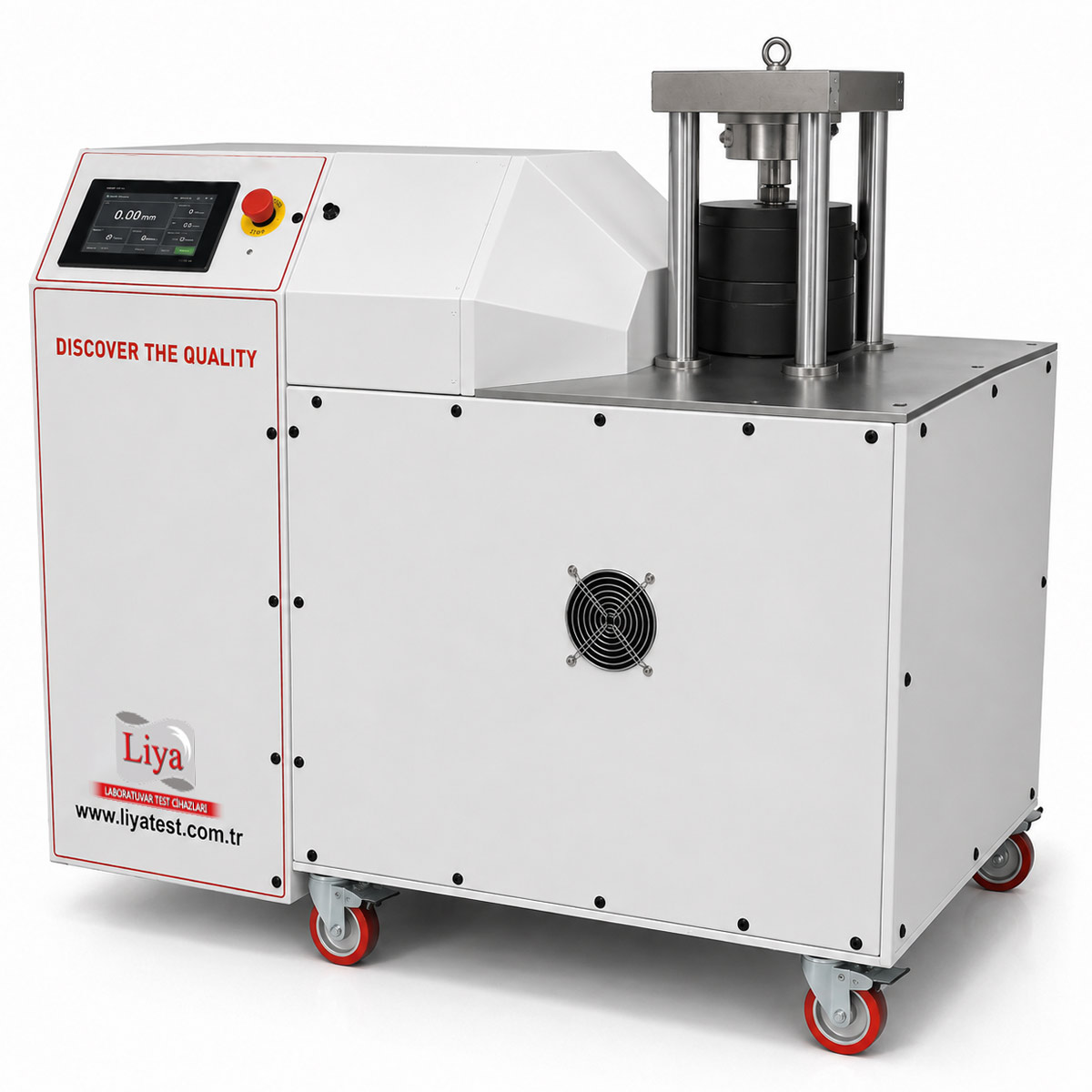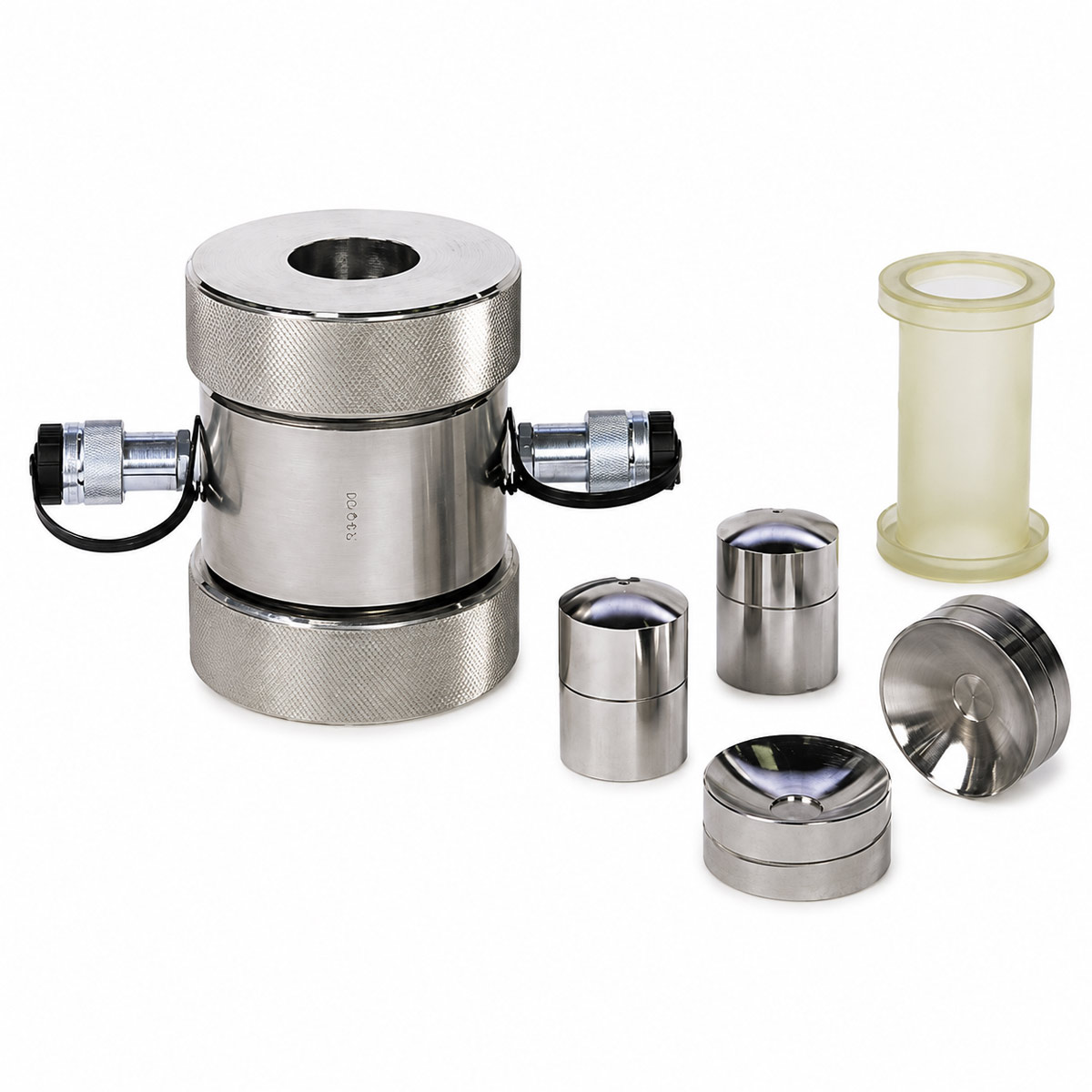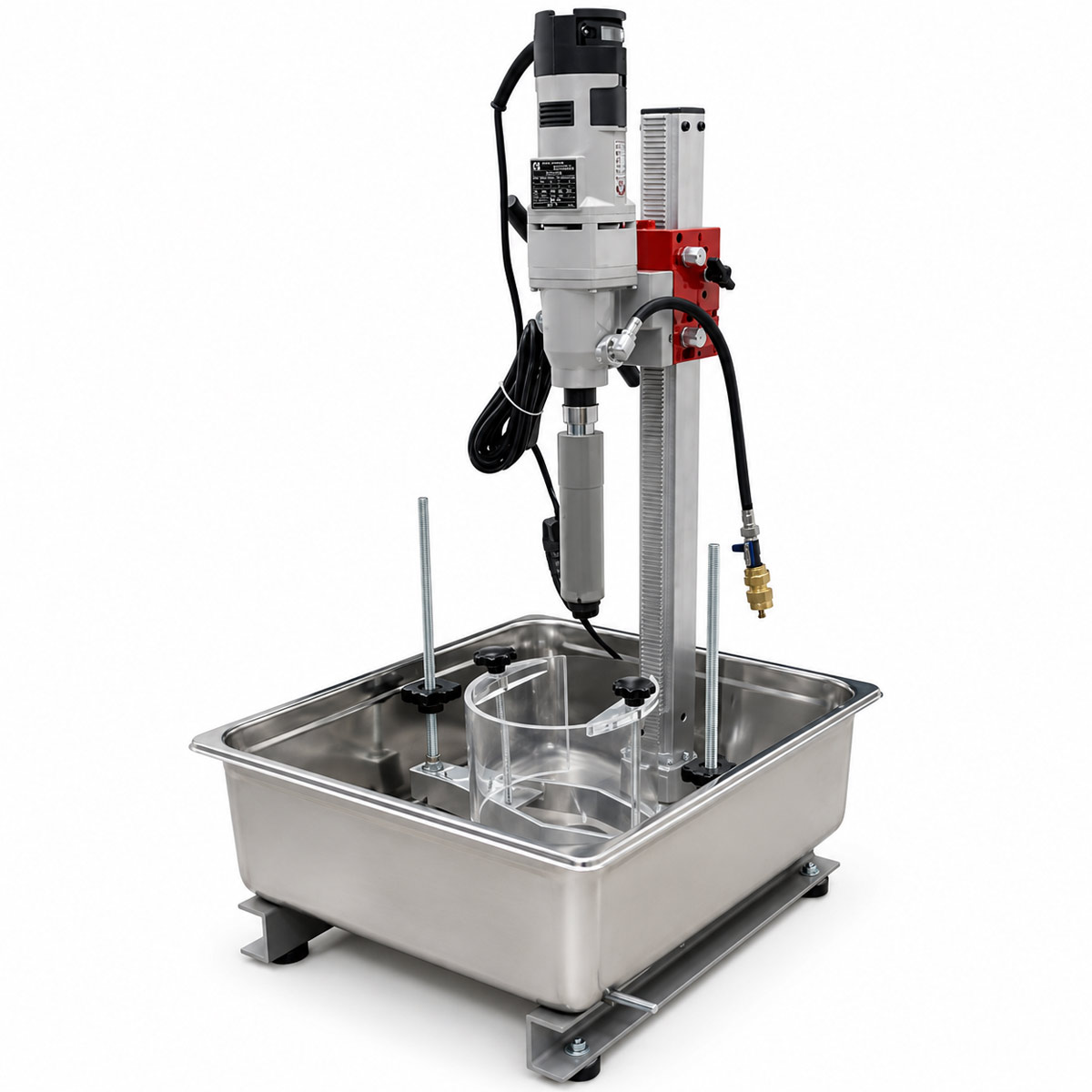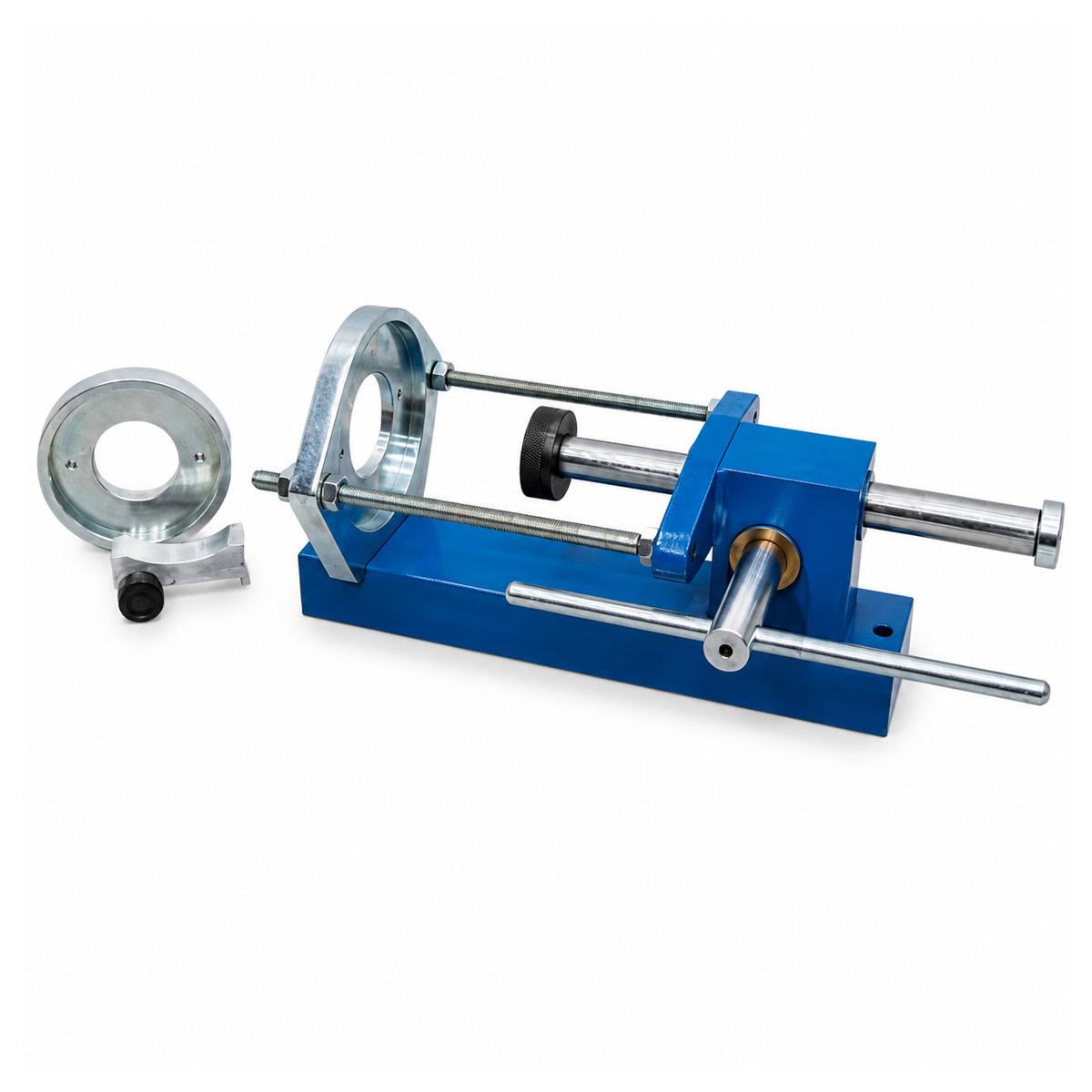

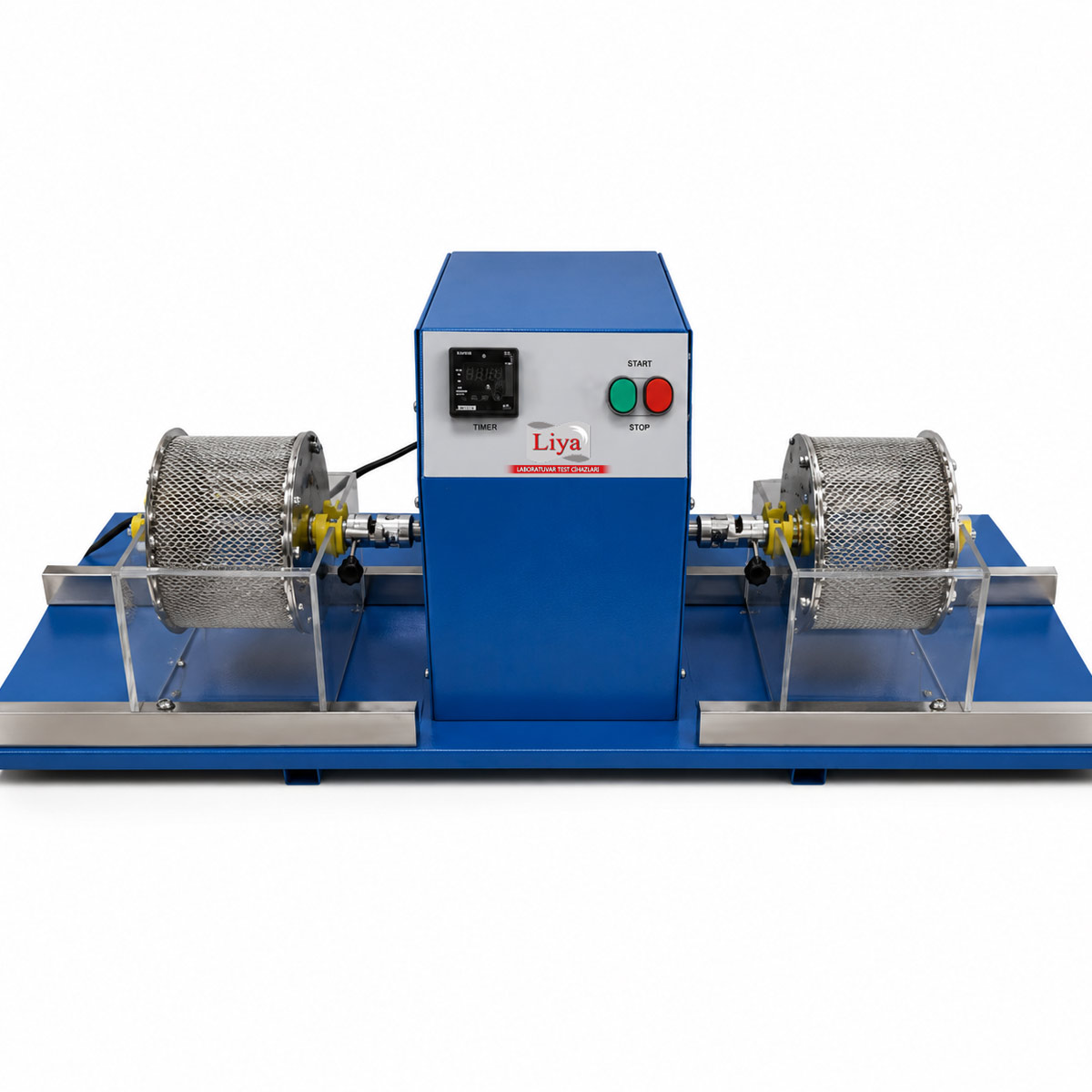
Slake Durability Test Device is designed to evaluate the resistance of shale and similar weak rocks to weakening and disintegration caused by wetting, drying and abrasion. Rock specimens are placed inside rotating stainless-steel mesh drums and exposed to controlled contact with water. After the test, the remaining dry material is weighed to determine the slake durability index. The machine operates at 20 rpm and can accommodate two or four drums.
- Weak Rock Durability Testing: Evaluates shale and similar weak rocks under wetting and drying effects.
- 20 rpm Rotation Speed: Drums rotate at a constant controlled speed.
- Two-Drum Standard Configuration: Standard machine operates with two test drums.
- Four-Drum Option: Two additional drums can increase laboratory test capacity.
- Stainless-Steel Drums: Resistant to repeated water exposure and laboratory use.
- 2 mm Mesh Opening: Allows disintegrated fine material to leave the drum during testing.
- Drum Dimensions: Each drum is approximately Ø140 × 100 mm.
- Digital Timer: Automatically stops the motor after the preset test period.
- Controlled Water Level: Water level is maintained approximately 20 mm below the drum axis.
- Compact Dimensions: Machine dimensions are 35 × 74 × 30 cm.
- Product Code: LT-R0002.
- Standard: ASTM D4644.
| Product Code | Product Name | Dimensions (cm) | Weight (kg) |
| LT-R0002 | Slake Durability Test Device | 35 × 74 × 30 | 15 |

LT_KAYA_SUDADAGILMA_
What Is a Slake Durability Test Device?
The Slake Durability Test Device is designed to evaluate the resistance of shale and similar weak rocks to deterioration caused by repeated wetting, drying and abrasion. The test provides a numerical durability value that helps laboratories compare the behaviour of weak rock materials under simulated environmental conditions.
This method is particularly useful for materials considered for embankments, slopes, road construction and other geotechnical applications. Weak rocks can gradually break down when exposed to moisture changes. Therefore, evaluating their durability helps engineers assess their suitability before use.
Rotating Stainless-Steel Drum System
The machine incorporates a motor-driven system mounted on a rigid base. It rotates the stainless-steel mesh drums at a constant speed of 20 rpm.
Each drum is approximately 140 mm in diameter and 100 mm long. The drum surface is manufactured from 2 mm mesh, allowing fine particles created during disintegration to pass through while more durable rock fragments remain inside.
The standard configuration uses two drums. Laboratories with higher test volumes can increase the system to four drums.
Controlled Wetting and Abrasion
Before testing, the rock specimens are dried and weighed. They are then placed inside the mesh drums.
The tanks are filled so that the water level remains approximately 20 mm below the drum axis. As the drums rotate, the rock pieces are repeatedly exposed to water while also contacting each other and the mesh surface.
This combined action simulates deterioration caused by environmental wetting and mechanical abrasion.
Digital Test Timing
A digital timer controls the test duration. The operator selects the required test period before starting the machine.
When the preset time is completed, the motor stops automatically. This feature reduces operator influence and helps different specimens undergo comparable test conditions.
How Is the Slake Durability Index Determined?
After the rotation period, the material remaining inside the drum is removed and dried. The laboratory then weighs the retained dry material.
The remaining dry mass is compared with the original dry mass. The resulting percentage is reported as the slake durability index.
A higher index indicates that the rock retained more of its original mass and therefore showed stronger resistance to disintegration. A lower value indicates greater deterioration during the wetting and abrasion process.
ASTM D4644 Test Method
Liya Test lists ASTM D4644 as the reference test method for this equipment. The method was developed for determining the slake durability index of shale and similar weak rocks through controlled drying, wetting and abrasion procedures.
The Slake Durability Test Device combines constant drum speed, stainless-steel mesh drums and automatic timing in a compact laboratory system. As a result, rock mechanics and geotechnical laboratories can evaluate weak-rock durability under controlled and repeatable conditions.