
Pycnometer | Glass Jar Type
STANDART: BS 812:2, 1377-2; ASTM C128, D854; AASHTO T84
LT-G0075 Pycnometer | Glass Jar Type
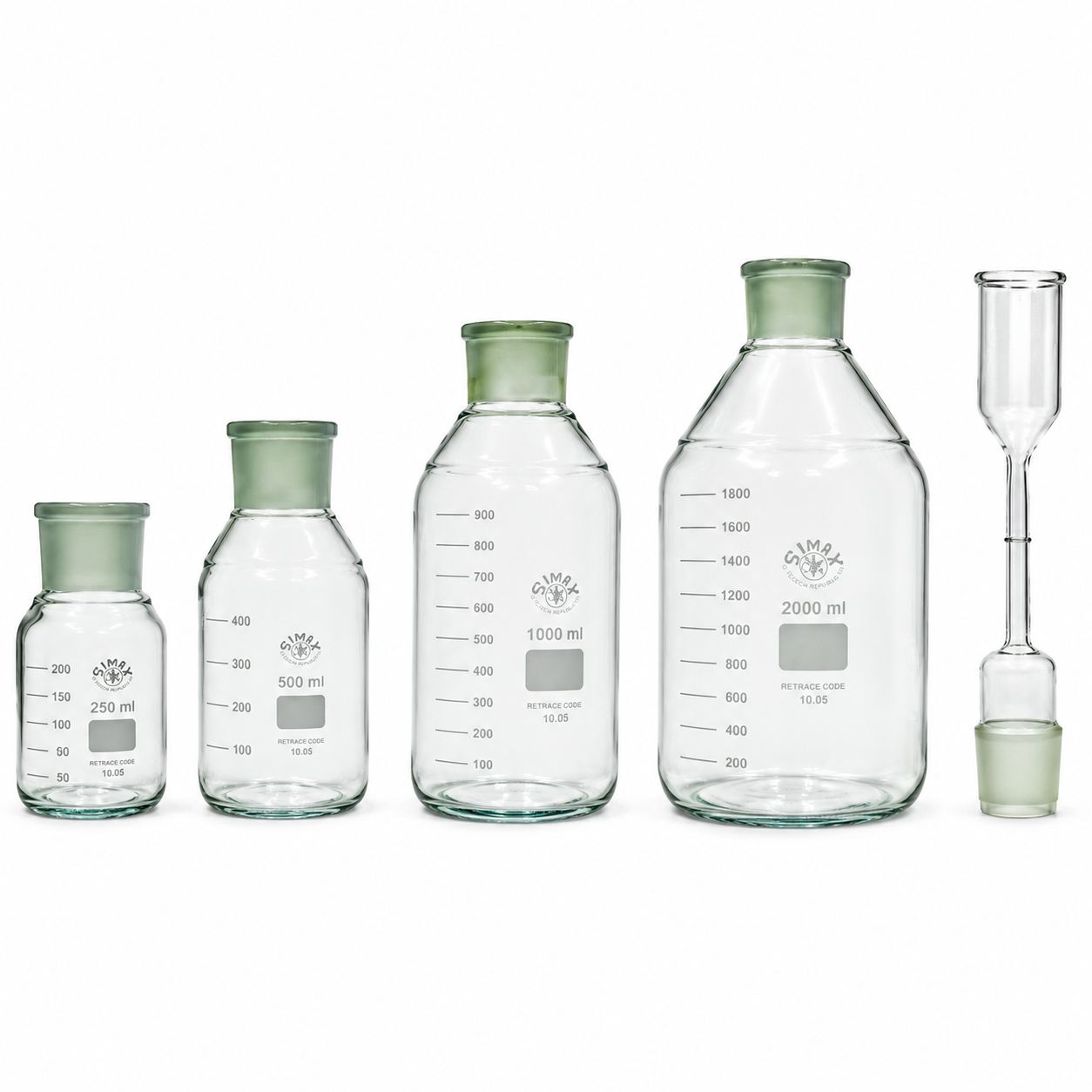
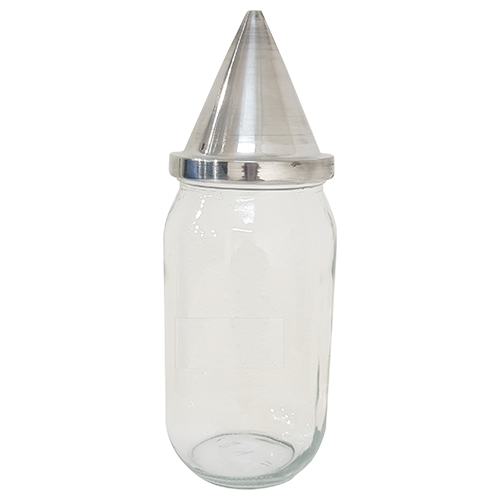
Glass Jar Type Pycnometer is used to determine the particle density, relative density and water absorption of fine aggregates. The transparent glass jar allows the operator to observe the water level and trapped air bubbles during testing. The conical metal top simplifies controlled filling and helps remove excess air from the vessel.
- Fine Aggregate Testing: Suitable for density and water absorption measurements of fine aggregate samples.
- Transparent Glass Jar: Allows easy observation of the water level and trapped air bubbles.
- Conical Metal Top: Supports controlled filling of the sample jar.
- Air Vent Opening: Helps release excess air that could affect test results.
- Water Absorption Determination: Supports calculation of water absorbed by the aggregate.
- Density Evaluation: Helps determine density-related properties required for concrete and asphalt mixture calculations.
- Easy Cleaning: Removable top and wide glass body simplify maintenance after testing.
- Compact Design: Suitable for routine laboratory use.
- Dimensions: Ø100 × 200 mm
- Approximate Weight: 0.5 kg
- Standards / References: BS 812-2, BS 1377-2, ASTM C128, ASTM D854, AASHTO T 84
| Product Code | Product Name | Dimensions (mm) | Weight (kg) |
| LT-G0075 | Glass Jar Type Pycnometer | Ø100 × 200 | 0.5 |

LT_PİKNOMETRE_
What Is a Glass Jar Pycnometer?
The Glass Jar Pycnometer is used to determine the particle density, relative density and water absorption of fine aggregate samples. The test uses the behaviour of a known quantity of aggregate in a controlled volume of water. The measured mass values allow the laboratory to calculate important aggregate density properties.
These results are useful in concrete, mortar and asphalt mixture design because aggregate density affects volumetric calculations. Water absorption also provides information about the moisture behaviour of the aggregate.
Transparent Glass Jar Design
The unit consists of a transparent glass jar and a conical metal top. The clear body allows the operator to monitor the water level throughout the test.
It also makes trapped air bubbles visible. Removing these bubbles is important because trapped air can affect the apparent volume of the sample and reduce measurement accuracy.
The conical top provides controlled filling of the vessel. An air vent opening helps release excess air while the jar is being filled.
How Is the Pycnometer Test Performed?
First, the operator cleans and dries the Glass Jar Pycnometer. The empty vessel is weighed using a suitable laboratory balance.
The prepared fine aggregate sample is then transferred into the jar. Water is gradually added, and the sample is carefully agitated to remove trapped air from between the particles.
Once the air has been removed, the vessel is filled to the required level. The outside surface is dried before the final weighing operation.
The recorded mass values are then used in the relevant calculation procedure.
Relative Density and Water Absorption
Depending on the applicable standard, the pycnometer method can be used to determine oven-dry relative density, saturated surface-dry relative density and apparent relative density.
Water absorption is determined by comparing the dry and saturated conditions of the aggregate.
These values help laboratories compare different aggregate sources and verify whether materials meet project or production requirements.
Factors Affecting Measurement Accuracy
Air bubbles can significantly influence pycnometer measurements. For this reason, the operator should ensure that trapped air is removed before taking the final reading.
Water temperature should also remain controlled because liquid density changes with temperature.
The outside of the jar must be completely dry before weighing. In addition, the balance should be checked and zeroed before each measurement.
Consistent sample preparation improves the repeatability of the results.
Compact Laboratory Construction
The LT-G0075 Glass Jar Type Pycnometer has approximate dimensions of Ø100 × 200 mm and weighs approximately 0.5 kg.
Its compact construction requires little laboratory bench space. The removable top and wide jar body also simplify filling, emptying and cleaning operations.
The transparent design provides an additional advantage during routine quality-control testing because the operator can visually monitor the complete test process.
Testing According to International Standards
ASTM C128 and AASHTO T 84 cover relative density and water absorption testing of fine aggregates.
BS 812-2 also includes methods for determining density-related properties of aggregates. ASTM D854 covers specific gravity testing of soil solids using a water pycnometer and may be relevant when the apparatus is used for applicable fine materials.
The Glass Jar Pycnometer therefore provides a simple and practical laboratory solution for density and water absorption measurements of fine aggregate materials.
As a result, the system combines transparent glass construction, controlled filling, easy air removal and compact dimensions to support reliable and repeatable laboratory testing.