
Pinhole Test Apparatus
STANDART: BS 1377:5; ASTM D4647
LT-S0018 Pinhole Test Apparatus| Ø33mm
LT-S0019 Pinhole Test Apparatus | Ø44mm
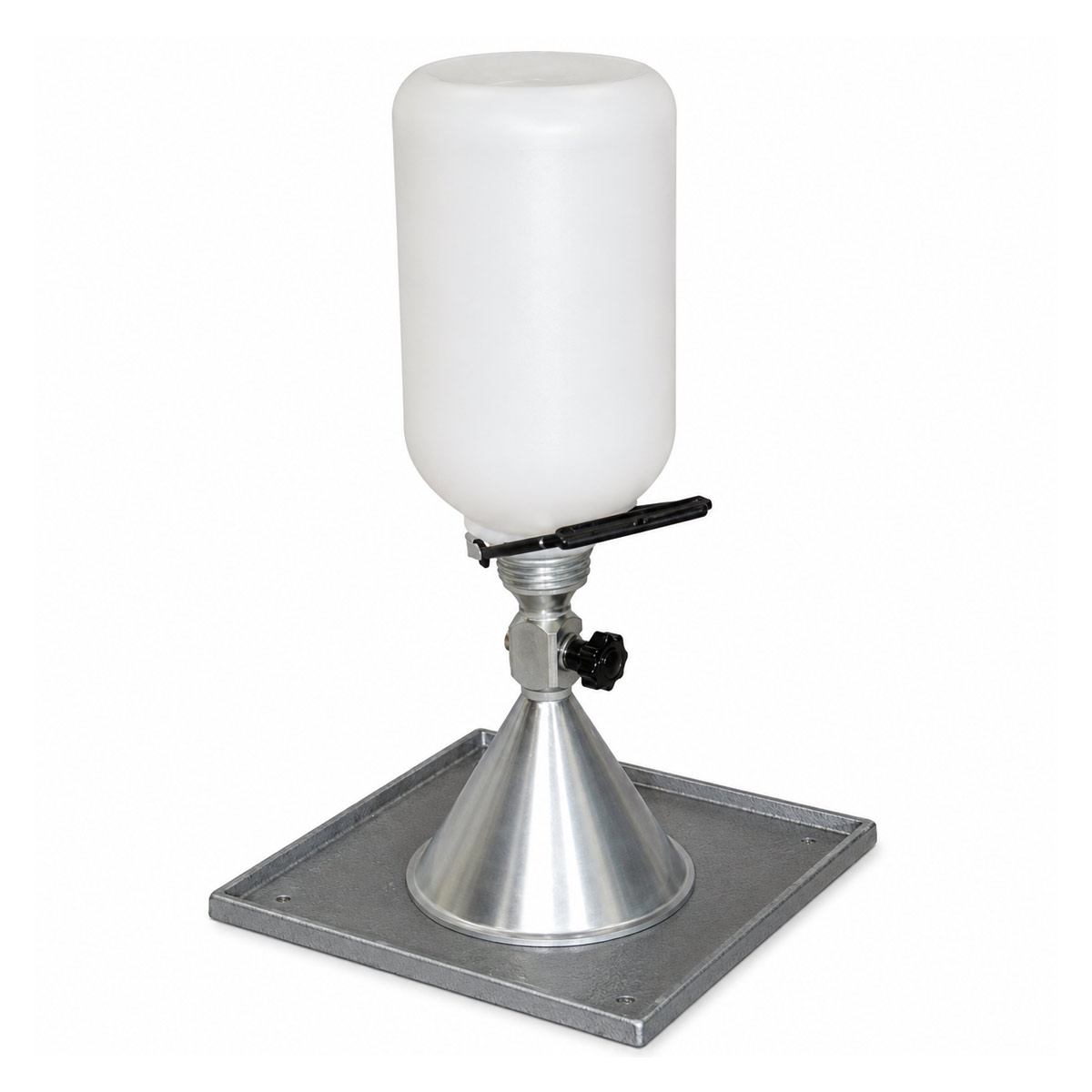
LT-S0500/4 Constant Level Water Tank | 7 Litre
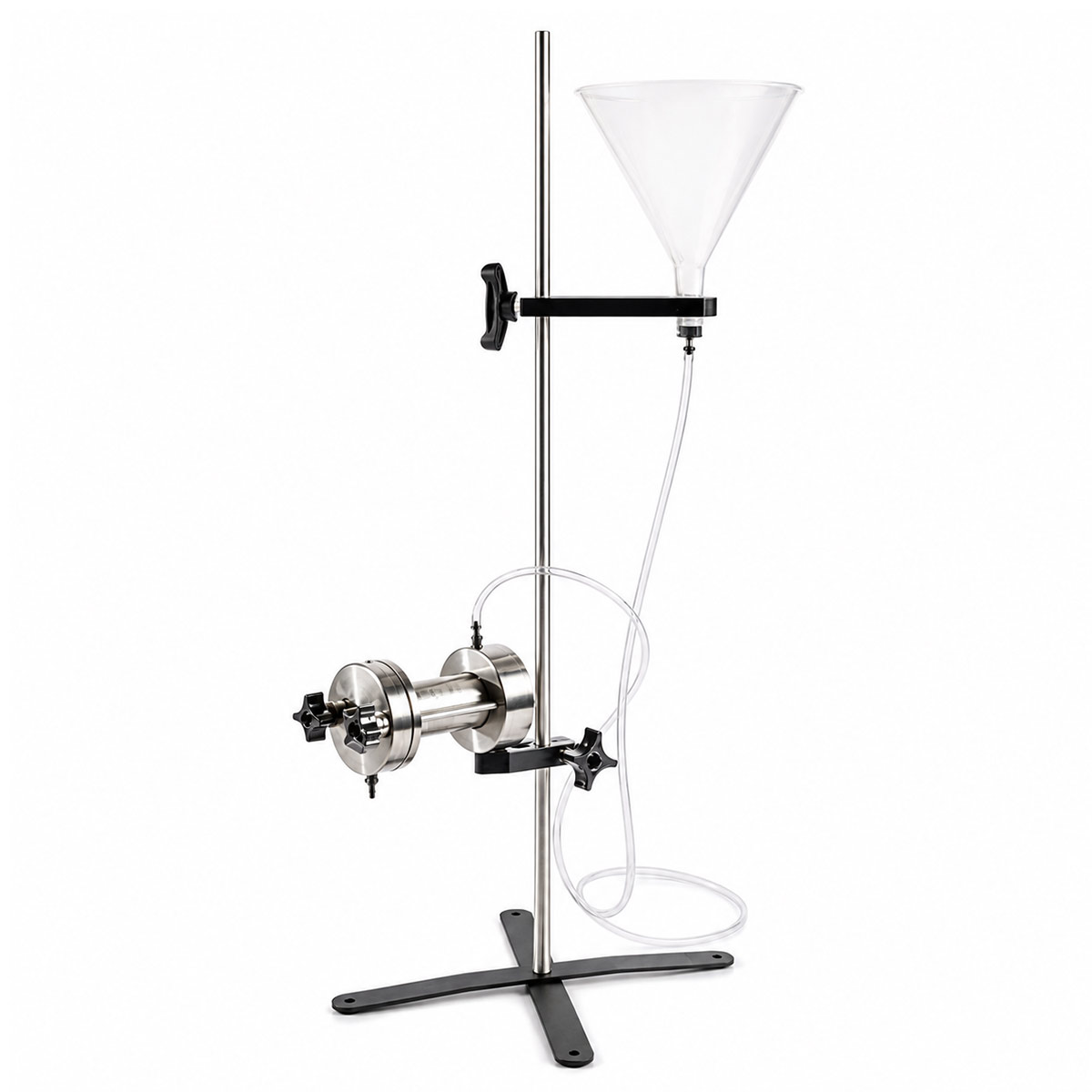
Pinhole Test Apparatus is used to evaluate the dispersive characteristics of compacted clay soils and their susceptibility to erosion caused by water flow. Two different model options are available with Ø33 mm and Ø44 mm internal diameters. A 1 mm diameter pinhole is formed in the specimen, and the turbidity of the discharge water together with the erosion behaviour around the hole is evaluated under controlled water flow. The system is associated with the current ASTM D4647/D4647M-13(2020) pinhole test method.
- Two model options: LT-S0018 Ø33 mm and LT-S0019 Ø44 mm versions are available.
- Dispersive soil analysis: Supports the evaluation of dispersive behaviour in clay soils.
- Erosion susceptibility: Allows the effect of water flow on the specimen to be observed.
- 1 mm pinhole: Includes a 1 mm steel pin for forming the standard pinhole in the specimen.
- Transparent body: Cylindrical plexiglass body allows easy observation of the test.
- Water inlet/outlet system: Upper and lower heads provide controlled water flow.
- 1100 mm scale: Supports monitoring of water level and the test setup.
- Manometer hose: The stand is equipped with Ø4 mm internal diameter / Ø6 mm external diameter PVC hose.
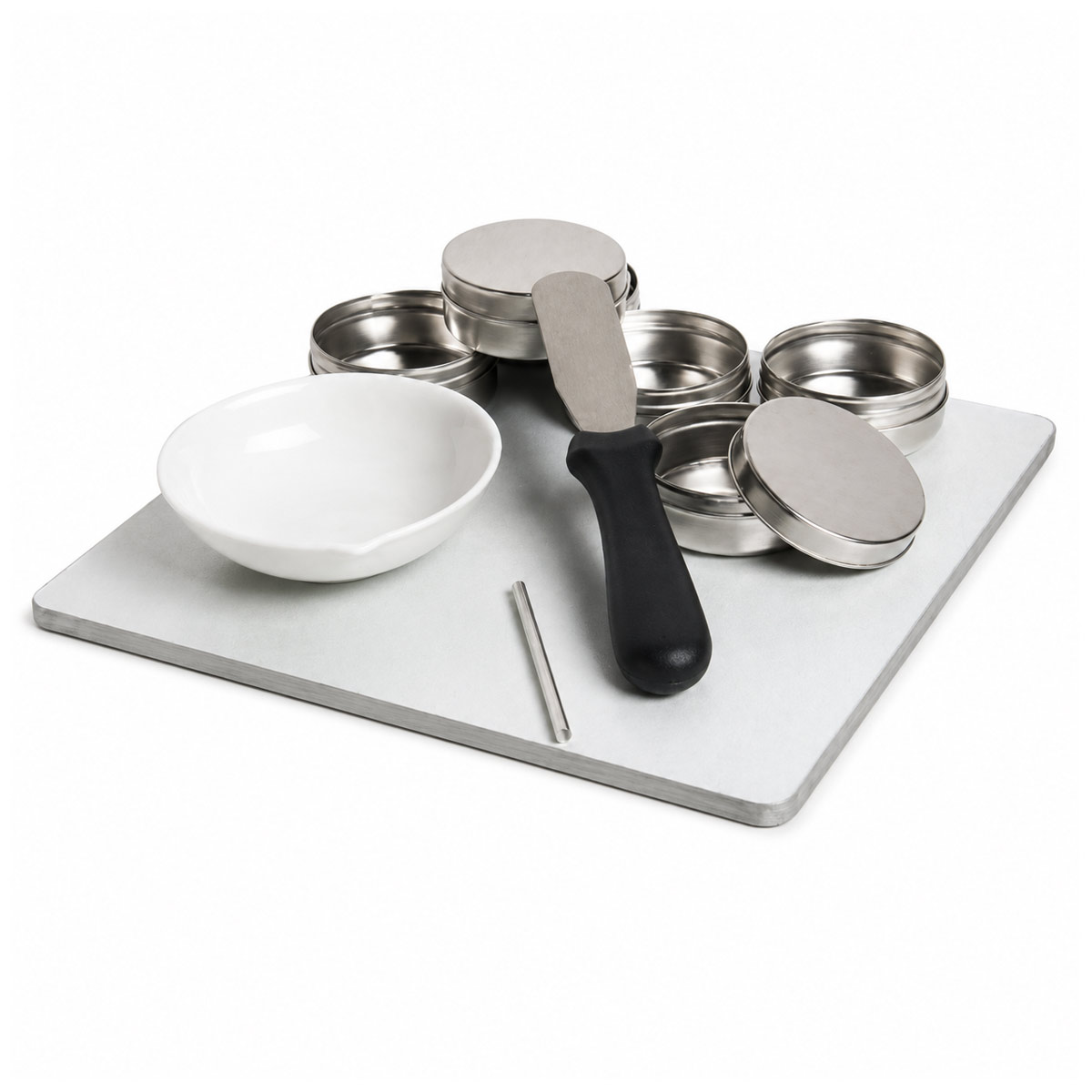
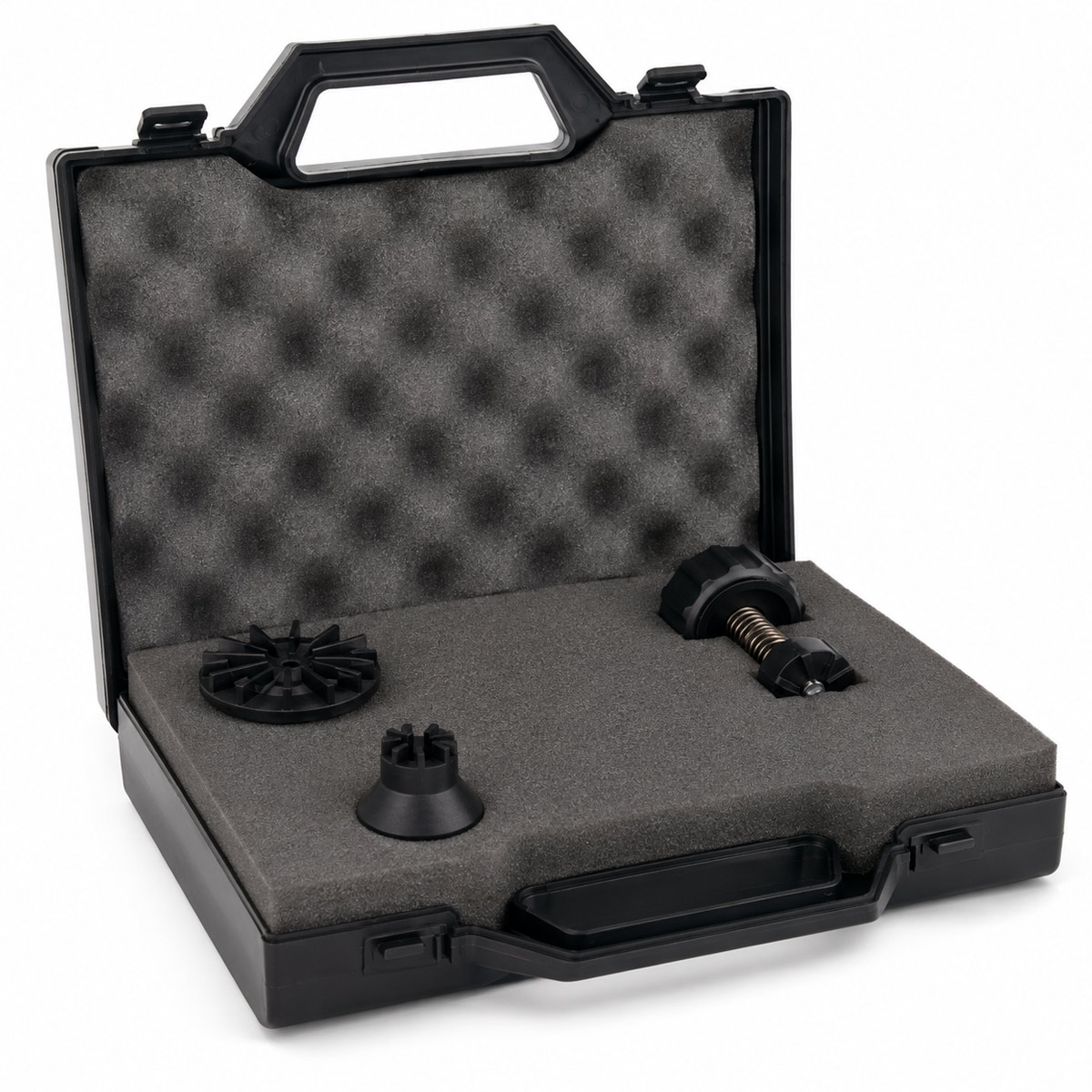
- Sample preparation: An anvil and rammer support the preparation of specimens suitable for the test cell.
- Graduated cylinder set: Includes 10, 25 and 50 ml glass graduated cylinders.
- Wire screens: The system includes 4 wire screens.
- PVC hose: A 1.5 m connection hose is included in the set.
- ASTM reference: The current active version is ASTM D4647/D4647M-13(2020).
- BS reference: The current laboratory standard is BS 1377-2:2022.
- LT-S0018: 150 × 200 × 1200 mm, approximately 3.5 kg.
- LT-S0019: 150 × 200 × 1200 mm, approximately 4 kg.
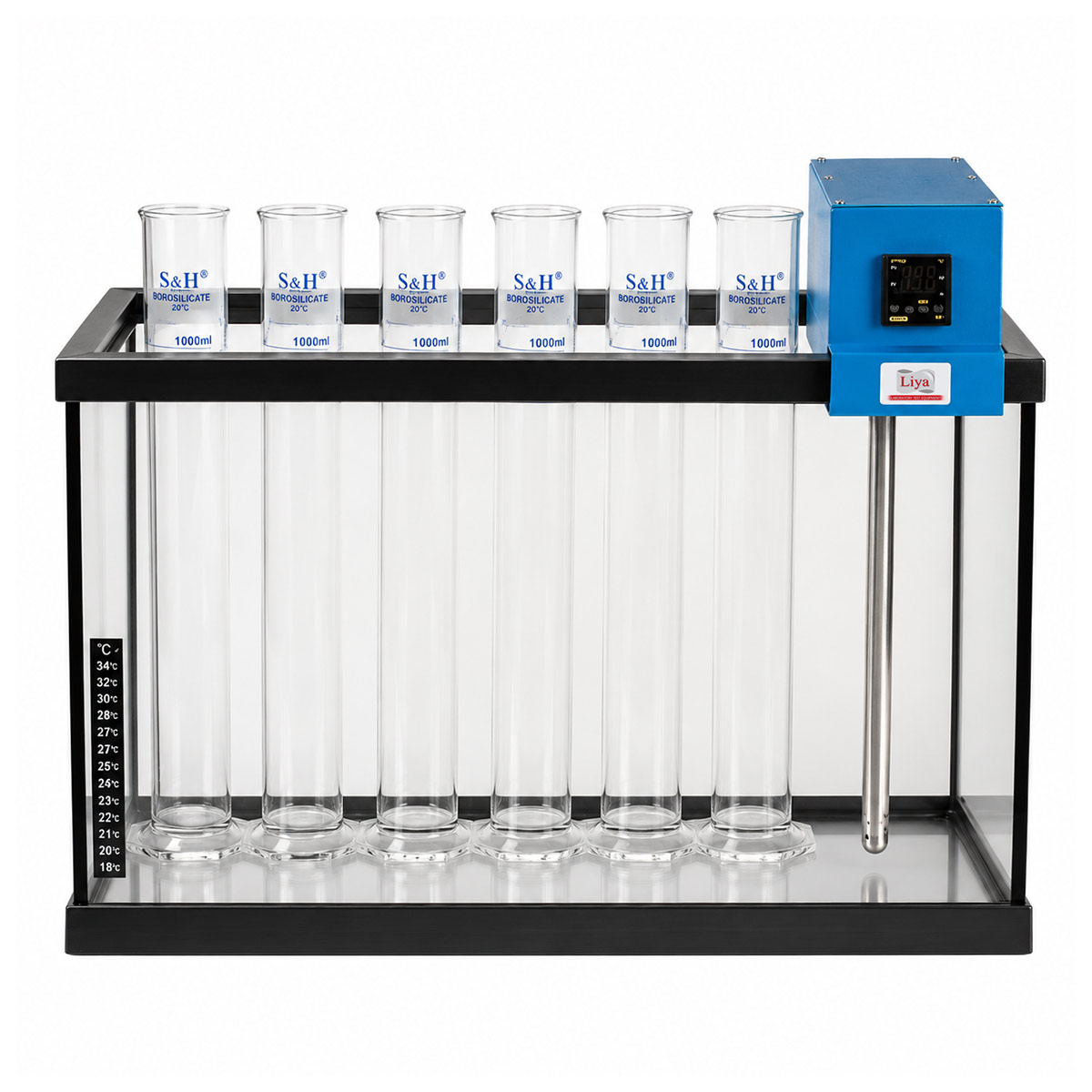
- Water tank: 7 L LT-S0500/4 is ordered separately.
| Product Code | Product Name | Internal Diameter | Dimensions (mm) | Weight (kg) |
| LT-S0018 | Pinhole Test Apparatus | Ø33 mm | 150 × 200 × 1200 | 3.5 |
| LT-S0019 | Pinhole Test Apparatus | Ø44 mm | 150 × 200 × 1200 | 4 |

What Is a Pinhole Test Apparatus?
The Pinhole Test Apparatus is used to identify the dispersive characteristics and erosion susceptibility of clay soils under laboratory conditions.
Dispersive clay soils can erode internally when exposed to flowing water. This behaviour can create serious problems in earth structures such as embankments, earth dams, channels and other compacted-soil constructions.
The pinhole test reproduces this mechanism on a laboratory scale by passing water through a small artificial channel formed inside a compacted clay specimen.
ASTM D4647/D4647M describes the method as a direct qualitative procedure for identifying and classifying the dispersive characteristics and resulting colloidal erodibility of clay soils.
How Does the Pinhole Test Work?
The prepared clay specimen is compacted inside the cylindrical test cell. A small hole approximately 1 mm in diameter is then formed through the specimen.
Water is passed through this opening under a controlled hydraulic head.
During testing, the operator observes the condition of the discharged water and the behaviour of the hole inside the soil specimen. Increasing turbidity or enlargement of the pinhole can indicate dispersive behaviour.
The current BS method also describes the pinhole test as passing distilled, deionized or demineralized water through a 1 mm diameter hole formed in recompacted clay.
Ø33 and Ø44 mm Test Cell Options
Liya Test offers two main configurations.
The LT-S0018 uses a Ø33 mm internal-diameter test cell, while the LT-S0019 uses a Ø44 mm internal-diameter cell.
The transparent cylindrical body is positioned between an upper water-inlet head and a lower outlet head. This arrangement allows controlled water flow through the specimen and helps the operator observe the test process.
Different plexiglass body diameters can also be manufactured on request.
Sample Preparation and Water System
The test configuration includes the basic equipment required for specimen preparation and hydraulic connection.
Liya Test lists PVC hose, 10 ml, 25 ml and 50 ml graduated glass cylinders, together with specimen-preparation equipment suitable for the selected body diameter.
The 7 litre LT-S0500/4 water tank must be ordered separately and is not included automatically with the standard apparatus.
ASTM D4647 Pinhole Classification
The current ASTM D4647/D4647M-13(2020) remains active.
The standard provides three alternative procedures for evaluating dispersive soils. Depending on the selected method, results are assessed using factors such as effluent cloudiness, final pinhole size and water-flow behaviour.
ASTM also emphasizes that the test provides a qualitative classification. Results should therefore not be interpreted as a direct numerical prediction of erosion rate in a full-scale dam, embankment or channel.
BS 1377-2:2022 Pinhole Method
The old Liya Test page references BS 1377:5.
However, BS 1377-5:1990 has been withdrawn, and the current consolidated laboratory standard is BS 1377-2:2022. The new standard specifically contains Clause 18 – Determination of dispersibility and Clause 18.1 – Pinhole method.
Overall, the Pinhole Test Apparatus provides a practical laboratory method for identifying dispersive clay soils and evaluating their susceptibility to internal erosion under controlled water-flow conditions.