
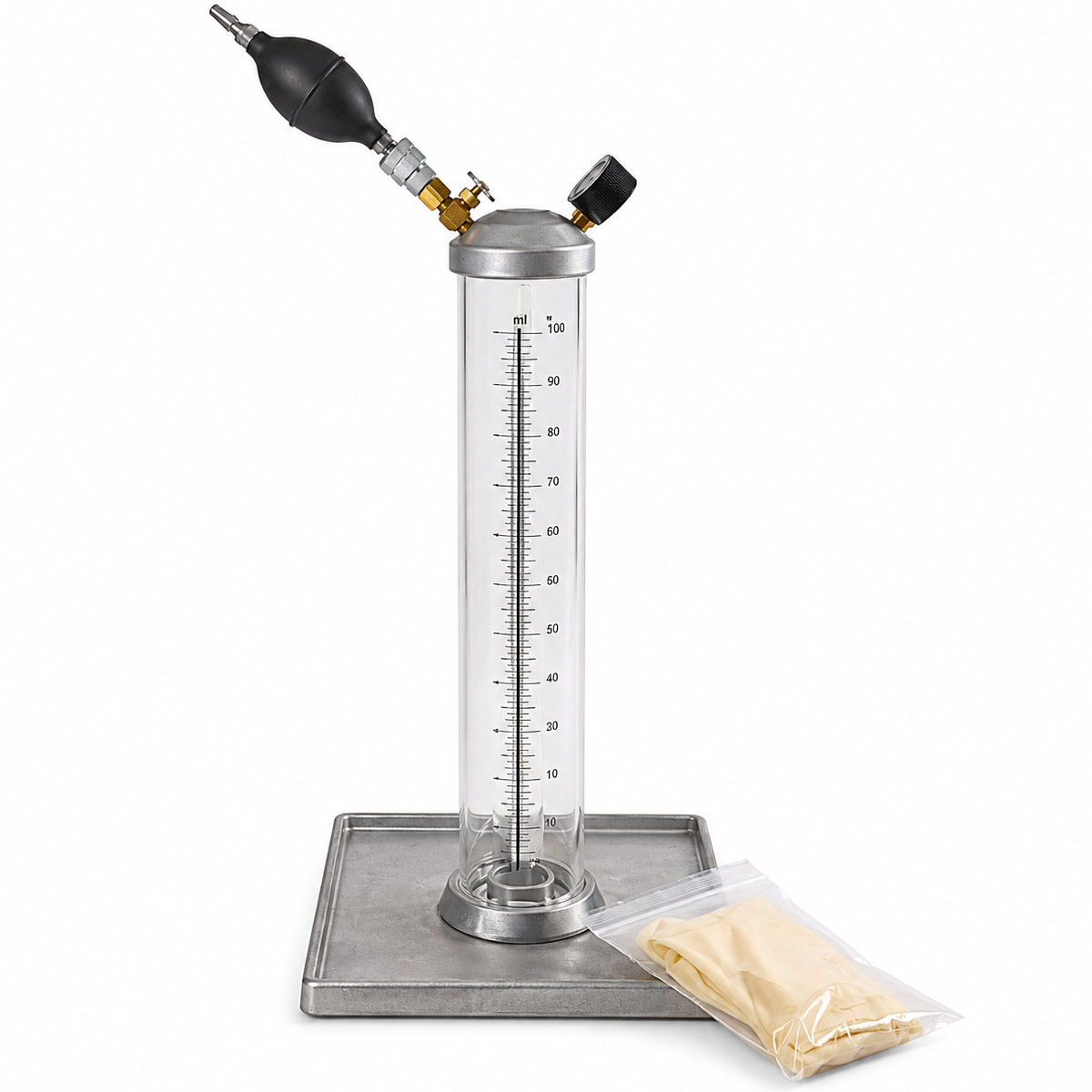
Balloon Density Set
STANDART: ASTM D2167; NF P94-061-2: AASHTO T205
LT-S0700 Balloon Density Set
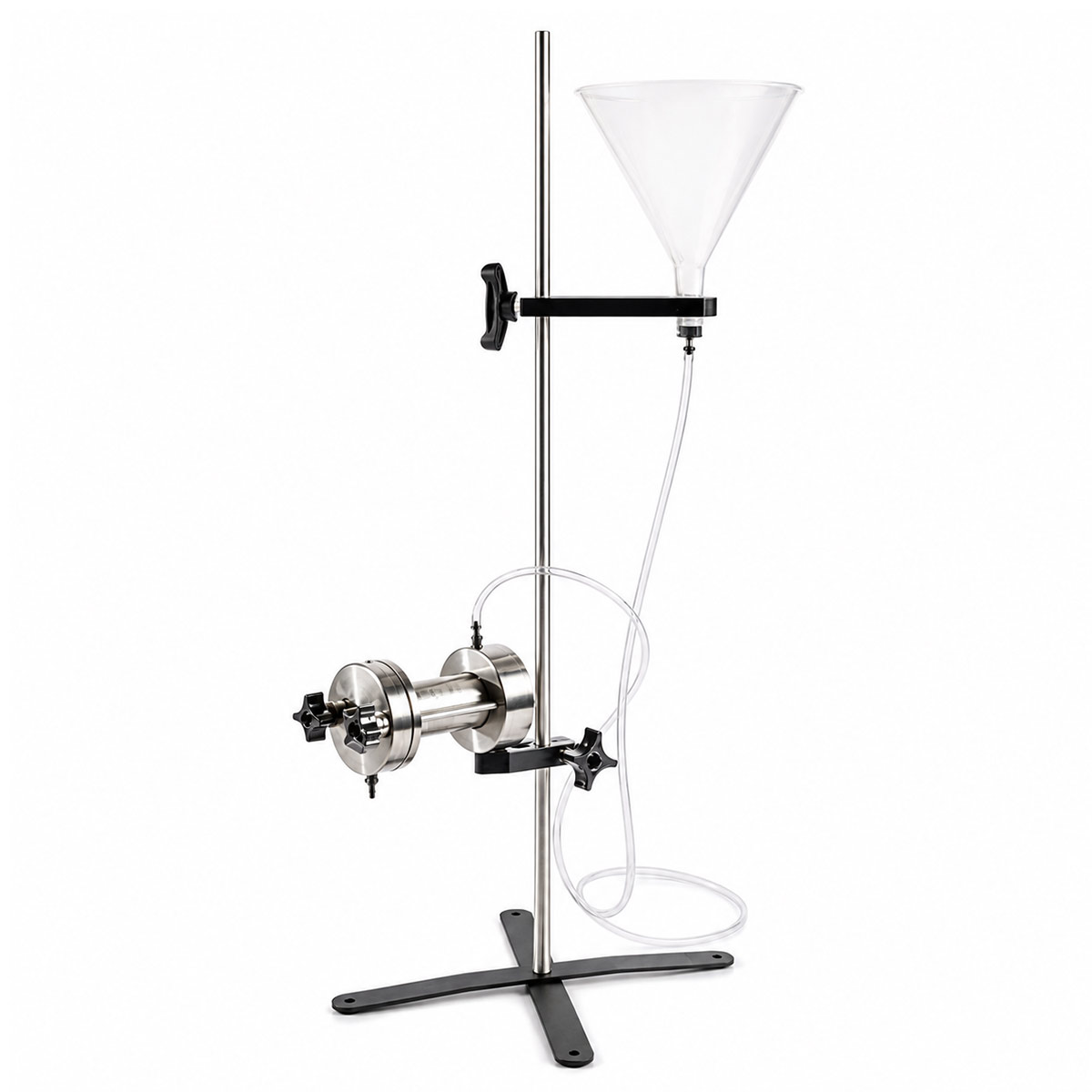
The Balloon Density Set is designed to determine the in-place density and unit weight of compacted or firmly bonded soils. A flexible rubber membrane expands into the excavated test hole and allows its volume to be determined from the quantity of displaced liquid. The mass of the excavated soil and measured hole volume can then be used to calculate field density.
- In-place density testing: Determines the field density of compacted or firmly bonded soils.
- Rubber balloon method: A flexible membrane conforms to the shape of the test hole.
- Liquid displacement: The volume of liquid required to expand the membrane is used to determine hole volume.
- Field compaction control: Supports density checks for embankments, road fills and earthworks.
- Wet density calculation: Excavated soil mass is related to measured test-hole volume.
- Dry density evaluation: Dry density can be calculated when moisture content is determined separately.
- Proctor comparison: Field density can be compared with laboratory maximum dry density values.
- Suitable soils: Intended mainly for soils that maintain a stable test-hole shape.
- Mechanical operation: No electrical power supply is required.
- Portable design: Suitable for field testing at different construction locations.
- External dimensions: 250 × 250 × 700 mm.
- Approximate weight: 7 kg.
- Product code: LT-S0700.
| Product Code | Product Name | External Dimensions (mm) | Weight (kg) |
| LT-S0700 | Balloon Density Set | 250 × 250 × 700 | 7 |

What Is a Balloon Density Set?
The Balloon Density Set is a field testing apparatus used to determine the in-place density and unit weight of compacted or firmly bonded soils.
During earthworks and road construction, laboratory compaction tests can establish the maximum dry density of a material. However, the actual level of compaction achieved at the construction site must also be evaluated.
The balloon density method provides a mechanical way to determine the volume of a small excavation directly in the field. The mass of the removed material is then related to this measured volume to calculate the soil density.
The LT-S0700 is designed as a compact and portable system for this type of field density assessment.
How Does the Rubber Balloon Method Work?
The operator first prepares the test surface and excavates a small hole in the compacted soil.
All material removed from the hole is carefully collected and weighed. The Balloon Density Set is then positioned over the excavation.
A controlled quantity of liquid is introduced into a flexible rubber membrane. As the membrane expands, it follows the internal shape of the test hole.
The change in liquid volume allows the operator to determine the volume of the excavation. The excavated soil mass is then divided by this volume to calculate the in-place wet density.
If the moisture content of the excavated soil is measured separately, the corresponding dry density can also be calculated.
Field Compaction Control
One of the main applications of the Balloon Density Set is the evaluation of field compaction.
The measured dry density can be compared with the maximum dry density obtained from a laboratory Proctor compaction test. This allows the field team to determine whether the soil layer has reached the specified percentage of compaction.
For this reason, the method can support quality-control work on road fills, embankments, compacted earthworks and structural backfills.
The former ASTM D2167 method specifically described the rubber-balloon procedure as suitable for determining the density of compacted soils used in earth embankments, road fills and structural backfills.
Suitable Soil Conditions
The rubber membrane needs a stable excavation in order to produce a useful volume measurement.
The former ASTM procedure therefore recommended the method mainly for compacted or firmly bonded soils that do not deform significantly when pressure is applied.
Soft, saturated or highly plastic soils may change shape during the measurement process. This can affect the calculated hole volume.
The method also requires additional care when the material contains sharp or coarse particles because these may damage the rubber membrane. ASTM D2167 specifically warned about sharp-edged particles and appreciable coarse material.
NF P94-061-2:1996
The current French reference is NF P94-061-2:1996.
AFNOR lists the standard as Current. It covers determination of the in-place density of materials using the membrane densitometer method. The procedure includes equipment preparation, excavation of the test cavity, determination of wet mass and measurement of the cavity volume.
This makes NF P94-061-2 the cleanest active standard reference currently associated with the operating principle of the LT-S0700.
ASTM D2167 Standard Status
LİYA’s existing product page lists ASTM D2167 as a reference.
However, ASTM officially lists ASTM D2167-15 as Withdrawn 2024 — No replacement. The former standard covered determination of in-place density and unit weight using a rubber balloon apparatus.
Therefore, we should not present ASTM D2167 on the new English page as a current compliance standard.
AASHTO T 205 Standard Status
The existing LİYA page also references AASHTO T 205.
AASHTO’s published historical status list shows that T 205 — Density of Soil In-Place by the Rubber-Balloon Method was discontinued in 2000 and replaced by ASTM D2167 at that time.
Since ASTM D2167 itself was later withdrawn in 2024, AASHTO T 205 should now also be treated only as a legacy reference.
Compact Field Density Testing System
The LT-S0700 Balloon Density Set measures 250 × 250 × 700 mm and weighs approximately 7 kg.
Its mechanical operating principle means that no electrical supply is required. This makes the apparatus convenient for use at multiple field locations during road, embankment and earthwork construction.
Overall, the Balloon Density Set provides a practical method for measuring excavation volume and evaluating the in-place density of suitable compacted soils.