
Hydraulic Sample Extruder | Double-Piston Motorized
STANDART: TS EN 13286-2, 13286-47, 12697-30; AASHTO T134, T180, T193, T245;
ASTM D698, D1557, D1883, D1559; BS 1377-4, 1924-2, 598-107
LT-S0115 Hydraulic Sample Extruder| Double-Piston Motorized
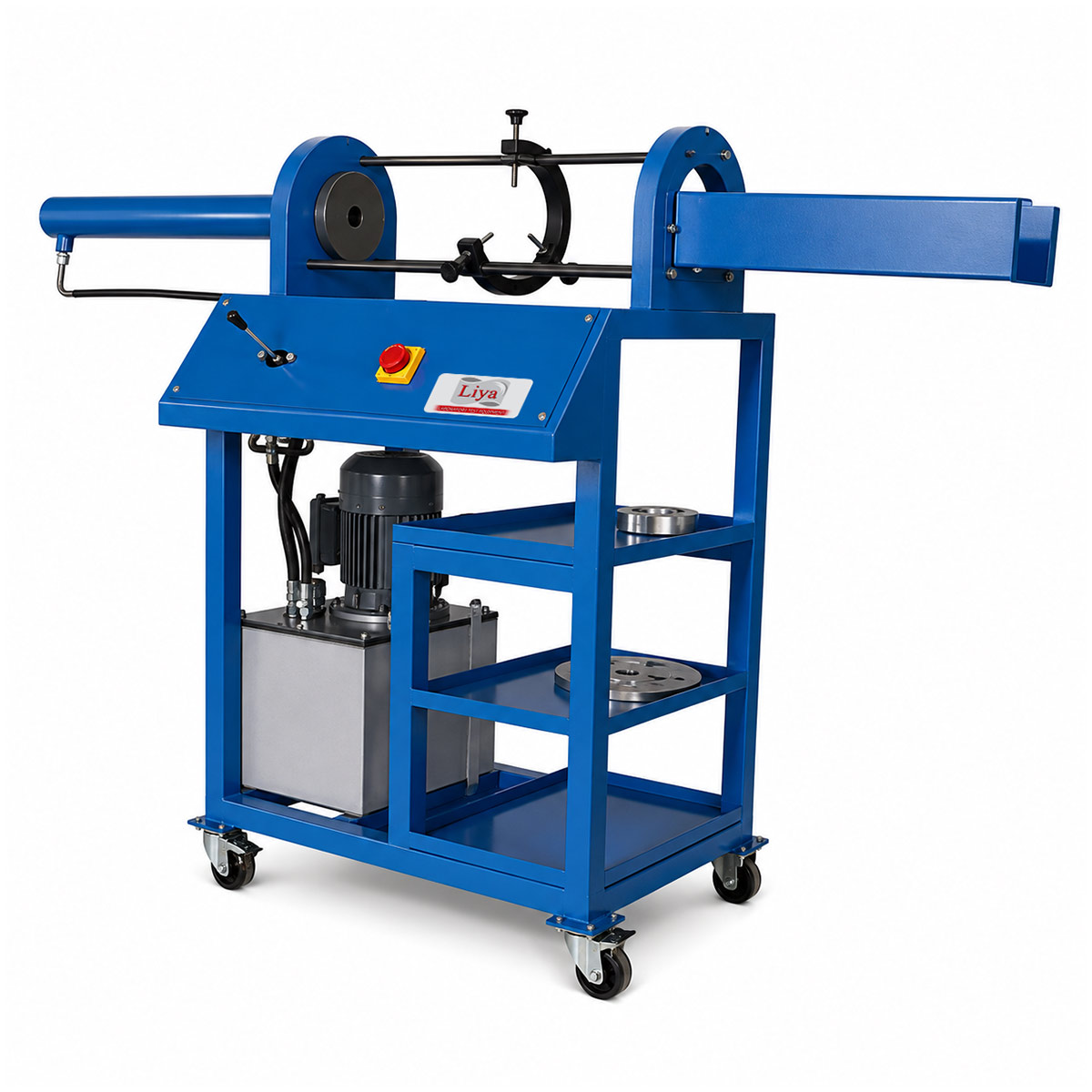
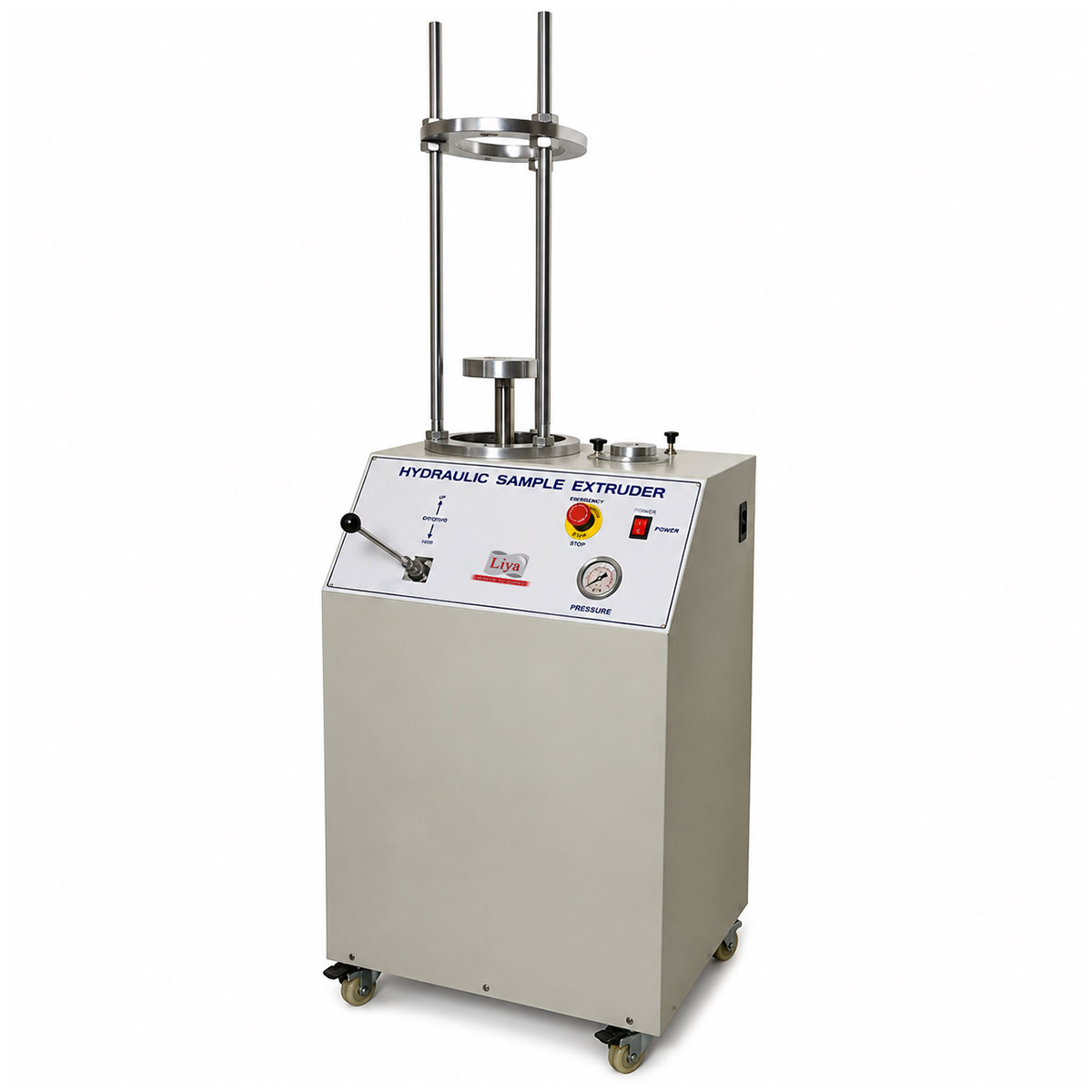
The Double-Piston Motorized Hydraulic Sample Extruder is designed for controlled removal of compacted soil and asphalt specimens from moulds and sample tubes. The 60 kN hydraulic system, 650 mm primary piston and 200 mm secondary piston allow one machine to handle Proctor, CBR, Marshall, unconfined compression and triaxial specimens.
- Maximum extrusion force: Hydraulic system provides up to 60 kN.
- Double-piston design: Two independent piston ranges support different mould and tube sizes.
- Primary piston stroke: 650 mm for Proctor, CBR and Marshall specimen removal.
- Secondary piston stroke: 200 mm for smaller sample tubes and cutters.
- Primary working range: Supports tubes and moulds from approximately Ø38 mm to Ø160 mm.
- Secondary working range: Suitable for approximately Ø38–72 mm internal diameter tubes and cutters.
- Proctor specimens: Supports extraction of standard and modified Proctor samples.
- CBR specimens: Allows prepared CBR specimens to be removed from their moulds.
- Marshall specimens: Suitable for extracting compacted asphalt specimens from Marshall moulds.
- Unconfined and triaxial specimens: Smaller piston system supports cylindrical soil specimens.
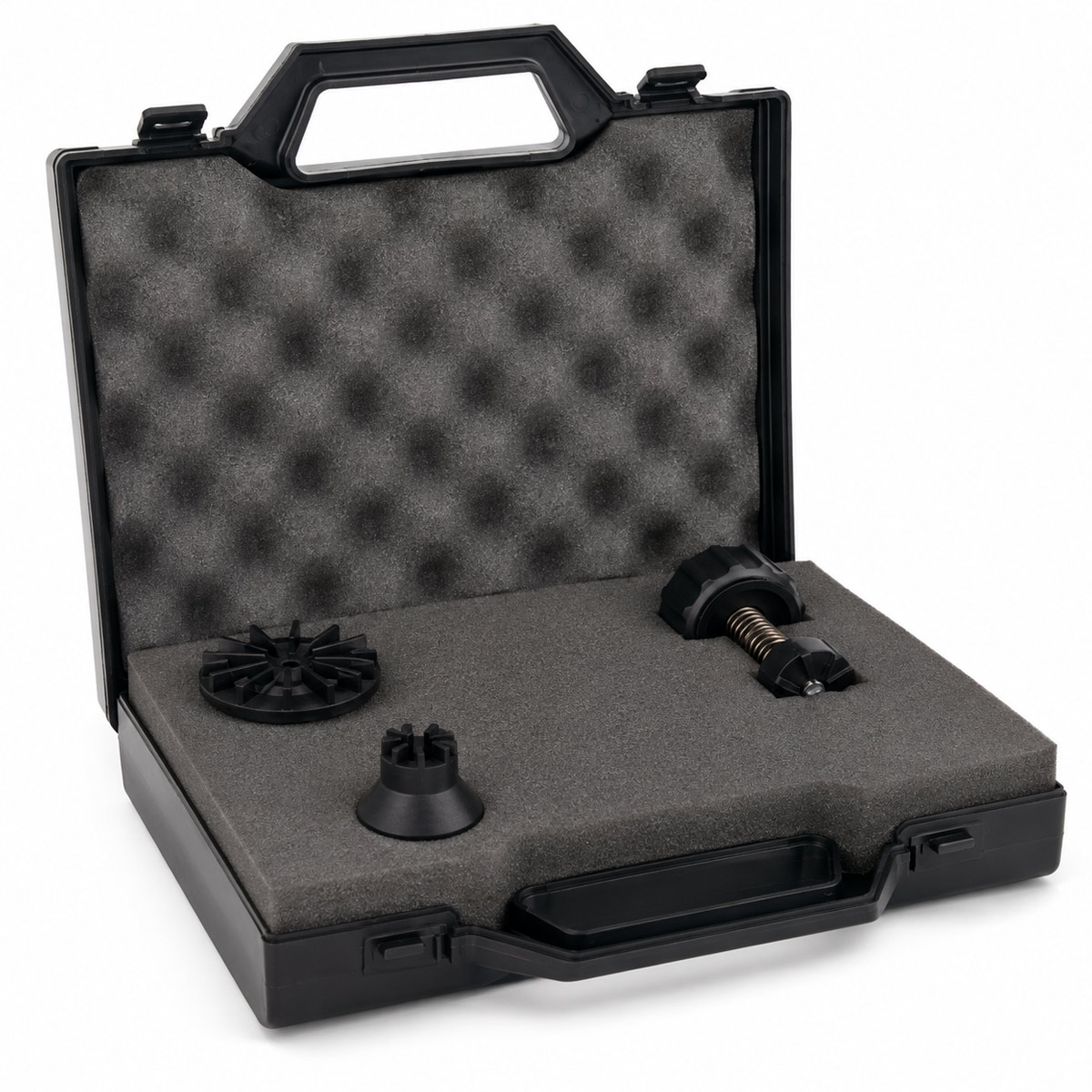
- Standard adaptors: Adaptors are available for 150 mm, 100 mm, 72 mm, 50.8 mm and 38 mm specimen sizes.
- Motorized hydraulic operation: Reduces manual effort during specimen extraction.
- Controlled movement: Hydraulic operation allows the piston to advance smoothly and stop when required.
- External dimensions: 65 × 75 × 175 cm.
- Approximate weight: 350 kg according to the current LİYA product data supplied for this page.
- Power supply: 220 V, 50–60 Hz.
- Product code: LT-S0115.
| Product Code | Product Name | External Dimensions (cm) | Weight (kg) | Power Supply |
| LT-S0115 | Double-Piston Motorized Hydraulic Sample Extruder | 65 × 75 × 175 | 350 | 220 V, 50–60 Hz |

What Is a Double-Piston Motorized Hydraulic Sample Extruder?
The Double-Piston Motorized Hydraulic Sample Extruder is designed to remove compacted soil and asphalt specimens from moulds and sample tubes in a controlled and efficient manner.
Removing a compacted specimen manually can damage the sample, disturb its geometry or require considerable physical effort. The LT-S0115 uses a motorized hydraulic system to apply axial force gradually, helping the specimen leave the mould or tube more smoothly.
The equipment can be used for Proctor, CBR and Marshall specimens, as well as smaller cylindrical samples prepared for unconfined compression and triaxial soil testing.
60 kN Hydraulic Extrusion Capacity
The LT-S0115 provides a maximum hydraulic extrusion force of 60 kN.
This force allows the system to remove tightly compacted specimens that may be difficult to release manually. Hydraulic loading also enables the operator to apply the extrusion force progressively rather than using sudden mechanical impacts.
The motorized hydraulic system is therefore particularly useful in laboratories that process multiple compacted specimens during routine testing.
650 mm Primary Piston
The first piston provides approximately 650 mm of working stroke.
This piston is intended primarily for larger moulds and longer specimen assemblies. It supports extraction from tubes and mould systems ranging approximately from 38 mm internal diameter up to 160 mm external diameter.
Typical applications include:
- Proctor specimens,
- modified Proctor specimens,
- CBR specimens,
- and Marshall asphalt specimens.
The long piston travel allows the specimen to be pushed completely through many common laboratory mould configurations.
200 mm Secondary Piston
A second piston provides approximately 200 mm stroke.
This smaller system is intended for sample tubes and cutters with internal diameters from approximately 38 to 72 mm.
It is especially useful for smaller cylindrical soil samples prepared for unconfined compression and triaxial testing, where preserving specimen geometry during extraction is important.
The dual-piston arrangement therefore allows one machine to handle both large compaction moulds and smaller soil-sampling tubes.
Adaptors for Different Specimen Sizes
The system can be equipped with several adaptors to suit commonly used mould and tube diameters.
The current configuration lists adaptors for:
- Ø150 mm / 6 inch
- Ø100 mm / 4 inch
- Ø72 mm
- Ø50.8 mm / 2 inch
- Ø38 mm / 1½ inch
These adaptors help centre the mould or sample tube and distribute the extrusion force correctly.
Different adaptor sizes may also be supplied separately where laboratories use additional specimen dimensions.
Proctor Specimen Extraction
The LT-S0115 can support specimens prepared according to standard and modified Proctor procedures.
ASTM D698-12(2021) remains the active ASTM standard for standard-effort laboratory compaction, while ASTM D1557-12(2021) covers modified-effort compaction.
On the EN side, BS EN 13286-2:2010 remains current and defines Proctor compaction procedures for unbound and hydraulically bound mixtures.
The extruder does not perform these compaction tests itself. Instead, it helps remove the finished specimen from the mould after preparation.
CBR Specimen Extraction
The machine can also remove CBR specimens after preparation or testing.
ASTM D1883-21 remains active for laboratory CBR testing of compacted soils.
BS EN 13286-47:2021 is also current and covers laboratory determination of California Bearing Ratio, Immediate Bearing Index and linear swelling for unbound and hydraulically bound mixtures.
AASHTO continues to list T 193-22 for California Bearing Ratio testing.
Again, the LT-S0115 functions as a specimen handling and extraction device, rather than a CBR loading machine.
Marshall Specimen Applications
The primary piston can also be used to remove compacted Marshall asphalt specimens from their moulds.
BS EN 12697-30:2018 remains current and covers preparation of bituminous mixture specimens by impact compaction.
AASHTO currently lists T 245-22 for resistance to plastic flow of asphalt mixtures using the Marshall apparatus, while specimen preparation by Marshall compaction is separately addressed in AASHTO R 68-22.
The older ASTM D1559 should no longer be presented as an active standard because ASTM withdrew it in 1998 with no replacement.
Motorized and Controlled Sample Removal
The hydraulic system enables the operator to move the piston progressively and stop the extrusion process when necessary.
Controlled movement is especially useful where specimen integrity must be preserved before subsequent laboratory testing. Proper alignment of the mould, adaptor and piston also reduces the risk of uneven loading during extraction.
The machine operates on 220 V, 50–60 Hz electrical supply.
According to the current technical data supplied for LT-S0115, the device measures 65 × 75 × 175 cm and weighs approximately 350 kg.
Overall, the Double-Piston Motorized Hydraulic Sample Extruder combines 60 kN hydraulic force, two piston strokes and multiple adaptor sizes to support specimen removal across soil, road-material and asphalt laboratory applications.