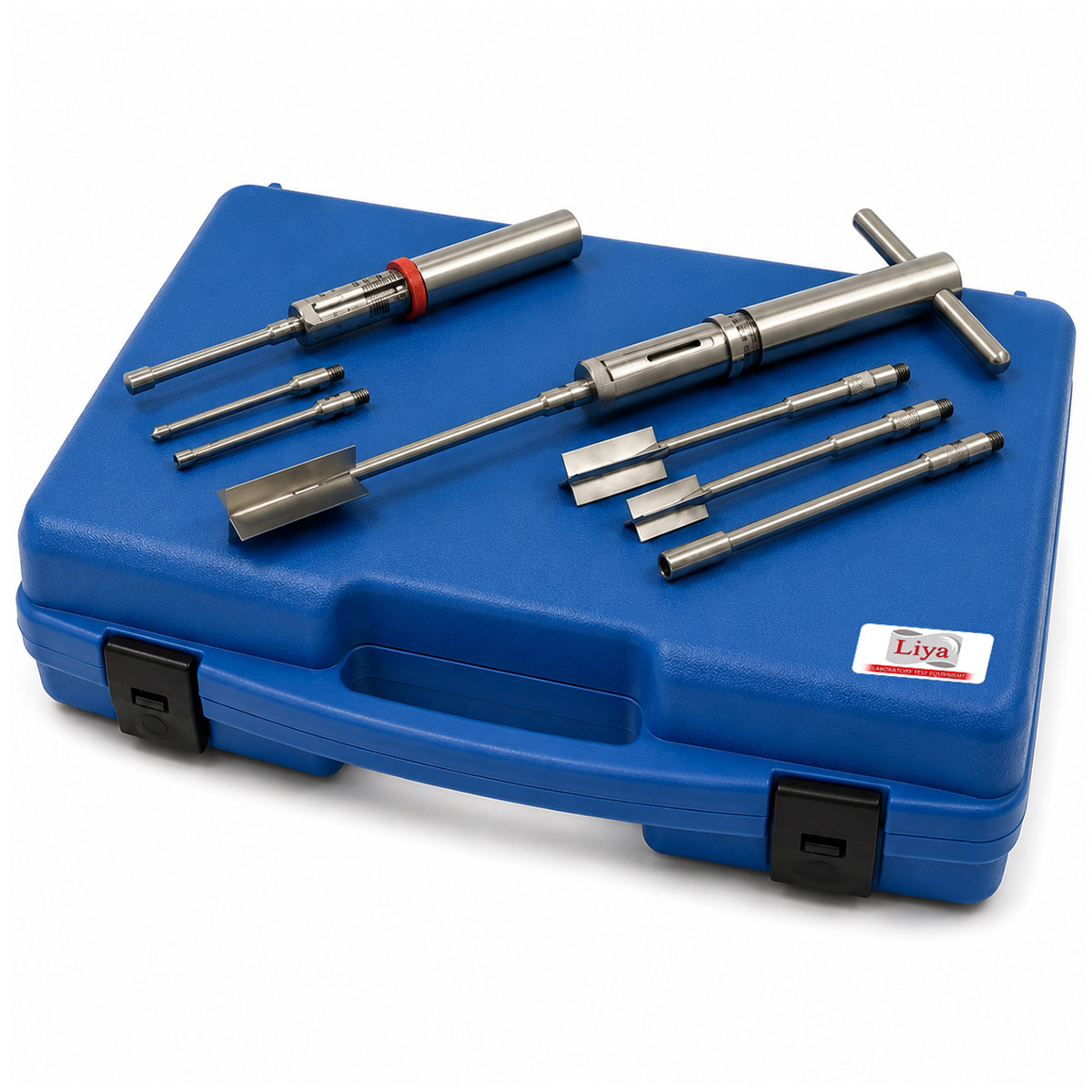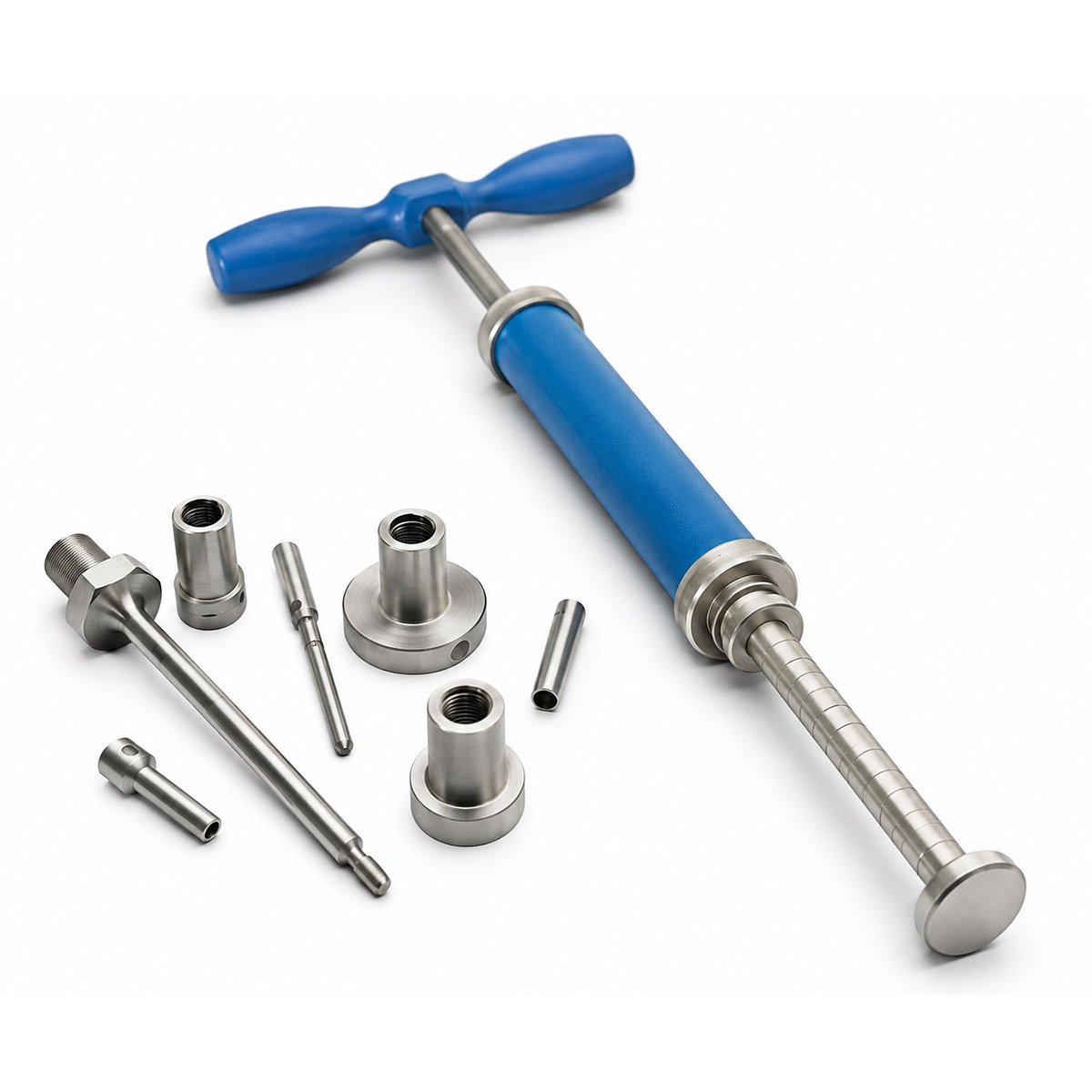

Plastic Limit Test Set
STANDART: ASTM D4318; AASHTO T90; BS 1377:2;UNE 103-104;UNI 10014; TS 1900-1
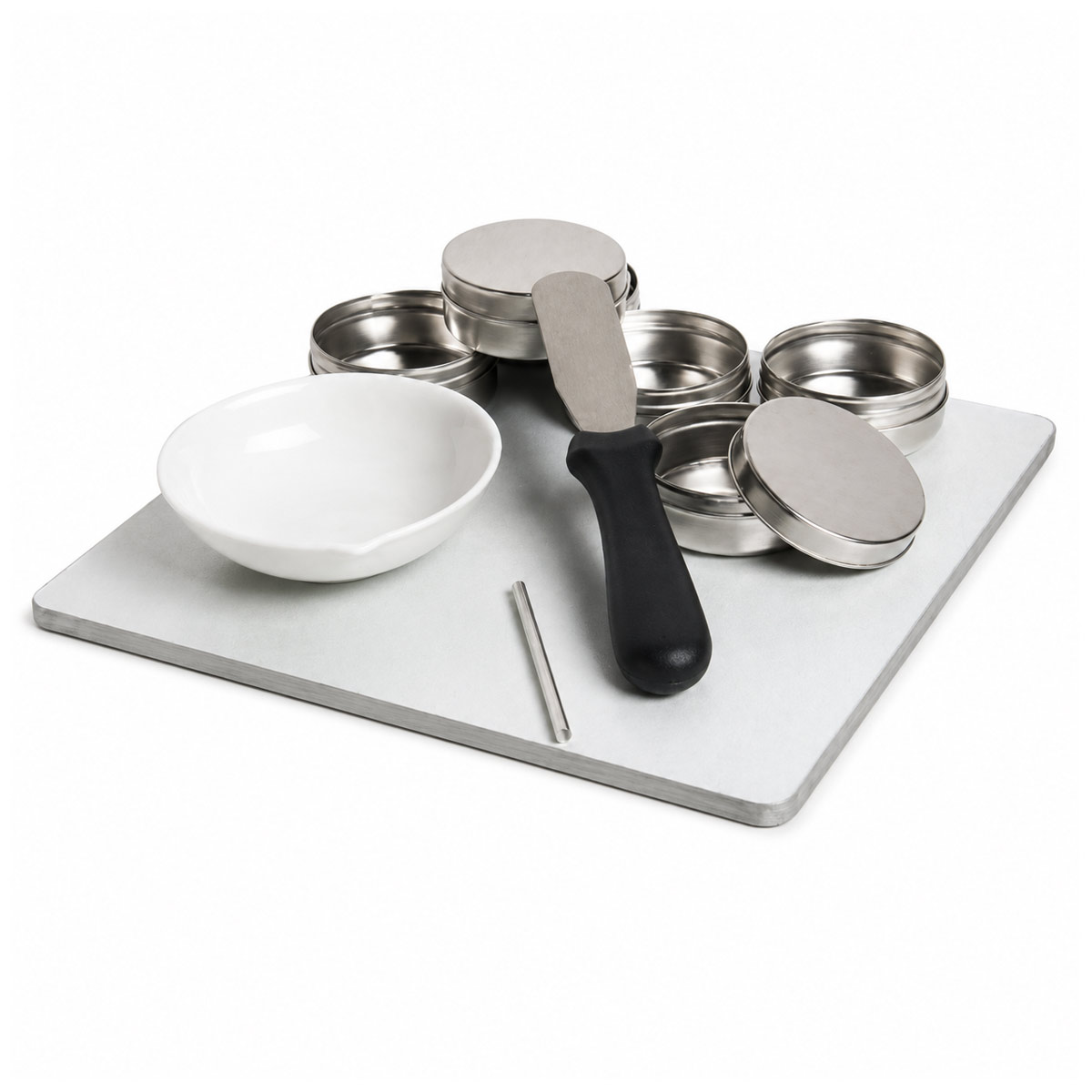
LT-S0045 Plastic Limit Test Set
LT-S0045/1 Plastic Limit Glass Plate| 300x300x5mm
LT-S0045/2 Plastic Limit Reference Rod | Ø3x100mm
LT-G0152 Moisture Tin | Ø55x35mm
LT-G0761 Porcelain Dish | Ø120mm
LT-G0310 Flexible Spatula | Ø100mm
The Plastic Limit Test Set is designed to determine the plastic limit of fine-grained soils. During the test, a prepared soil specimen is manually rolled on a glass plate until it forms threads approximately 3 mm in diameter and begins to crumble. The corresponding moisture content is used to determine the plastic limit.
- Plastic limit determination: Evaluates the lowest moisture content at which the soil remains plastic.
- Fine-grained soil testing: Suitable for cohesive soils containing clay and silt.
- 3 mm reference diameter: The steel reference rod helps the operator check the required thread diameter.
- Glass rolling plate: 300 × 300 × 5 mm working surface.
- Reference rod: Ø3 × 100 mm.
- Moisture tins: The Liya product description specifies 4 pieces of Ø55 × 35 mm tins.
- Porcelain dish: Listed in the product group as Ø120 mm.
- Flexible spatula: 100 mm, wooden handle.
- External dimensions: 360 × 370 × 180 mm.
- Approximate weight: 3 kg.
- Product code: LT-S0045.
| Product Code | Product Name | External Dimensions (mm) | Weight (kg) |
| LT-S0045 | Plastic Limit Test Set | 360 × 370 × 180 | 3 |

What Is a Plastic Limit Test Set?
The Plastic Limit Test Set is used to determine the consistency characteristics of fine-grained soils under laboratory conditions. The test establishes the plastic limit, which represents the lowest moisture content at which a soil continues to behave plastically.
The plastic limit is one of the principal Atterberg limits used in soil classification. When evaluated together with the liquid limit, it also allows the plasticity index to be calculated.
These parameters provide useful information when comparing clayey and silty soils in geotechnical and civil engineering applications.
How Is the Plastic Limit Test Performed?
A small portion of the prepared soil specimen is placed on the glass plate and rolled manually.
The operator gradually forms the material into thin threads. The target thread diameter is approximately 3 mm. When the thread reaches this diameter and begins to crumble under the specified rolling procedure, the specimen is collected for moisture-content determination.
The resulting moisture content is used to determine the plastic limit.
The Ø3 mm reference rod supplied with the LT-S0045 helps the operator compare the soil thread with the target diameter and maintain a more consistent test procedure.
Complete LT-S0045 Test Set
The LT-S0045 combines the main accessories required for routine plastic-limit testing.
The set includes a 300 × 300 × 5 mm glass plate, a Ø3 × 100 mm steel reference rod, moisture tins, a porcelain dish and a flexible spatula.
Liya Test states that the standard configuration contains four Ø55 × 35 mm moisture tins. The complete set measures 360 × 370 × 180 mm and weighs approximately 3 kg.
Plasticity Index and Soil Classification
The plastic limit is commonly evaluated together with the liquid limit.
The numerical difference between the liquid limit and plastic limit gives the plasticity index. This value helps describe the range of moisture contents over which a soil behaves plastically.
AASHTO T90-22 specifically covers determination of the plastic limit and plasticity index of soils. It includes both hand-rolling and plastic-limit-device procedures, with hand rolling identified as the referee procedure.
Current Plastic Limit Standards
The active British reference is BS 1377-2:2022. BSI specifically lists plastic-limit testing among the applications covered by the current standard.
The active international standard is ISO 17892-12:2018, which covers determination of both the liquid and plastic limits of soils. ISO confirms that the standard remains current; amendments were also published in 2021 and 2022.
Overall, the LT-S0045 Plastic Limit Test Set provides a simple and compact laboratory solution for determining the plastic behaviour of fine-grained soils.