
Marshall-CBR Sample Extruder
STANDART: TS EN 12697-30, 13286-2, 13286-47; AASTHO T245, T134, T180,T193;
ASTM D1559, D698, D1557, D1883; BS 598-107, 1377-4, 1924-2
LT-U0035 Marshall-CBR Sample Extruder
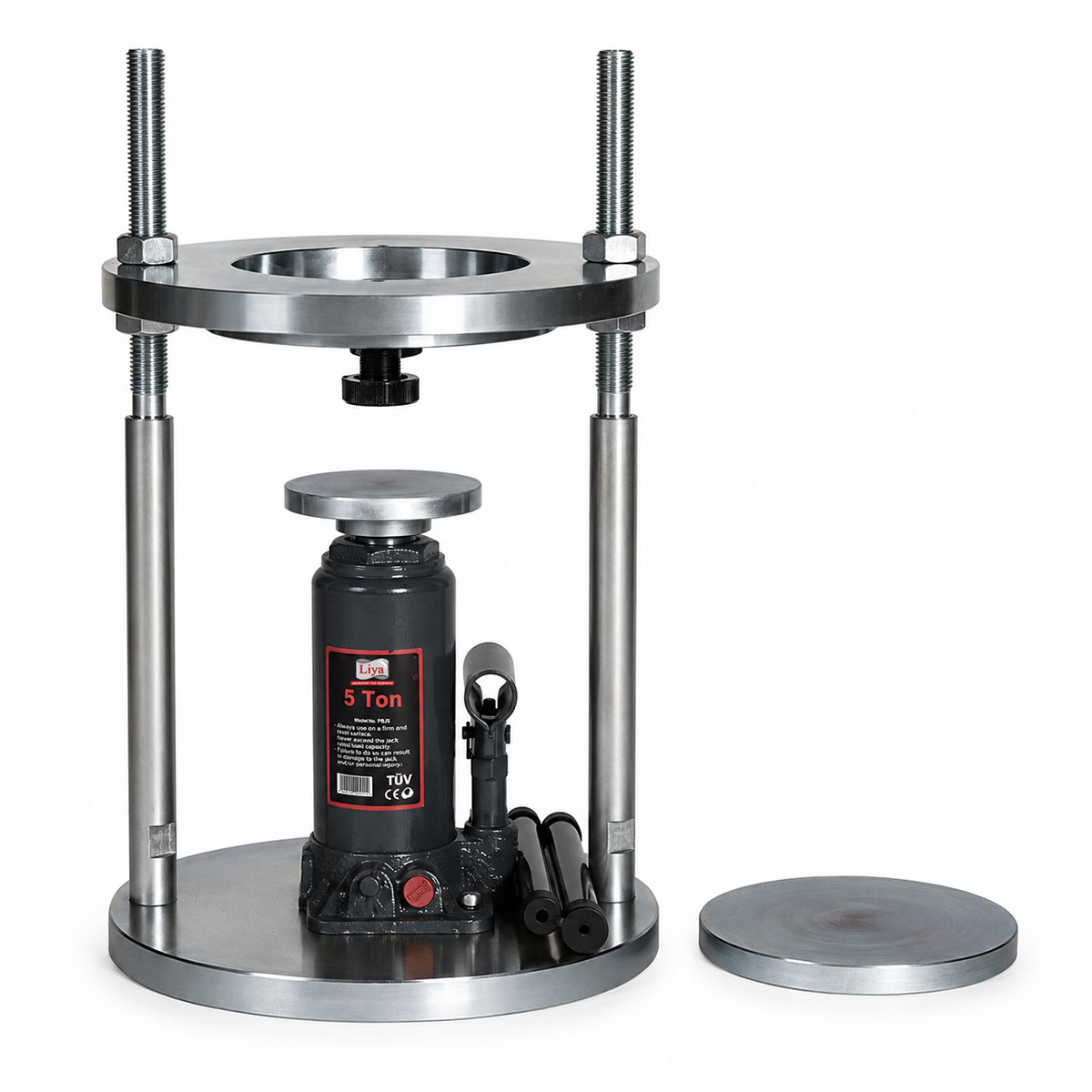
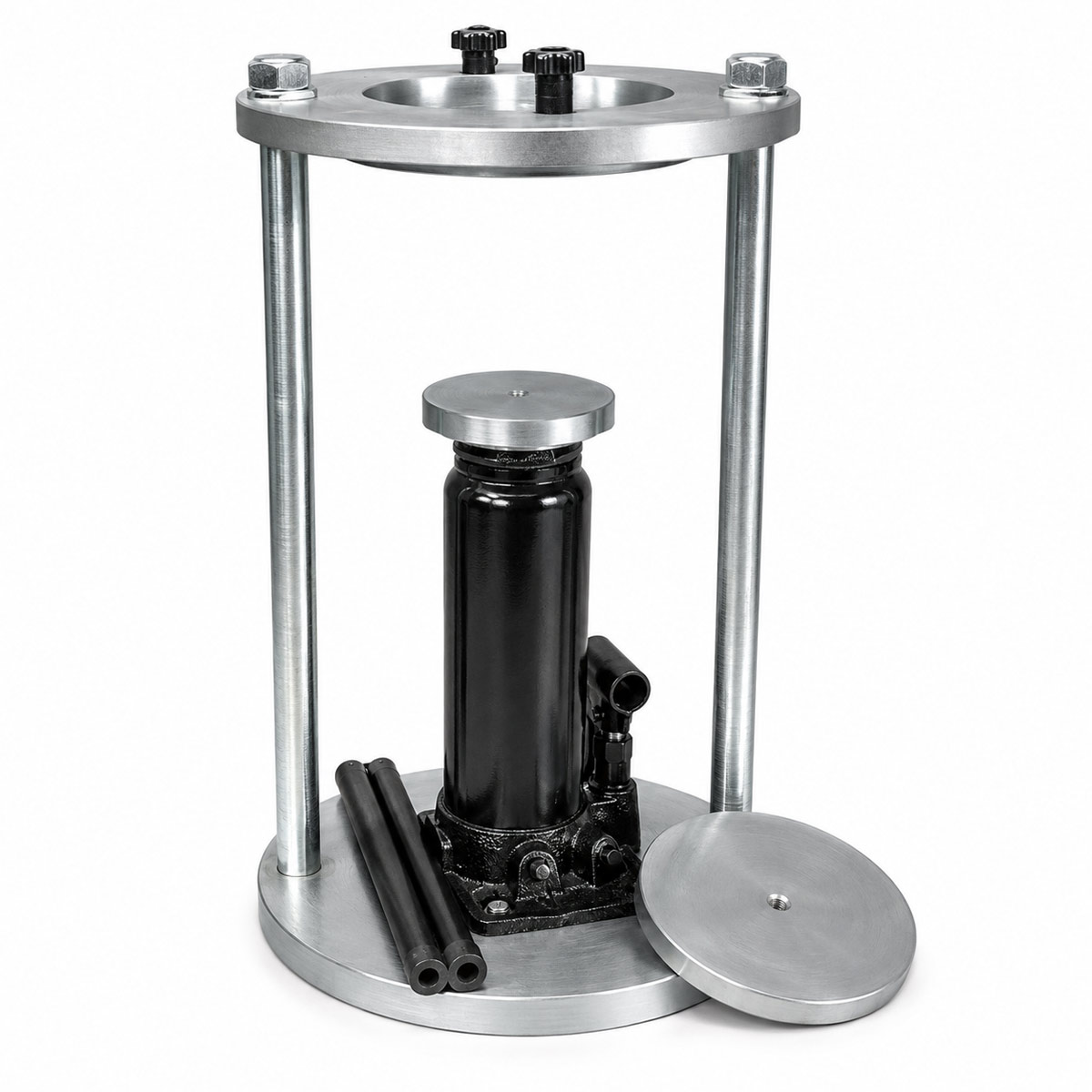
The Marshall-CBR Sample Extruder removes compacted asphalt and soil specimens from their moulds in a controlled manner. Its manual hydraulic system provides up to 5 tons of extrusion force, helping the operator remove specimens without damaging the mould or sample structure.
- 5 ton extrusion capacity: The manual hydraulic jack provides controlled force for removing compacted specimens.
- Marshall mould compatibility: Suitable for standard Marshall specimens and compatible mould systems.
- CBR applications: Supports removal of compacted soil specimens from suitable CBR moulds and adaptors.
- Controlled operation: The hydraulic mechanism allows the operator to increase extrusion force gradually.
- Stable construction: The robust frame maintains stability during specimen removal.
- Compact dimensions: The unit measures approximately Ø30 × 54 cm.
- Heavy-duty design: With a weight of approximately 30 kg, the unit remains stable during operation.
- Manual hydraulic system: No electrical connection is required.
- Wide laboratory use: Suitable for asphalt, soil, road construction and quality control laboratories.
- Standards support: Can be used with specimens prepared according to relevant Marshall, CBR and soil compaction methods.
| Product Code | Product Name | External Dimensions (cm) | Weight (kg) |
| LT-U0035 | Marshall-CBR Sample Extruder | Ø30 × 54 | 30 |

What Is a Marshall-CBR Sample Extruder?
The Marshall-CBR Sample Extruder is designed to remove compacted asphalt and soil specimens from their moulds in a controlled manner. The system is suitable for Marshall specimens and compatible CBR sample moulds. Therefore, laboratory personnel can remove specimens while reducing the risk of damage to the sample or mould.
After compaction, a specimen may remain tightly attached to the internal surface of the mould. Manual removal methods can damage specimen edges or alter its geometry. A hydraulic sample extruder provides a more controlled solution for this process.
Powerful Hydraulic Extrusion System
The unit uses a manual hydraulic jack with approximately 5 tons of extrusion capacity. The operator moves the hydraulic handle gradually to increase the applied force.
This controlled force pushes the compacted specimen out of the mould in a steady manner. The hydraulic mechanism also reduces the need for sudden or excessive manual force. As a result, specimen removal becomes safer and easier to manage.
Marshall and CBR Mould Compatibility
The system supports compatible Marshall moulds used for compacted asphalt specimens. With suitable moulds and adaptors, it can also support CBR and soil compaction laboratory applications.
Correct positioning of the mould is important before extrusion begins. Once the mould is securely placed, the hydraulic mechanism applies vertical force to the specimen. This arrangement helps maintain specimen alignment during removal.
Compact and Stable Construction
The LT-U0035 Marshall-CBR Sample Extruder has approximate dimensions of Ø30 × 54 cm. Its compact structure allows laboratories to use the unit without requiring excessive working space.
The machine weighs approximately 30 kg. This robust construction provides stability while the hydraulic system applies extrusion force. The simple mechanical design also supports routine operation and maintenance.
Asphalt and Soil Laboratory Applications
The Marshall-CBR Sample Extruder is suitable for asphalt production facilities, highway laboratories, universities, geotechnical laboratories and quality control centres.
Laboratories can use the unit with specimens prepared for Marshall, CBR and soil compaction procedures. Its manual hydraulic structure also means that the machine does not require an electrical power supply.
Specimen Removal for Standard Test Procedures
The system can support specimen handling associated with EN 12697-30, AASHTO T245, ASTM D698, ASTM D1557 and ASTM D1883, together with other relevant Marshall, CBR and soil compaction procedures.
These standards primarily define specimen preparation, compaction or testing methods rather than the extrusion mechanism itself. Therefore, laboratories should select the correct mould and adaptor for the applicable procedure.
Overall, the LT-U0035 Marshall-CBR Sample Extruder combines 5 ton hydraulic force, compact construction and controlled manual operation. Therefore, laboratories can remove compacted asphalt and soil specimens from their moulds quickly and reliably.