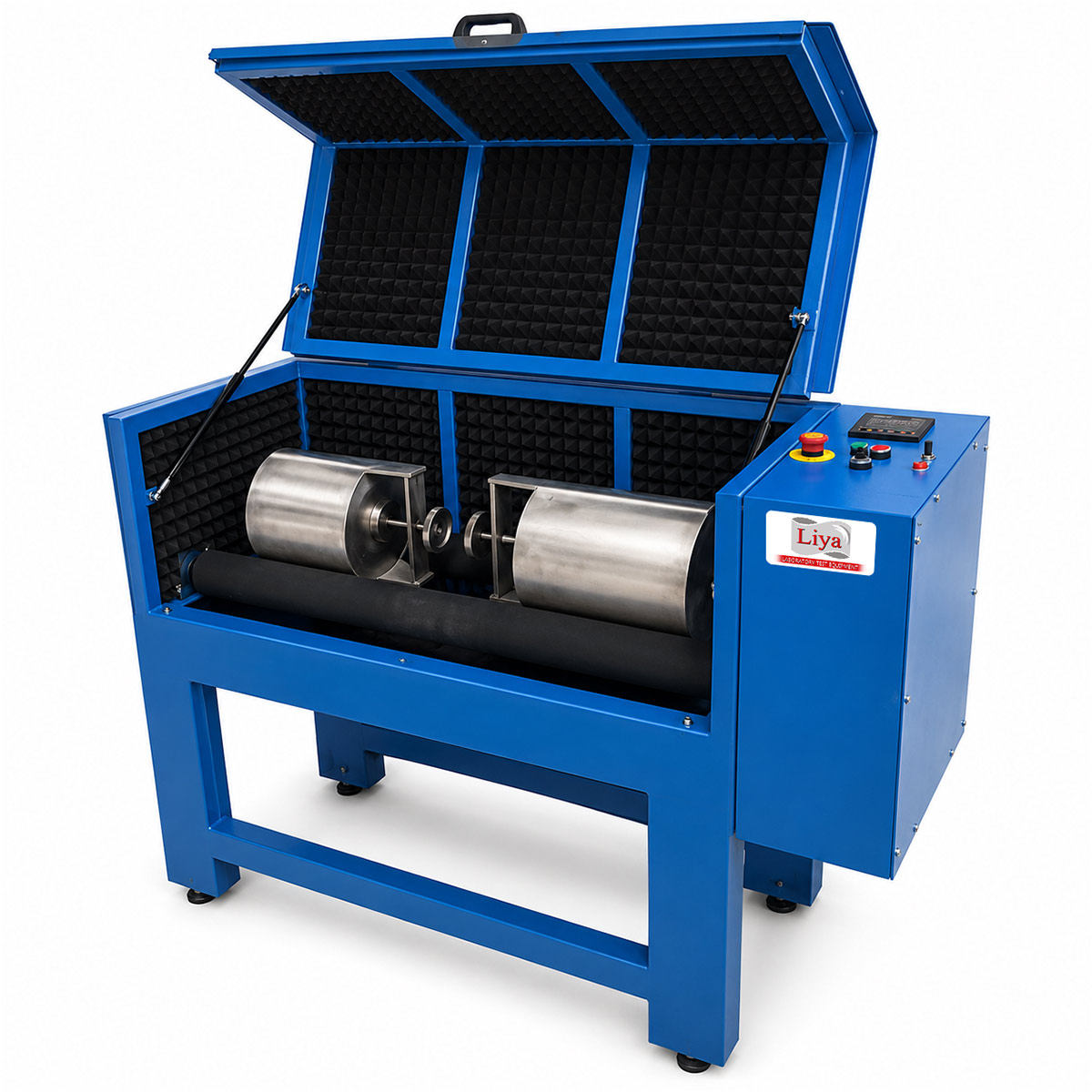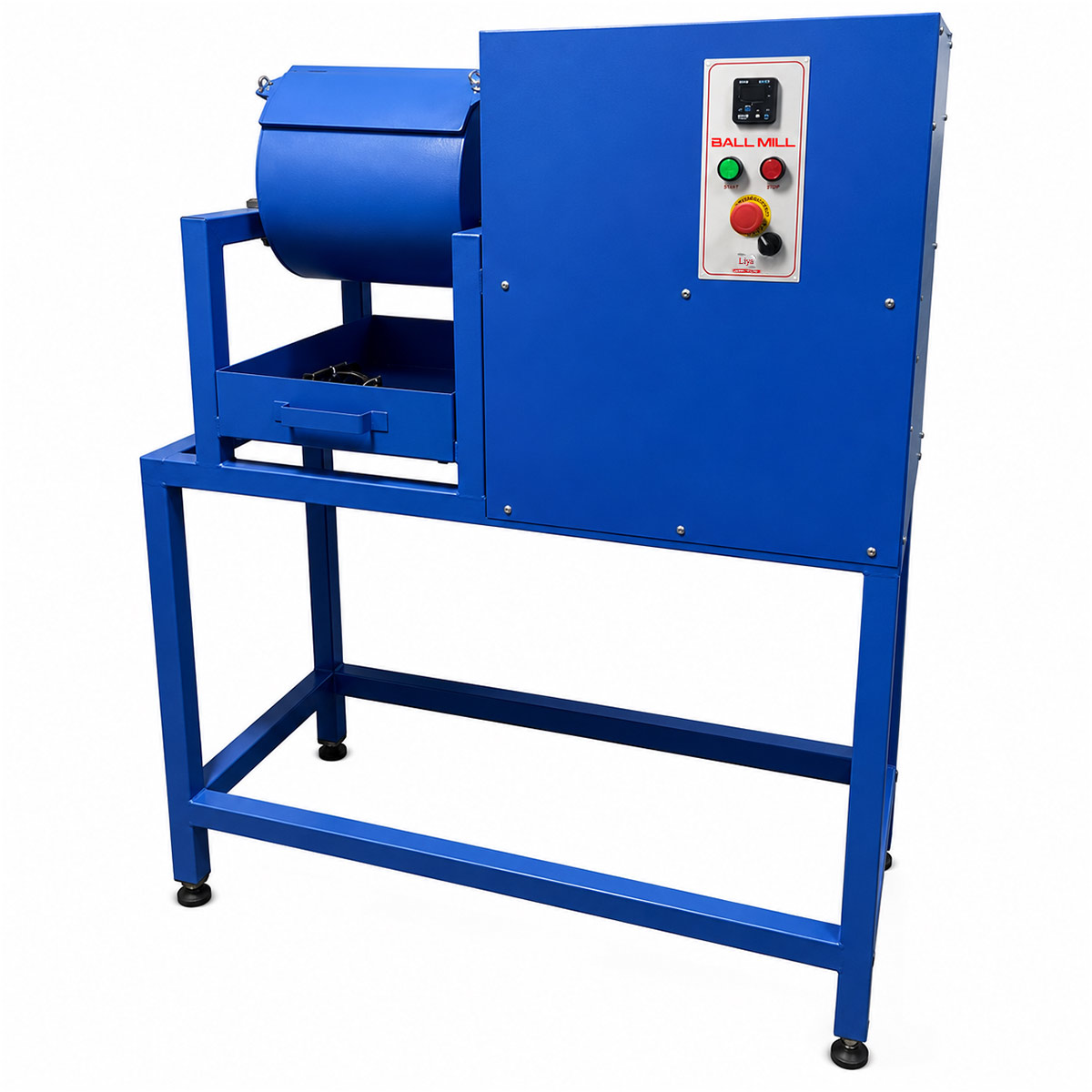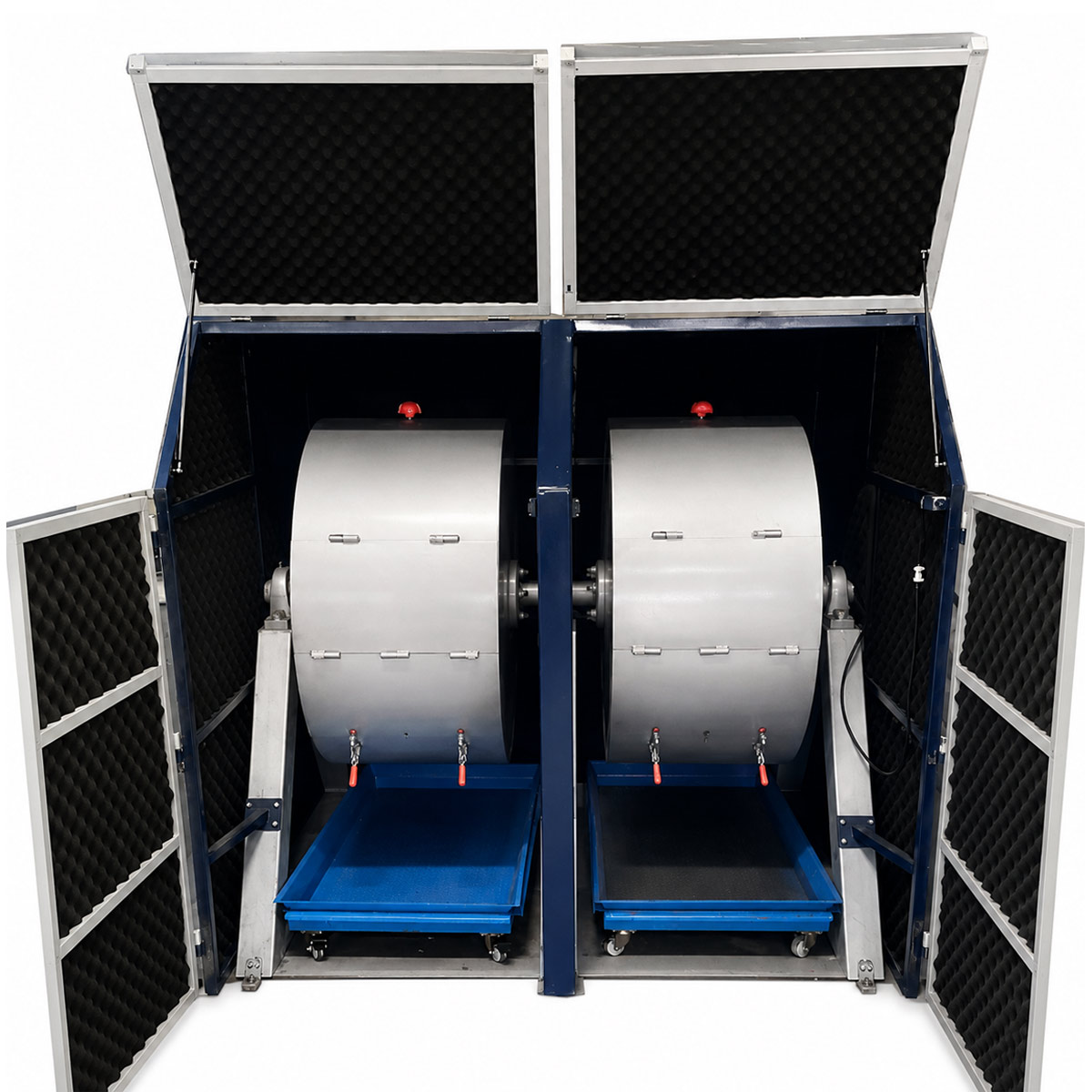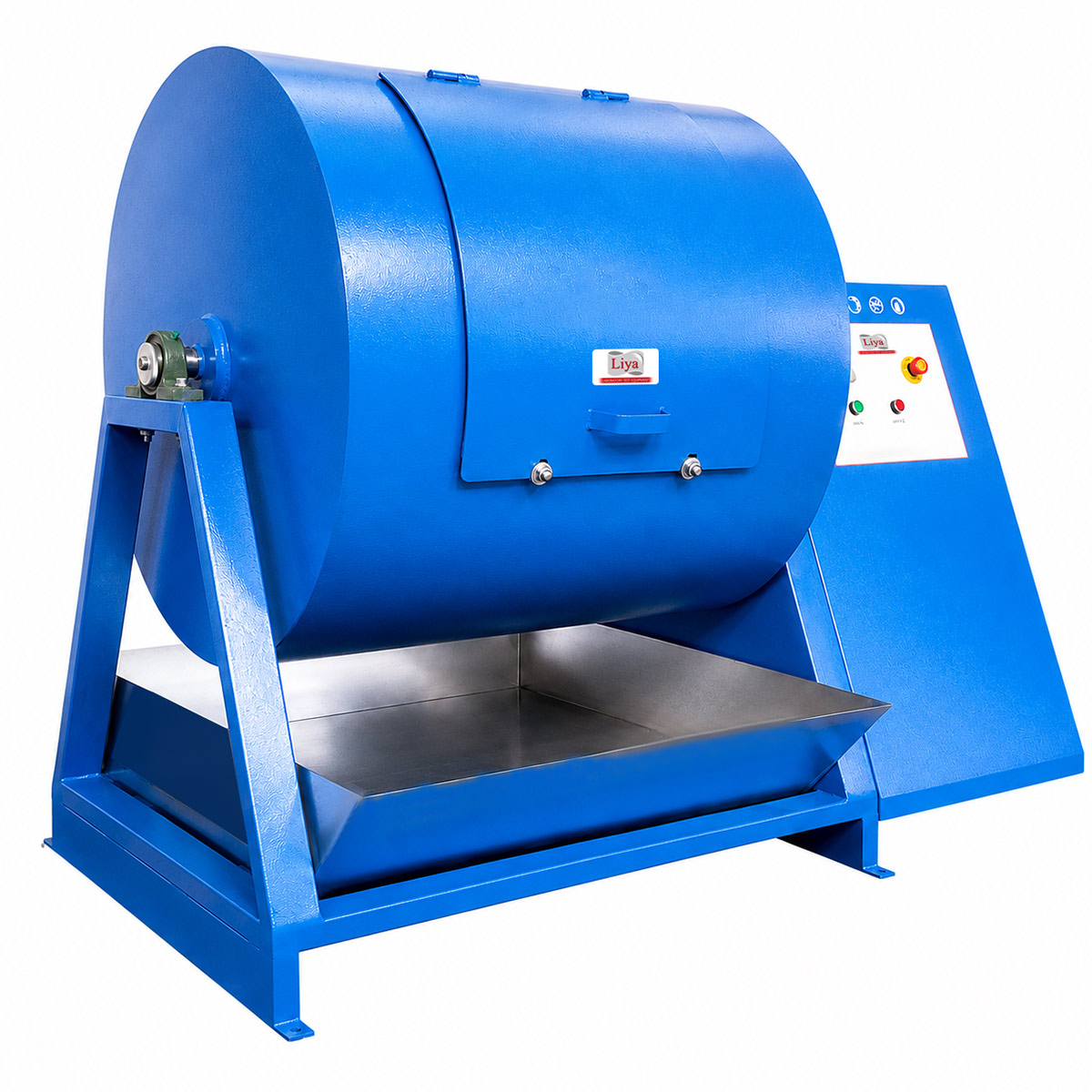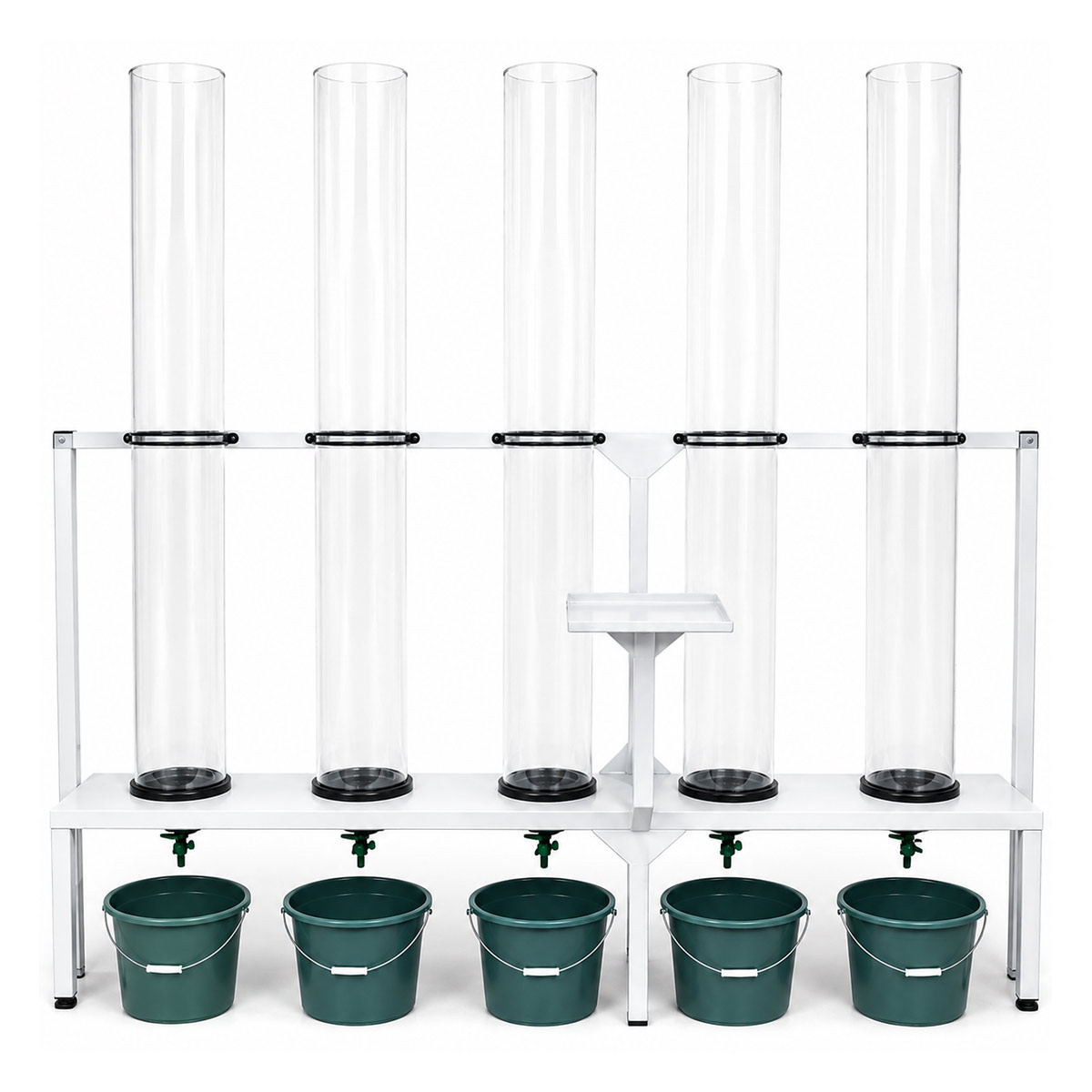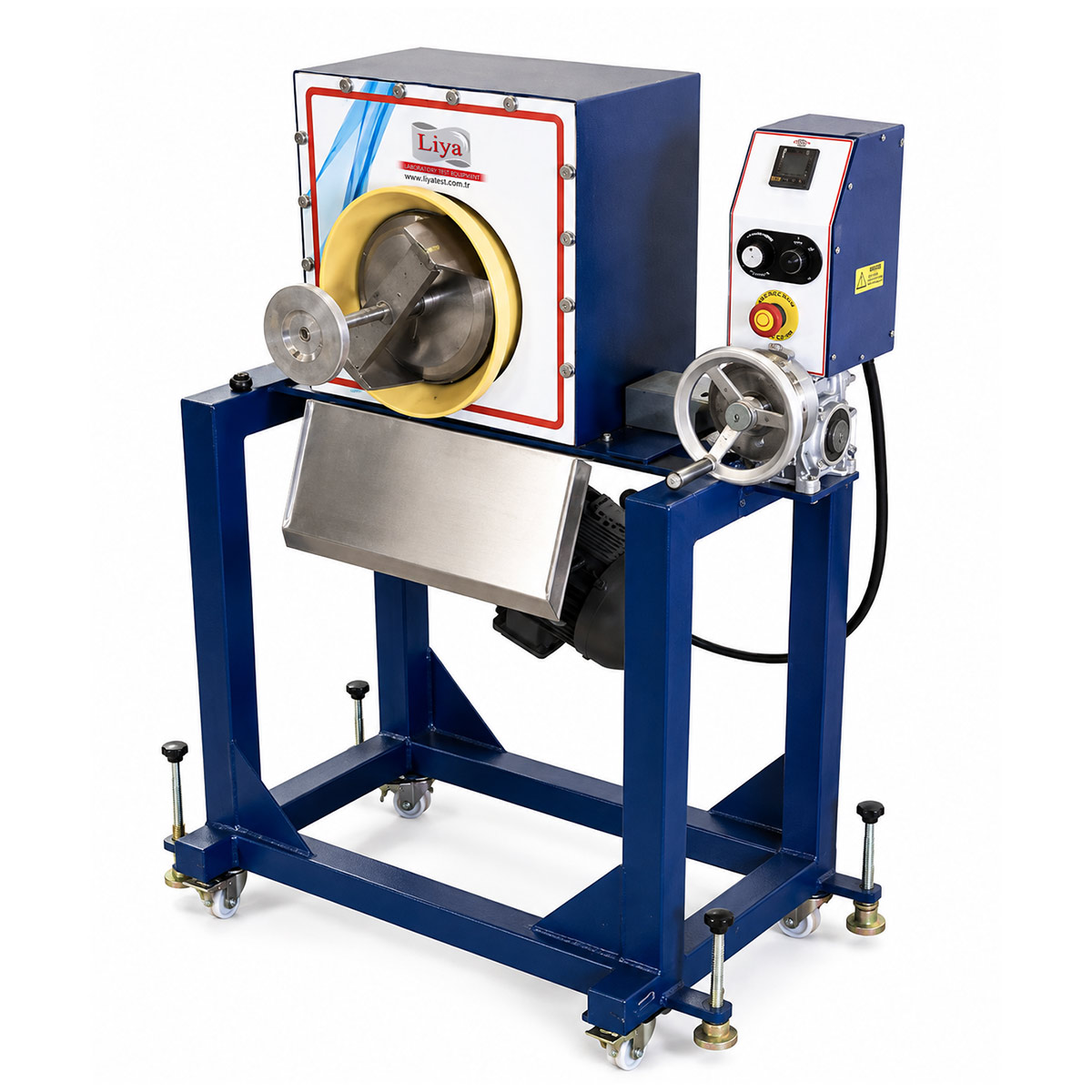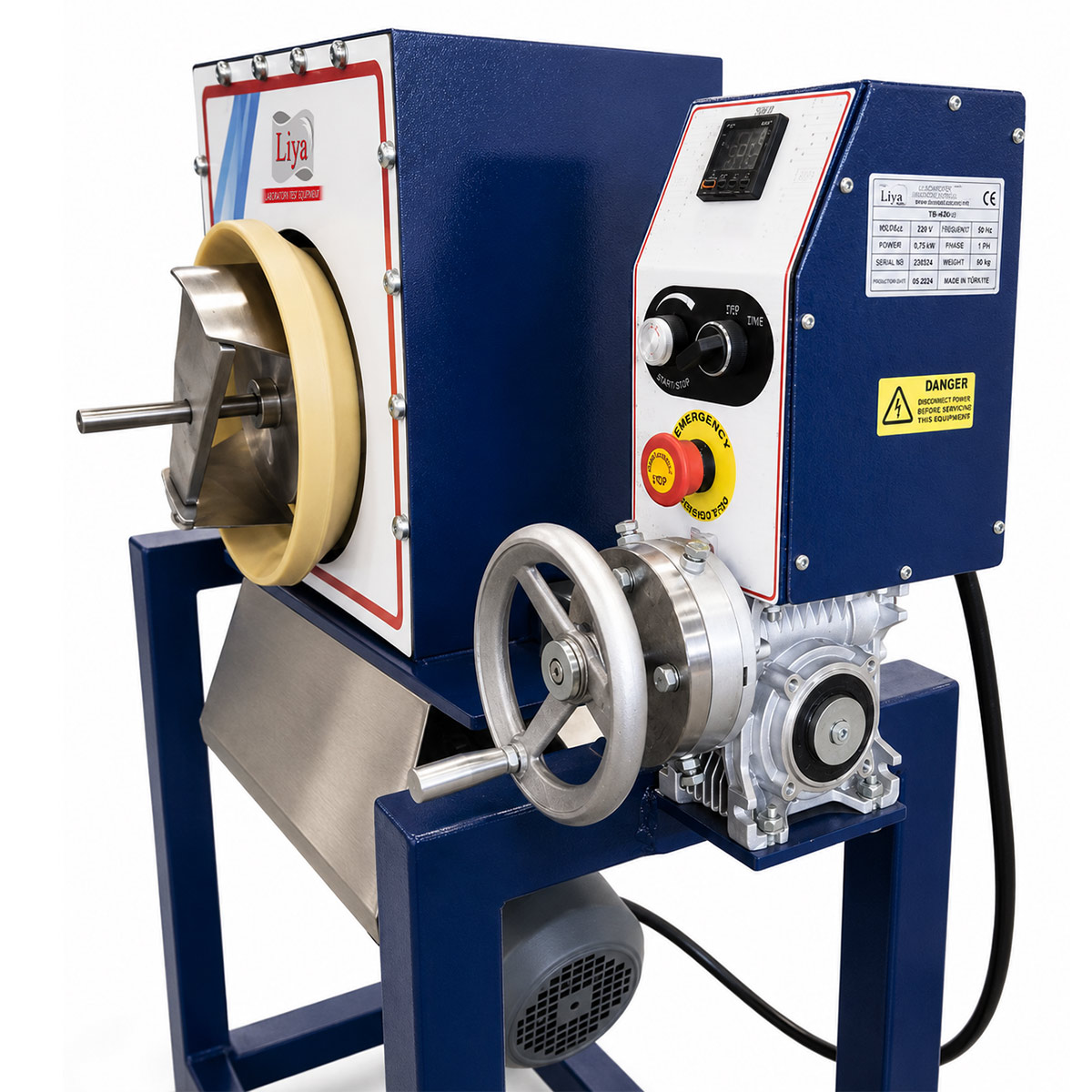

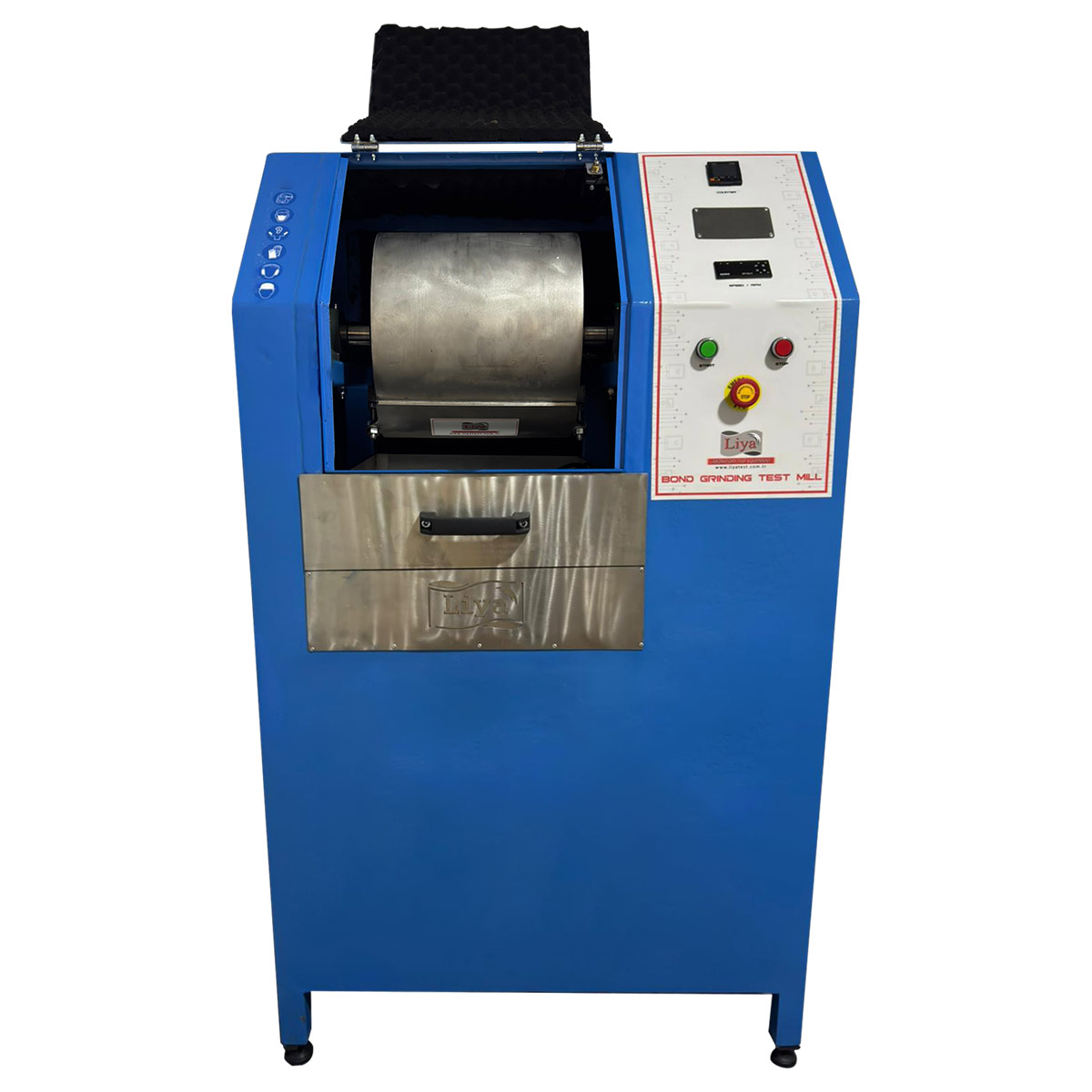
Bond Grinding Test Mill is designed to determine the grindability of ores and mineral samples and to support the determination of the Bond Ball Mill Work Index. The cylindrical AISI 304 stainless steel grinding chamber has internal dimensions of approximately Ø305 × 305 mm and a capacity of 22 litres. Variable speed control, a programmable revolution counter and dedicated grinding-ball charges provide controlled and repeatable grinding cycles.
- Bond Work Index Testing: Supports evaluation of a material’s resistance to ball milling.
- 22 L Grinding Chamber: Provides sufficient volume for laboratory grindability studies.
- Ø305 × 305 mm Internal Dimensions: Matches the conventional Bond laboratory mill geometry.
- Variable Speed Control: Adjustable between 0 and 100 rpm.
- Reference Test Speed: Conventional Bond testing is generally performed at approximately 70 rpm.
- Programmable Revolution Counter: Adjustable between 0 and 9999 revolutions.
- AISI 304 Stainless Steel Chamber: Provides corrosion resistance and durable laboratory use.
- Feed Size: Suitable for material below 8 mm.
- Feed Volume: Approximately 2500–3500 ml.
- Product Fineness: Listed as <40 µm* by Liya Test.
- Grinding Ball Charge: Supplied with primary and spare grinding-ball sets.
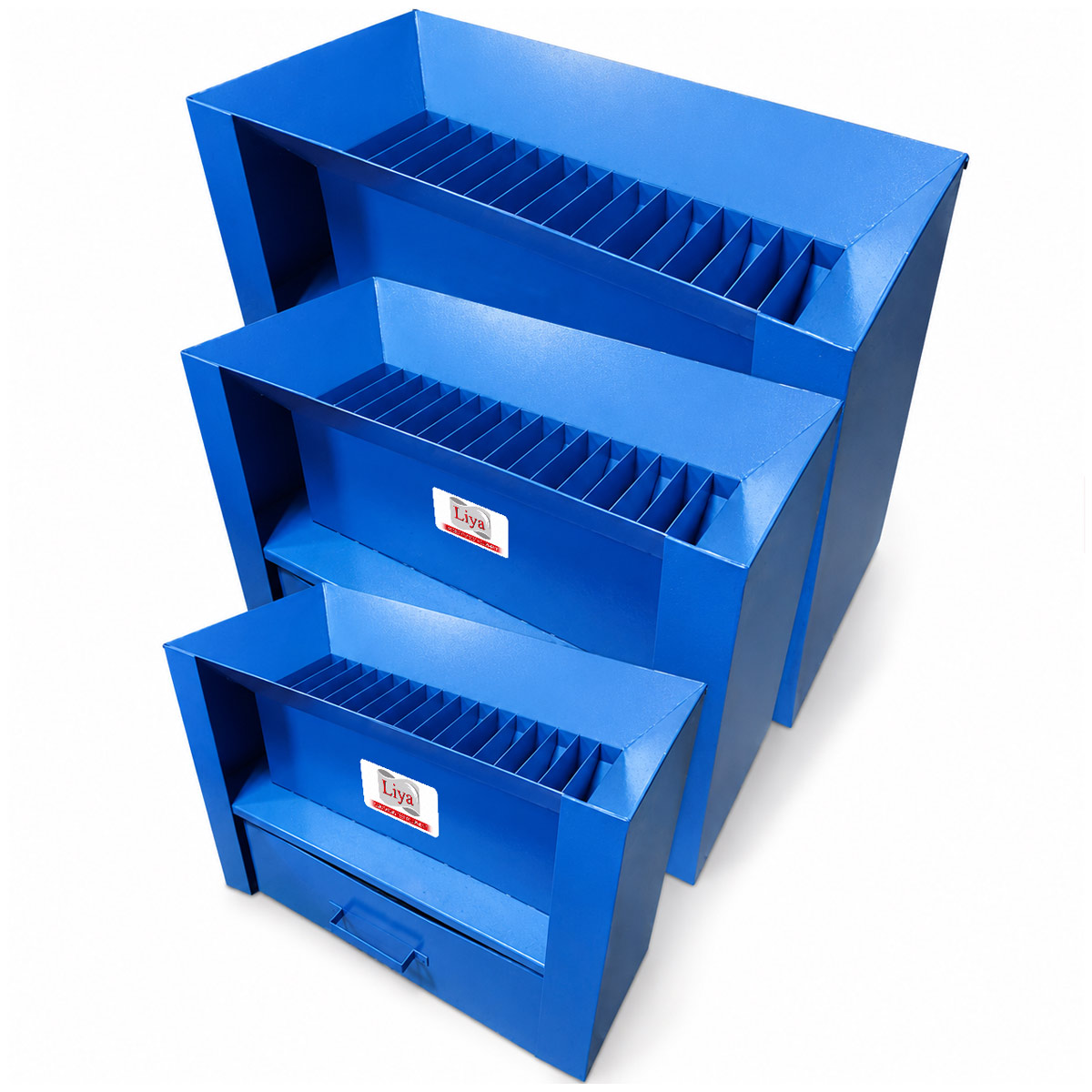
- Sample Collection System: Includes product collection and ball-separation containers.
- Motor: 1.5 kW, 1400 rpm.
- Product Code: LT-CE0025.
| Product Code | Product Name | Capacity (L) | Internal Dimensions (mm) | Grinding Speed (rpm) | Feed Size (mm) | Feed Volume (ml) | Product Fineness (µm) | Motor Power | Power Supply |
| LT-CE0025 | Bond Grinding Test Mill | 22 | Ø305 × 305 | 0–100 | <8 | 2500–3500 | <40* | 1.5 kW, 1400 rpm | 220 V, 50 Hz, 3 Ph |

LT_CIMENTO_BONDTIPIBILYALIDEGIRMEN_
Bond Grinding Test Mill for Grindability Testing
The Bond Grinding Test Mill is designed to evaluate the grindability of ores, minerals and similar raw materials under controlled laboratory conditions. The system supports preparation of the data required to determine the Bond Ball Mill Work Index, which is widely used to compare the resistance of different materials to grinding.
The Work Index provides useful information when evaluating grinding energy requirements and comparing ore types. It is therefore frequently used in mineral-processing laboratories and comminution studies.
Ø305 × 305 mm Grinding Chamber
The mill uses a cylindrical grinding chamber with internal dimensions of approximately Ø305 × 305 mm. Liya manufactures the chamber from AISI 304 stainless steel and specifies a total capacity of approximately 22 litres.
This geometry is consistent with the conventional Bond laboratory ball-mill configuration described in published technical literature. Standard Bond test work commonly uses a 305 × 305 mm laboratory mill operating at approximately 70 rpm.
Variable Speed and Revolution Control
The operator can adjust the mill speed between 0 and 100 rpm. This range allows the system to support different laboratory grinding studies.
For conventional Bond Work Index testing, the operator should use the speed specified by the selected Bond procedure rather than simply selecting the maximum speed.
The digital revolution counter can be programmed from 0 to 9999 revolutions. Once the selected number is reached, the system completes the grinding cycle. This helps laboratories repeat each stage under consistent operating conditions.
Bond Grinding Ball Charge
Bond testing uses a defined distribution of steel grinding balls. Published descriptions of the conventional procedure specify a charge of 285 steel balls with different diameters and a total mass of approximately 20.1 kg.
Different ball sizes allow both coarse and fine particles to be subjected to suitable grinding action throughout the cycle.
Liya Test supplies the machine with primary and spare grinding-ball charges together with product collection and ball-separation containers.
Controlled Feed and Grinding
The LT-CE0025 accepts material with a listed feed size below 8 mm. The recommended feed volume is approximately 2500–3500 ml.
After each grinding cycle, the material is removed and classified using the selected test sieve. Oversize material is returned to the mill together with the required fresh feed. The process continues until the grinding response reaches the condition required by the selected Bond procedure.
The conventional Bond method simulates a closed grinding circuit and is used to calculate the material’s resistance to ball milling.
Mineral Processing Applications
The Bond Grinding Test Mill is suitable for ore preparation, mining laboratories, cement raw-material studies and mineral-processing research.
Its adjustable speed, programmable revolution counter and standard laboratory mill geometry allow laboratories to perform controlled grindability comparisons.
As a result, the Bond Grinding Test Mill provides a practical system for evaluating ore grindability and generating data for Bond Work Index calculations.