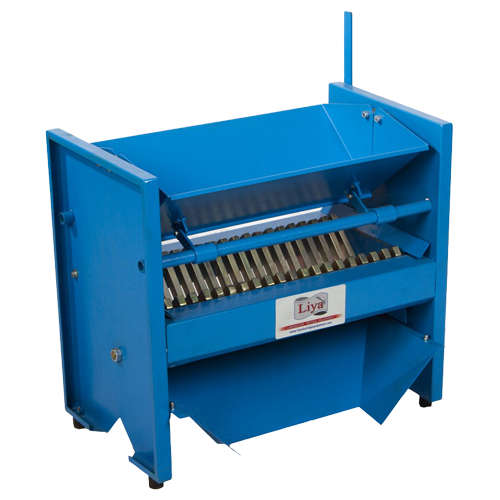

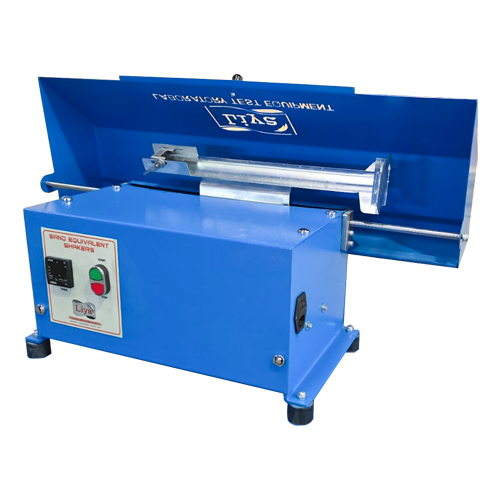
Sand Equivalent Shaker
STANDART: TS EN 933–8, ASTM D2419, AASHTO T176, UNI 7446
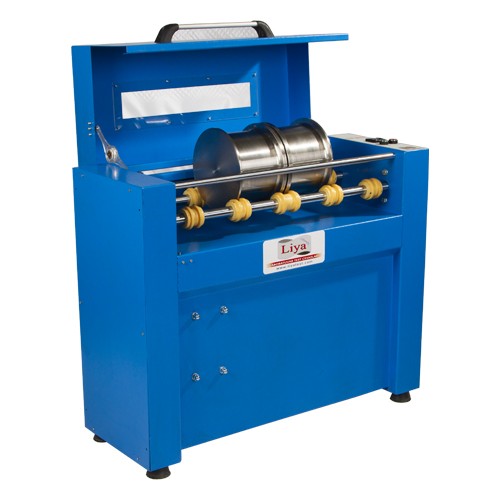
LT-A0003 Sand Equivalent Shaker
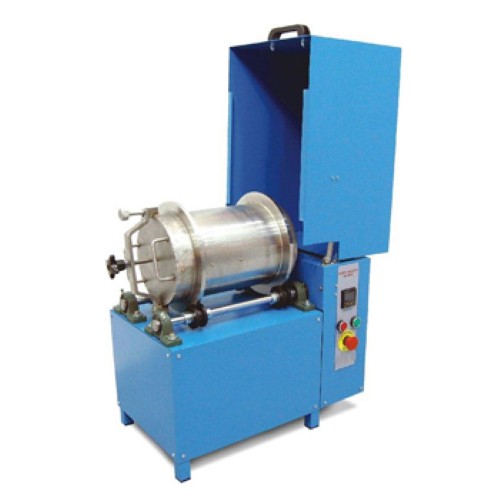
LT-A0004 Sand Equivalent Shaker with Safety Cover
Sand Equivalent Shaker is designed for the automatic shaking of graduated cylinders used in sand equivalent testing. The unit provides controlled horizontal movement at a constant operating speed, helping laboratories maintain consistent shaking conditions between tests. The system operates at 180 r.p.m. and includes an integrated timer that automatically stops the machine when the preset test period is completed.
- Automatic Shaking: Provides consistent and repeatable movement of sand equivalent cylinders.
- Controlled Horizontal Movement: Applies the required linear movement during the test.
- Operating Speed: Works at 180 r.p.m.
- Integrated Timer: Automatically stops the shaker when the preset period is completed.
- Reduced Operator Influence: Limits variations associated with manual shaking.
- Standard Model: LT-A0003 Sand Equivalent Shaker.
- Safety Cover Model: LT-A0004 Sand Equivalent Shaker with Safety Cover.
- EN Setting: 200 ±1 mm horizontal movement and 90 ±3 cycles / 30 s.
- ASTM Setting: 203.2 ±1.02 mm horizontal movement and 88 ±3 cycles / 30 s.
- Power Supply: 220 V, 50–60 Hz, 1 ph.
- Standards: EN 933-8, ASTM D2419, AASHTO T176 and UNI 7446.
| Product Code | Product Name | Dimensions (mm) | Weight (kg) | Power Supply |
| LT-A0003 | Sand Equivalent Shaker | 220 × 600 × 320 | 4.6 | 220 V, 50–60 Hz, 1 ph |
| LT-A0004 | Sand Equivalent Shaker with Safety Cover | 240 × 800 × 340 | 27.5 | 220 V, 50–60 Hz, 1 ph |

LT_KUMESDEGERSALLAMA_
What Is a Sand Equivalent Shaker?
The Sand Equivalent Shaker is an automatic laboratory machine used to shake graduated cylinders during the sand equivalent test. It provides controlled horizontal movement and a constant operating speed, helping laboratories reproduce similar test conditions for each sample.
The sand equivalent method evaluates the relative quantity and character of clay-like or plastic fines and dust present in granular soils and fine aggregates. ASTM D2419 describes the method as a rapid test for materials passing the 4.75 mm sieve.
Automatic and Controlled Shaking
The shaker eliminates the need for continuous manual cylinder movement. Once the graduated cylinder is installed, the operator selects the required test conditions and starts the machine.
The unit operates at 180 r.p.m. and includes an integrated timer. When the preset test period is complete, the shaker automatically stops. This controlled operation reduces differences caused by manual shaking and improves repeatability between test series.
EN and ASTM Test Settings
The machine can be adjusted according to the required test method.
For EN applications, the horizontal movement is 200 ±1 mm, with 90 ±3 cycles in 30 seconds. For ASTM applications, the movement is 203.2 ±1.02 mm, with 88 ±3 cycles in 30 seconds.
This adjustable system allows the same laboratory machine to support different sand equivalent procedures without relying on manual shaking.
Standard and Safety Cover Models
Liya Test offers two versions of the equipment. LT-A0003 is the standard Sand Equivalent Shaker and provides a compact solution for routine laboratory use.
LT-A0004 Sand Equivalent Shaker with Safety Cover includes an enclosed protective section around the moving mechanism. This version is suitable for laboratories that prefer additional separation between the operator and the moving test assembly.
Sand Equivalent Testing
The current ASTM D2419-22 method determines the sand equivalent value of soils and fine aggregates and is listed by ASTM as active. The result provides an empirical indication of the amount and character of clay-like material present in the sample.
The Sand Equivalent Shaker combines automatic movement, controlled speed and timed operation in one system. It therefore provides aggregate, asphalt and construction-material laboratories with a practical and repeatable solution for sand equivalent testing.