
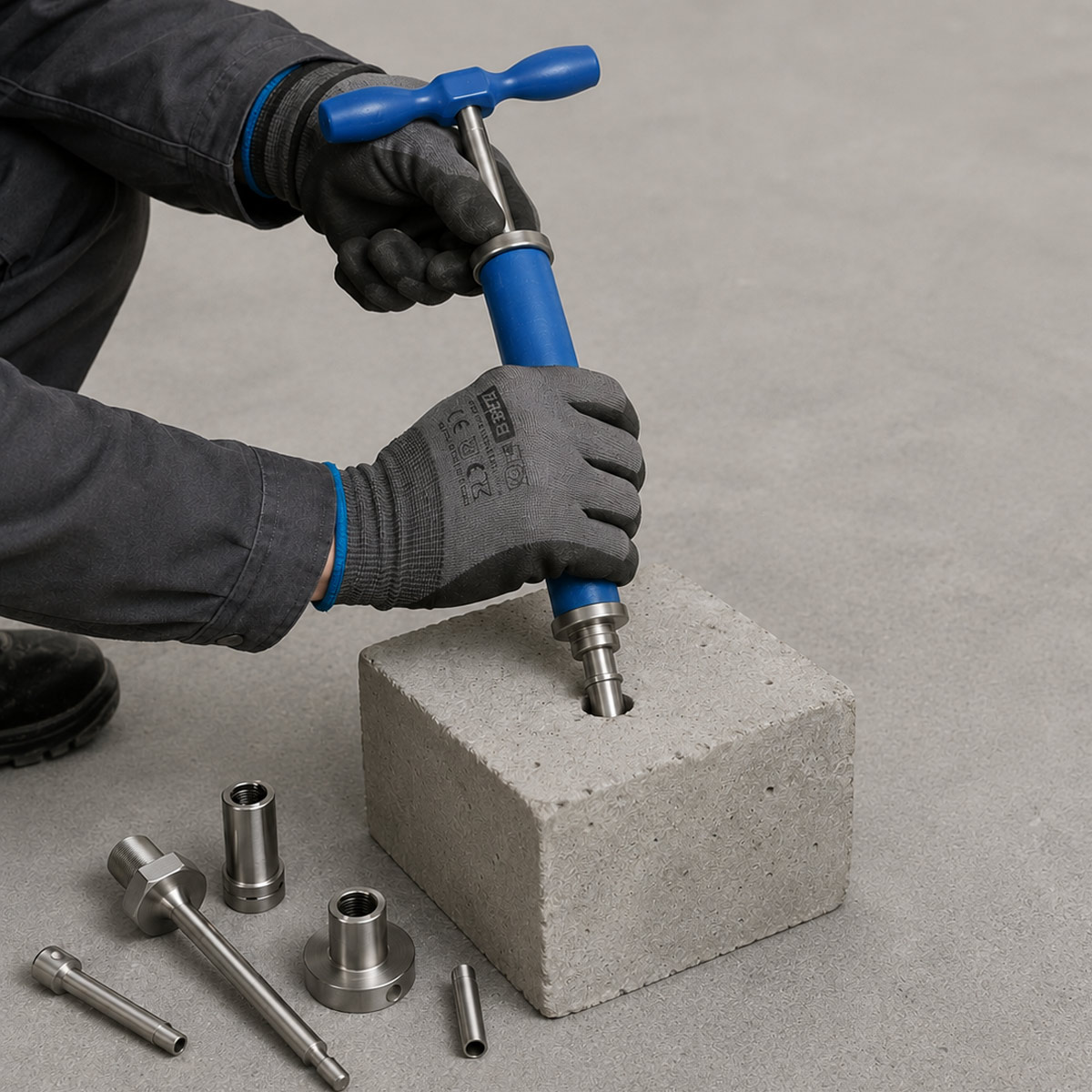
Concrete Penetrometer
STANDART: EN 12390-2
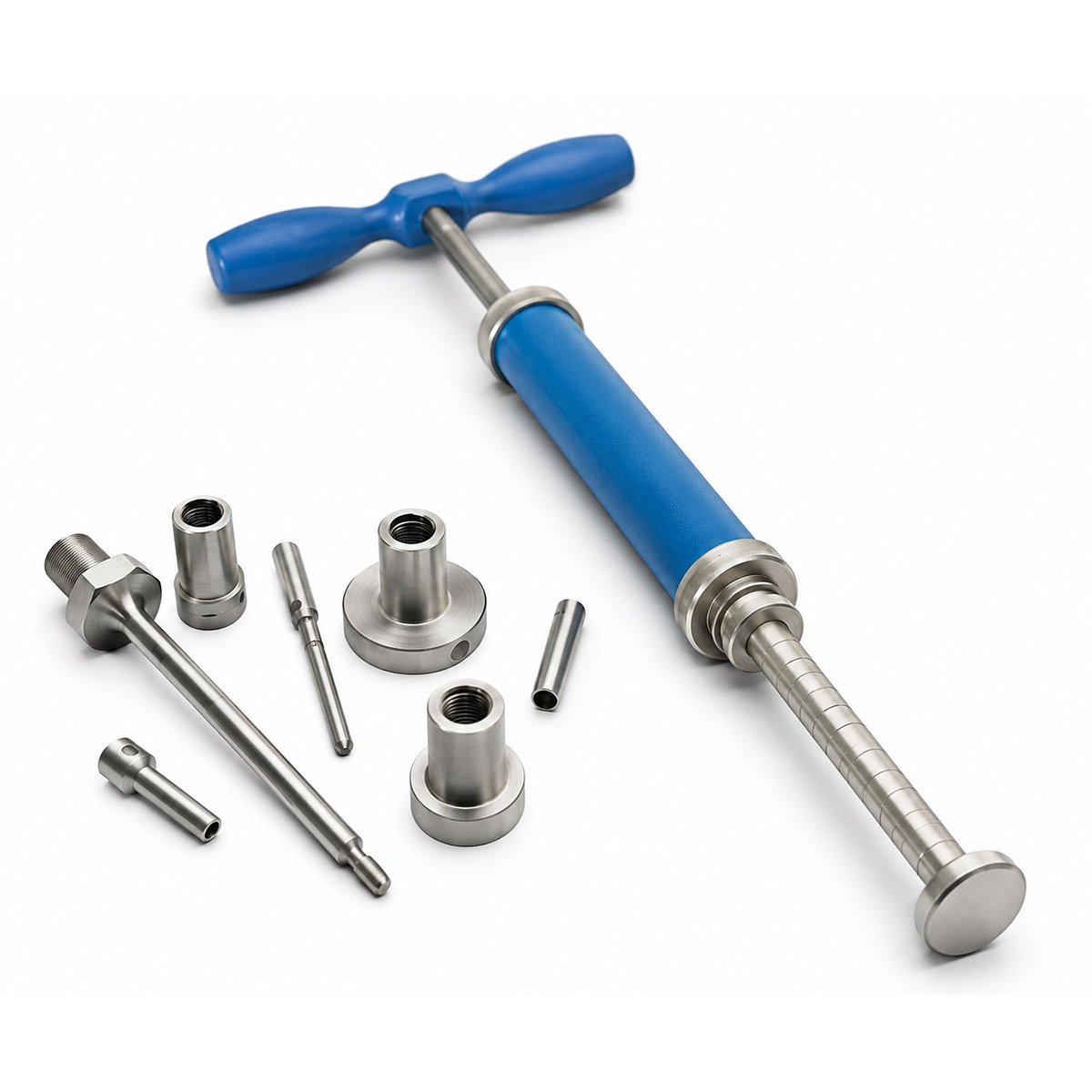
LT-C0025 Concrete Penetrometer
LT- C0025/1 Penetration Needle Set | İğne Seti
Concrete Penetrometer determines the initial and final setting times of fresh concrete and mortar mixtures by penetration resistance. A calibrated internal spring measures the force required to penetrate the screened mortar portion of the concrete. The instrument provides a measuring range of 1–100 daN and is supplied with six interchangeable penetration needles. Different needle areas allow the operator to monitor the increasing resistance of the mixture throughout the setting process.
- Product Code: LT-C0025
- Product Name: Concrete Penetrometer
- Application: Initial and final setting time determination
- Test Principle: Penetration resistance of screened mortar
- Measuring Range: 1–100 daN
- Force Measurement: Calibrated internal spring system
- Needle Set: 6 interchangeable penetration needles
- Needle Areas: 16, 32, 65, 160, 325 and 650 mm²
- Direct Reading: Mechanical indicator provides rapid force measurement
- Portable Design: Suitable for laboratory and field applications
- Approximate Weight: 2 kg
- Applications: Concrete, mortar and suitable grout mixtures
- Relevant Test Method: ASTM C403/C403M
| Product Code | Product Name | Technical Details | Weight (kg) |
| LT-C0025 | Concrete Penetrometer | Measuring Range: 1–100 daN | 2 |
| LT-C0025/1 | Penetration Needle Set | 16, 32, 65, 160, 325, 650 mm² | — |

LT_BETON_PROKTORPENETROMETRE_
What Is a Concrete Penetrometer?
The Concrete Penetrometer determines the initial and final setting times of fresh concrete and mortar mixtures by measuring penetration resistance. The test focuses on the screened mortar portion of the concrete. As the mixture stiffens, the force required to penetrate the sample gradually increases.
Setting behaviour depends on several factors, including cement type, water content, temperature and chemical admixtures. Therefore, penetration measurements provide useful data for mix design, quality control and setting-time evaluation.
The results can also help laboratory and field teams understand how quickly a mixture loses workability and develops stiffness.
Calibrated Spring Measurement System
The instrument includes a calibrated internal spring with a measuring range of 1 to 100 daN.
During testing, the operator presses the selected needle vertically into the mortar specimen. The indicator directly shows the applied force. Therefore, the user can record penetration resistance without a separate load-measuring unit.
Measurements are repeated at suitable time intervals. As the mixture continues to set, the recorded resistance values increase. This progression allows the laboratory to follow the setting process over time.
Six Interchangeable Penetration Needles
The set includes six penetration needles with bearing areas of 16, 32, 65, 160, 325 and 650 mm².
Larger needles are useful during the early stages of the test, when the mortar still offers relatively low resistance. As the material stiffens, the operator can switch to a smaller needle.
This range allows the same instrument to follow both low and high penetration resistance during a complete setting-time test.
The operator should clean the needle before every measurement. In addition, each penetration should be made at a fresh location on the specimen surface.
How Is Setting Time Determined?
First, the laboratory prepares the concrete mixture according to the required procedure. The coarse aggregate is then removed so that the mortar fraction can be tested.
The screened mortar is placed into a suitable container. The operator selects the appropriate needle and performs penetration measurements at regular time intervals.
For each reading, the required force is recorded. The laboratory then evaluates penetration resistance as a function of elapsed time.
ASTM C403/C403M defines the determination of concrete setting time by penetration resistance using mortar sieved from the concrete mixture.
Initial and Final Setting Behaviour
During the early stage of hydration, the mortar offers relatively little resistance to penetration. As hydration continues, the material gradually becomes stiffer.
Repeated measurements allow the laboratory to identify the development of penetration resistance and determine the required setting-time points according to the applicable method.
This information can be useful when comparing different cement types, admixture dosages or curing temperatures.
Laboratory and Field Applications
The instrument weighs approximately 2 kg, making it easy to transport between different testing locations.
Its compact mechanical design supports use in ready-mixed concrete plants, construction sites, research laboratories and material-testing facilities.
The device can also support suitable mortar and grout studies when the selected procedure uses penetration resistance as the evaluation method.
Reliable Setting Time Evaluation
The Concrete Penetrometer combines a calibrated spring system, six interchangeable needles and portable construction in one practical testing instrument.
As a result, laboratories can monitor the gradual stiffening of fresh concrete and mortar mixtures in a controlled and repeatable manner. The 1–100 daN measuring range and multiple needle sizes allow the user to follow penetration resistance from the early stage of setting through the later stages.