
Unit Weight Measure
STANDART: TS EN 1097-3, 12350-6
LT-C0075 Unit Weight Measure | 3 Liter
LT-C0054 Unit Weight Measure | 5 Liter
LT-C0076 Unit Weight Measure | 7 Liter
LT-C0077 Unit Weight Measure | 10 Liter
LT-C0078 Unit Weight Measure | 15 Liter
LT-C0056 Unit Weight Measure | 20 Liter
LT-C0079 Unit Weight Measure | 30 Liter
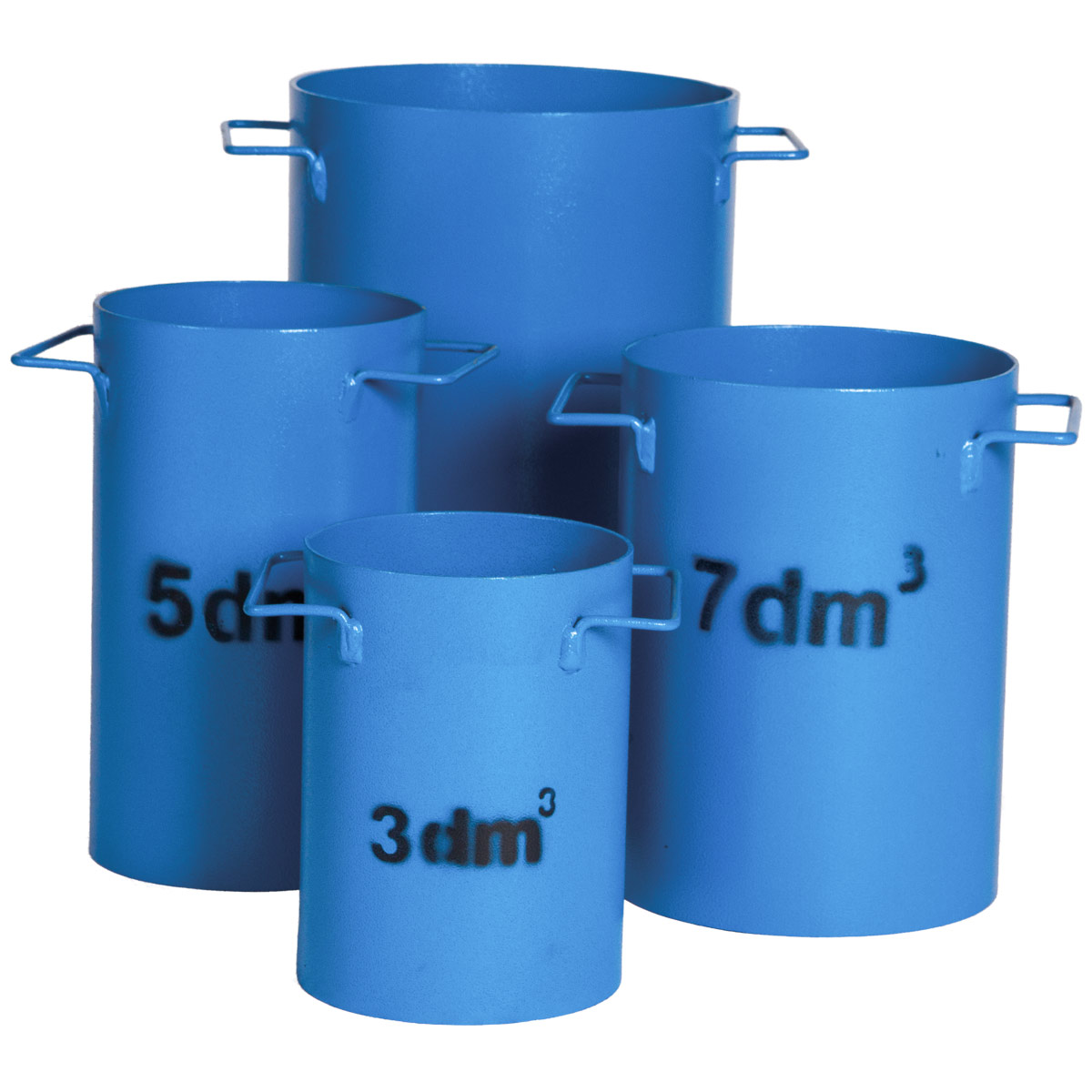
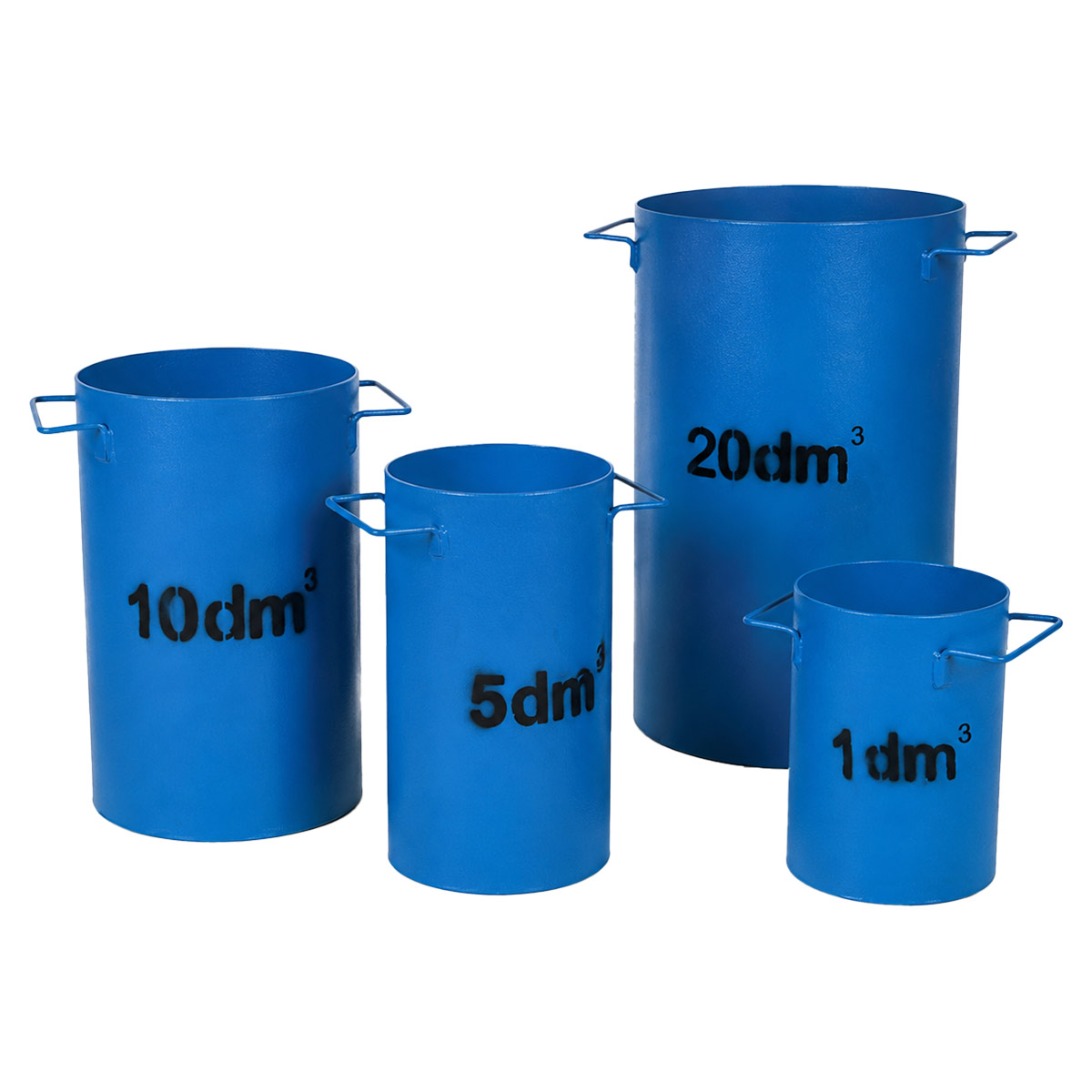
Unit Weight Measures are designed to determine the bulk density of aggregates and the density of fresh concrete using a calibrated container volume. The rigid metal construction helps maintain the specified volume during repeated laboratory use, while the smooth internal surface simplifies filling, strike-off and cleaning. LİYA Test offers 3, 5, 7, 10, 15, 20 and 30-liter capacities, allowing laboratories to select the appropriate measure according to specimen volume and aggregate size.
- Application: Bulk density testing of aggregates and density testing of fresh concrete
- Capacity Options: 3, 5, 7, 10, 15, 20 and 30 L
- Aggregate Testing: Supports determination of loose bulk density
- Void Content: Test data can support calculation of voids between aggregate particles
- Fresh Concrete Testing: Suitable models can be used for compacted fresh concrete density measurements
- Calibrated Volume: Provides a known volume for mass-to-volume calculations
- Rigid Metal Construction: Helps maintain dimensional stability during repeated use
- Smooth Internal Surface: Simplifies filling, strike-off and cleaning
- Parallel Top Edge: Supports accurate removal of excess material
- Carrying Handles: Improve handling when the measure is filled
- Standards: EN 1097-3, EN 12350-6
| Product Code | Capacity | Dimensions (mm) | Weight (kg) |
| LT-C0075 | 3 L | 150 × 210 × 210 | 3.7 |
| LT-A0054 | 5 L | 170 × 240 × 250 | 5 |
| LT-C0076 | 7 L | 190 × 260 × 270 | 6.3 |
| LT-C0077 | 10 L | 210 × 290 × 310 | 7.7 |
| LT-C0078 | 15 L | 250 × 340 × 330 | 10 |
| LT-A0056 | 20 L | 270 × 370 × 380 | 12 |
| LT-C0079 | 30 L | 310 × 410 × 430 | 20 |

LT_BETON_BİRİMAGIRLIKKOVALARI_
What Are Unit Weight Measures?
Unit Weight Measures are used to determine the mass of aggregate or fresh concrete contained within a known volume. The laboratory compares the calibrated volume of the measure with the recorded mass. This allows users to calculate aggregate bulk density or fresh concrete density.
Accurate volume and a stable internal geometry are important for reliable results. Therefore, the operator should clean and dry the measure before testing and record its empty mass. The material is then placed into the container according to the applicable test method.
Different Capacity Options
LİYA Test offers models with capacities of 3, 5, 7, 10, 15, 20 and 30 liters.
Smaller measures provide practical handling for lower specimen quantities. Larger models offer more working volume for coarse aggregates and higher-volume fresh concrete applications.
The operator should select the capacity according to the maximum aggregate size and the applicable test procedure. A suitable measure allows the material to settle naturally and helps improve consistency between repeated tests.
Bulk Density Testing of Aggregates
First, the operator weighs the clean and dry measure. Aggregate is then introduced according to the specified procedure.
After filling, excess material is removed until the surface is level with the top edge. The filled measure is weighed again.
The laboratory subtracts the empty-container mass from the total mass. Next, the net aggregate mass is divided by the calibrated volume of the measure. This calculation provides the bulk density of the aggregate.
The result can also support determination of the void content when the required aggregate particle-density information is available.
EN 1097-3 describes the determination of loose bulk density and voids in aggregates.
Density Testing of Fresh Concrete
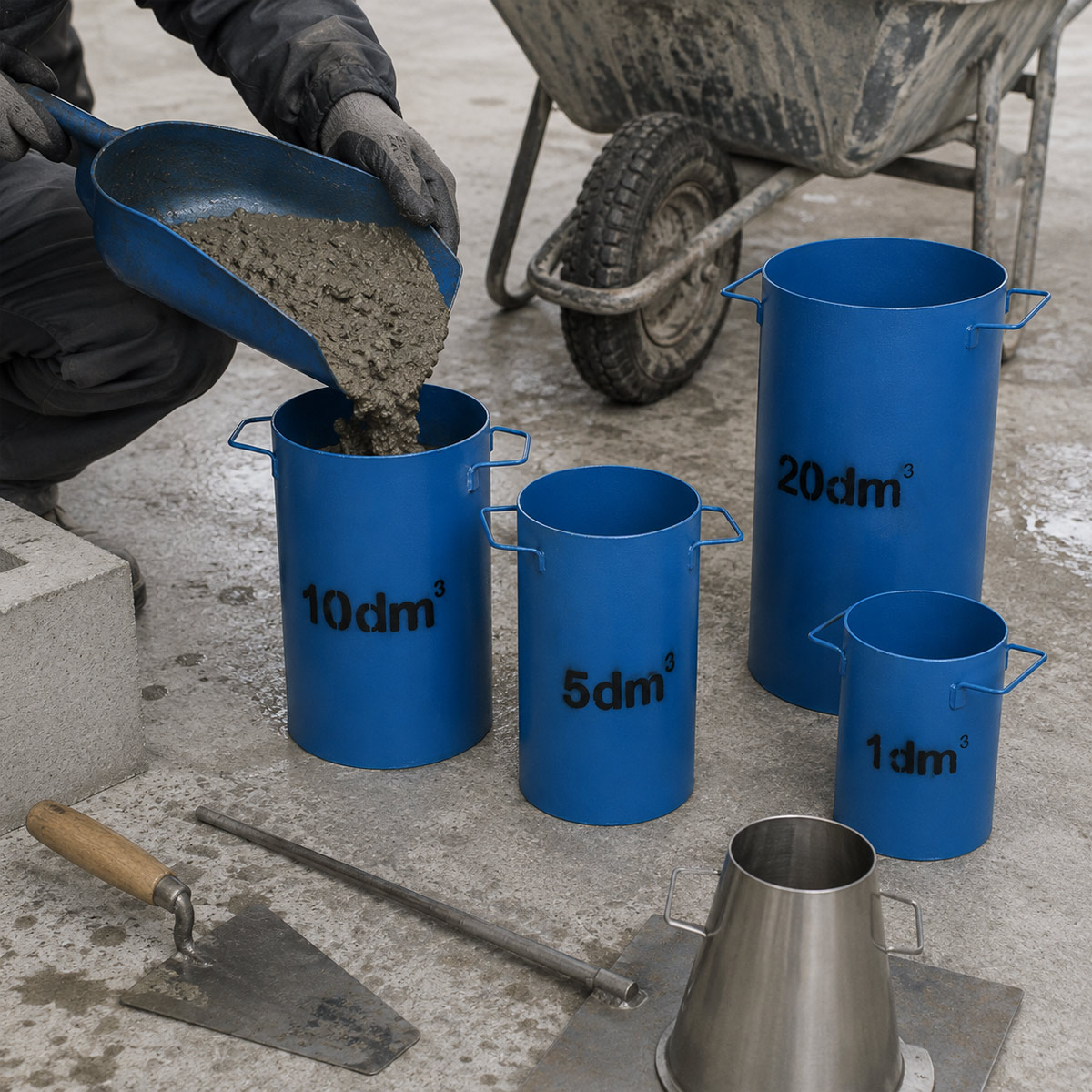
For fresh concrete testing, the operator fills the measure in the required layers. Each layer is compacted according to the applicable test method.
After compaction, excess concrete is struck off until the top surface is level with the rim. The filled container is then weighed.
The net mass of the concrete is divided by the calibrated container volume. As a result, the laboratory obtains the density of the compacted fresh concrete.
EN 12350-6 specifies a method for determining the density of fresh concrete under laboratory and field conditions.
Rigid and Practical Construction
The rigid metal body helps the measure retain its calibrated volume during routine laboratory use. The smooth internal surface reduces material retention and simplifies cleaning after each test.
A parallel top edge also supports accurate strike-off. This feature helps the operator remove excess aggregate or concrete more consistently.
Carrying handles make the larger models easier to move when filled. However, users should protect the containers from impact because deformation may alter the calibrated volume.
Reliable Aggregate and Concrete Testing
Unit Weight Measures combine different capacities, durable construction and straightforward operation in one product range.
With options from 3 to 30 liters, laboratories can select a suitable measure for different aggregate sizes and fresh concrete volumes. As a result, the product series supports consistent bulk-density and fresh-concrete density testing according to EN 1097-3 and EN 12350-6.